

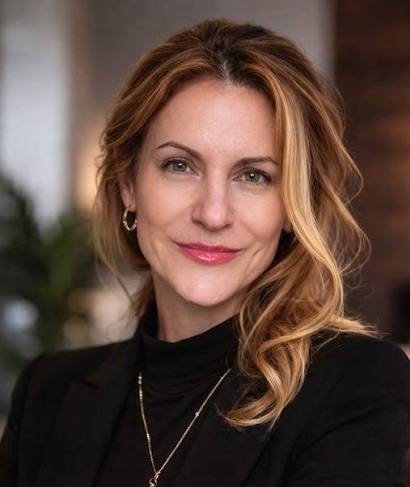
Dr. Jane Shore explains people-based learning, the idea that we learn with and through each other as cognition, not just connection. She argues this ancient human process must be named and intentionally designed into schools, especially as AI reshapes education.
transcript
Speaker 1 Hey there. Nick here at Human Restoration Restoration Project. In case you're not familiar at all with the Katamari video game series, as the player, you navigate this ball that starts off small at first until everything in the environment starts sticking to you. And by the end of a level, you have entire buildings, trees, cars, and all manner of flora and fauna stuck to you. I have the sense that my guest today is a human Katamari. Every experience and interaction sticks, and she's made it the mission of her life to make sense of it all. Doctor Jane Shore is an author, artist, former education researcher, cofounder of Revolution School, and founder of School of Thought. But before any of those titles, Jane is first and foremost a meaning maker. And her most recent book, People Based Learning, The Future of Learning is Human, braids together decades of experience, conversations, models, and research to bear on a new way of organizing learning and schooling. People based learning is all about the interplay between connecting, reflecting, and affecting, a dynamic spiral or open end loop that helps us engage meaningfully with new people, ideas, and experiences, she writes. At its core, this approach encourages both exploration and introspection, ultimately leading to deeper understanding, deeper personal meaning, deeper memory, and collective growth.
Speaker 2 Thank you, Jane, for joining me today. Oh my goodness.
Speaker 3 I am so excited to be here, Nick. I one of the reasons I'm excited is to be in a conversation with you and your mind on these topics, but that introduction was tremendous, and I love the idea. I what is the term that you just used? The game the idea of things sticking to you, that's exactly what it feels like. That's the idea.
Speaker 1 If you look up Katamari, it's like k a t a m a r I, It's a whole series of game, almost like a genre of game that started with this single title where you are just going through the map, collecting objectives, and you basically just end up being this huge ball of this huge mess of everything stuck to you at the end of the level. And as I was reading the book, Jane, that's what kinda stuck with me ironically was, you know, your your reflection and just like pulling together all the various threads of your life to make sense of it. And I don't know, that's the sort of visual metaphor it clicked in my head. I love it. I love there was a visual metaphor, but I love the idea that there was something,
Speaker 3 as you were reading, that was about meaning making. I think the process of putting a book together, that is that captures what it felt like. It felt, as if all of these different experiences and opportunities to learn and connect over life from, you know, growing up a certain way at a table where people were learning, you know, our our dining room table to having the opportunities that you you included in the introduction. I think that writing a book is a process of getting that out in some kind of coherent way so someone else can read it and expand upon what the ideas are providing.
Speaker 1 So I appreciate that. Yeah. Well, was gonna be my first question is, you know, for a book that feels like a culmination of a lifetime of this, how did you even begin to bring all of those threads together? Like, how did you sort out, oh, what would be important or what felt valuable in all of that?
Speaker 3 It starts with the idea that we engage in learning with and through each other, and it isn't a concept that I had previously heard articulated exactly like that as a way to think. So I have experienced in my life, or I've had opportunities, as you said, I was a teacher. I got to do research for many years. I got to be part of the team that started a school. And there are in all of these experiences that we have, and you know this, your start, you know, with an organization that you're developing as you go, there are roles that don't exist yet. So you're creating these roles, and all the while, it's like, well, there are these roles. I need to go, I need to be the person as I'm doing research that maintains this connection between the researchers who are coming up with this design and the people that are doing beautiful, innovative things in classrooms. And a lot of times, it was like, in my research world, we'd have a question. We'd have a project. And then the idea was, go find somebody that wants to answer this with us. And so there wasn't, like, that that piece, that bridge that goes in between that allows you to say, who's holding the people here? They're humans that you're studying to understand things about learning, but there wasn't anybody, like, in that space necessarily. So the the book sort of evolved through my experiences and research where I was that I ended up being so interested in what was happening in these, you know, incredibly, innovative classrooms, or I got I think about, like, the value of practitioner wisdom. And then I would be sitting with researchers talking about design and questions, and can we really answer these things? And the conversation wasn't necessarily direct. So and even in the spaces as I move into places where I could feel more on the ground, so when I've got to start, revolution school, in similar ways, there was this role between the teachers that were doing incredible things in the school and all of these things happening right outside and, like, who's in the role that's tying that together? And it started to emerge as this articulation of that. And what was so interesting and exciting, I loved writing a book because it was also so these ideas were there, this idea that there's this role, and I heard it called various things. I heard it called, a learning engineer. So a person that can sort of sit in the middle in that intersection. I heard it called, you know, a bridge or but, really, it was it's a unique, it's a unique naming, but a lot of people kind of do this. You know, we're we're engaging in this idea. So we and I know your work at Human Restoration Project, you do work around project based learning or the other p's in PBL, so, like, place learning, problem based learning. And it started to emerge for me. This is not a replacement or something even that's different. It's it's ancient. You know, we've been learning with and through people. That's an ancient way to learn. But it started to emerge as a concept when I realized we're not naming people based learning. And as, you know, the world begins to move in the direction of, like, every conversation we're having is around technology and what's technology doing, we have to be more intentional and remind ourselves of that core that is in the work that we do. Make it visible. So it does feel exactly, as you said, like a culmination of so many different experiences, and that is so exciting to get to our it takes a little while, but it's it's it's like writing a book is thinking. It's not putting all your ideas together. It's like this is what emerged because I had this container to say, this is a concept. How do I organize it so someone else can hold it?
Speaker 1 Maybe that's what I was, experiencing. Right? You're kind of going along in your thought process as you're going through it. I was thinking as you were as you were chatting there of there's this, sort of change systems thinker guy named Harold Yarhey, and he has this wonderful diagram that on the x axis it has sense making, so on a spectrum from low to high sense making. And then on the y axis it has sharing, so high sharing and low sharing. And what's interesting is people who are high sense making and high sharing are the catalysts. And what's really interesting though, Jane, is I think you've also been in those other positions too. So people who are high sense making but low sharing are experts. Right? Like, we're kind of in our own little sphere, you know, that's a little siloed, but we're like the the expert. Maybe that's the researcher hat. Right? People who are low sense making but high sharing are the connectors. Right? These are all valuable roles and low sharing and low sense making, right, consumers of information. The catalyst brings all of those pieces and roles together, you know, to help move, I don't know, organizations forward. And that's really, I think, maybe the role that you're playing in this is the catalyst for all of these different ideas.
Speaker 3 I I so appreciate that. I also appreciate that it's visual because I feel as if that's another aspect. There are so many ways that we could begin to understand the way people learn and communicate and process. And certainly, writing the book was one of the ways that I got to process and make this concept really concrete for myself, although it's still evolving, but the other way is obviously visuals as thinking. And to put that in perspective and create a way to think about people that are low sense making or high sense making, low sharing or high sharing, I think, allows you to it allows you into concepts that can feel really abstract. Simply like having an I guess it's because of the way our brains need to organize, you know, and it allows you to get in.
Speaker 1 You know what's very funny, Jane, is you have predicted all of the questions in almost the exact order that I'm gonna ask them here, so I don't even know where to go. But I have a question about the art, because I was joking with Chris even as I was reading it, I was like, man, I just want people based learning as like the coffee table art book, you know. I don't even want it as like a book that just sits on my shelf, like I want it to be out in the open so you can flip through it, right, and just see the diagrams. And the sense that I get again from you Jane is that like the words are in support of the art and the images instead of necessarily the other way around like you would typically find in an education book. Like the text as a narrative kind of locks us in linear ways of thinking, but your art is able to capture the complex ideas in, I think, like a concise and aesthetic way, like making sense of a lot of different moving parts of information, but in a really, I mean, tight aesthetic space. All of that said, like could you elaborate on the role that art plays in your own thinking and writing? Like do you create art to think in the same way that you were saying you put this book together to think? Do you think about the what you're communicating to readers with that? How do you view what you're doing there?
Speaker 3 First, I will say yes. Yeah. I do think through visualization and through drawing. I want to call out that this idea is something that happens because I appreciate the illustrative process and it feels very meditative for me. I also believe that it is something that we can all tap into. I think that independent of whether or not you see yourself as a visual, you know, visual person and artist, it is a part of our communicative ability to to draw. You know? And you can look I I have done a little, you know, just digging and research because I find it so interesting. But if you think of, like, early ways of communication on cave walls, you know, they're drawings. And so I definitely think through visuals and through the creation of visuals, and I am looking for opportunities to sort of, like, spread the practice because it feels as if it begins to open up a different channel. I also would call out for the book itself. I've always been drawn to visuals. It became really clear that these were ways that were helping me think. In 2020, during the pandemic, when we had just started a school and every school was online, I started creating something that I called visuals for virtual. So any that got in touch with me that needed a visual for their classroom, I would just create something. And I would think with them and then say, okay, here's what I came up with, and they would work with me because one of the things that I love about the creation of visuals, my own process is very organic, and it's also very hand drawn. So I'm not using, a graphic program or, you know, I'm but I I am doing it on an iPad, I have to say. I do sometimes draw on paper, but so it's digital in that way, but it is hand drawn. And there are a couple of artists that I started following in 2020 who were sharing out visuals. And during that time when we were so isolated, you know, we were so separate, whatever fully distanced. And these visuals were appearing everywhere. They were appearing in the news, in the New York Times. They're in The Guardian. And there were a couple of artists. One is named Mona Talibi, and she has done some beautiful work, and some of it was political. She has a background. She was working for the UN. And doing interviewing in The Middle East. She she speaks various languages, and she was interviewing individuals about experiences during various conflicts. And she was finding herself wanting to create visuals so that it they were independent of a particular language. And she talks about her work as taking the numb out of numbers and having spent so much time in research. You know, when you look at academic research, you can almost predict what the first page will look like. You know, there it has a template. There's very rarely any kind of drawing. And if there's a visual, it's done by a computer, and it's a pie graph or, you know, some kind of linear way of thinking. And so Mona Talibi was somebody who really influenced my own thinking around where visuals can be in transmitting really complex, important information that can transcend any one language. And then as I was thinking about putting this together, you know, the idea of people based learning together, there's an author named Stephanie Harrison. She worked in Martin Seligman's lab at the University of Pennsylvania, which happens to be right up the street from me in Philly. And he is the person that is one of the founders of positive psychology. So he is cited as the person that founded that concept. And Stephanie Harrison worked in his lab, and she made this gorgeous sort of graphic art with beautiful colors, and she was using the art to share out ideas from the Positive Psych Lab. And, Nick, you just said you were think and I I have to say thank you. I'm so appreciative and, like, the idea that you would think that this could be a coffee table book. But Stephanie Harrison was actually contacted by a publisher and asked if she would turn her art into a coffee table book. And she said, thank you. That is flattering. I would love to act use my art in a more academic book. So if we could, let's bring the art and create a book. So she wrote a book called The New Happy, and she, you know, got a one of the traditional publishers to publish an academic book that had art in it. And so when I was looking for publishers, I talked to you all, talked to Chris. I know I did. For publishers that would possibly think of creating with me, a book that had, the bottom line with stories and research, but also had color illustrations. And it was really these other artists that helped, that part of it happen.
Speaker 1 And you know what's interesting? I wasn't even necessarily thinking about taking away the take taking away the context of it too in the in the academic sense. I was more interested in, like, if it was on the table, right, and people were picking it up for the art, then they could have access to those ideas rather than picking up an education book. Is the conversation, you know, we have at HRP all the time. It's like, how do people who are not already in education spheres and circles and doing, you know, education work and speaking this language, how do they, you know, become privy to this? And art, think, is a really great in for that. So people saw that as an in to some of these ideas that we're talking about, then, yes, maybe, you know, we could build people based learning on, you know, story and exploration and all these things, and oh, what are those elements of it? I think sometimes the the formal academia of it all can be alienating to people on the outside. So I again, I just I love that you brought those two things together. I'm like, I wanna put it out the middle so anyone who comes in can just flip it over instead of having to go to the bookshelf. Yeah. I love it. And I I appreciate that because, you know, your original question, I think, was sort of also circling around visuals as thinking, which it absolutely is for me. I never start
Speaker 3 with, oh, this is what I want it to look like. I start with ideas and, you know, I I I read things and then it'll they will change. And, actually, if I could continue to change visuals, which I sometimes do on my substack, I will say, okay. This idea is sort of, you know, nuanced, and I need to change the visual a little because they're sort of living. But I appreciate what you're saying because what you're talking about, it's almost like this is gonna sound cheesy, but it's almost like a portal. You know? It's like you're allowing something else to open up so that the conversation can spread in a way that is greater than inside a school. It's about human learning. It's about the fact that our ideas and learning itself is complicated with another mind. And that's the idea idea about with people based learning that really sort of sticks as a definition. It's really like learning within through each other as a part of our thinking, and I feel that way about visuals as well. It's a part of the thinking. It's not like an extra. It's it actually helps me think, and I hope that others can be brought into thinking in a different way by looking at something like that.
Speaker 1 Yeah. I think we're trained so often, and I know I'm guilty of this when I was teaching, right, Cornell notes or whatever is really those sort of methods are just a way of, I don't know, a shorthand transcription. Right? It's a way of like getting if they're not sense making tools, it's a way of just reproducing information, but the way that art brings together complex ideas and puts them in relationship to each other, right, assigns values and valences and uses color and texture and lines, like communicates all of that and helps people sense make. I think it's a huge reason why things like sketch notes have really taken off, right? People just making sense in visual ways and you don't even have to consider yourself an artistic person just to, I don't know, put information on the page and sort of what's the relationship between these two ideas. Right? Ask yourself some questions, know, draw a diagram. But it's viewed as, you know, being less intellectually rigorous, I guess, than just like transcribing a bunch of notes. But what I see is actually communicating more complex and depth in relationship,
Speaker 3 than just what reproducing the text could. Absolutely. And I know we have a mutual friend and colleague and somebody we admire, Angela Stockman. I think about her and others like her. I I also use, have followed Shauna Coppola. There are people that have done a lot of work around the way that we privilege text and thinking about other ways in, because learning really happens in different places, not just like different settings, but different places in our brain. And so if we use a visual to connect ideas or we allow ourselves to sort of be opened to the exploration of something by putting something in a visual, it's not that it reduces any kind of privilege in another way. It just expands the way that we can communicate, and we can learn, and we can make it visible.
Speaker 1 I love that so much, Jane. I think really it comes down to viewing learning as a process of sense making. And I think that's why, like, we're speaking the same language here, think, because, like, a, we're both, I think, sense makers in that kind of way, right, like trying to piece together the puzzles, but also understanding that learning is not learning for young people is not the linear process that it often is framed in schools, and we need to communicate the value of that process to young people. And I mean, we've done that through our student voice work and things that we've partnered on over the years too. So yeah, it's it's like how do we get more people on board with this way of, I don't know, not necessarily being taught is learning or reading is understanding, but like you being active in the world is the human process of sense making that's really innate to all of us and that you write so much about in the book. Yeah.
Speaker 3 The idea of, this is something I've been sitting with, making learning visible. I just got to spend the week in DC at Washington International School, had a teacher institute called WSIT. Have you ever heard of this, The WSIT, the Washington International School? I have not. Okay. So it's a week long experience. It's really mostly likely people that were local. They partner with Project Zero at Harvard, and they do a lot with thinking routines. Do you know the work that Project Zero has done around this? Yes. Yeah. The middle of Project Zero. Yeah. Right? So a lot of what we got to experience, it just all these things you as you said in the beginning, I feel like I'm I'm gonna not remember the name of the care the thing that collects all the the snowball. I think of it as a big snowball of your experiences in life that you're carrying along. But this idea of making thinking visible is a process that you can integrate into instruction and the way we learn. And I've thought about it if we use that same language and the same sort of frame to make learning visible, that is the idea of sense making and visualization. And the learning visible can happen when you have a person that you are learning with or from so that their experiences are complicating yours, or they're disrupting your assumptions about something, or there's a human there that's gonna make you remember the story that you just read. All of things are bit the way that learning can become visible. And this week or last week really made me think about that because the thinking is part of it. The learning itself, how does that differ, and what are the things that we can do when we're making learning visible?
Speaker 1 Yeah. It's sort of the the other side of the conversation we were just having about Shauna and Angela, like in privileging text. Yes. Like in what information gets privileged on the evidence of learning side, right? Like so often it just boils down to a test score or a number is viewed as more valuable or rigorous or as better evidence than you know, an image or a picture or something else. So yeah, I mean at the end of the day, like if you can talk to somebody about an idea or teach it to another person or if you can draw, right, some kind of image or represent an idea in a different and unique way, that's just as much evidence of learning as being able to take a test about it. In fact, I'd even argue, you know, it's probably a better form of it because oftentimes I think the people who can perform, like they can do the thing, a performance based task like that, couldn't necessarily translate that into a bullet test. Right? If you're actually asked to, you know, pick a, b, c, and d about, x, y, and z concept, you might have a harder time translating those things back and forth. So I don't know. The expertise doesn't necessarily transfer, I think, from taking the test to actually doing the thing.
Speaker 3 Exactly. And I think about multimodal measurement. So I don't necessarily and this would be something I I could spend so much time talking to you about and and Oh. With with you all, the way that you all think about this. But the the measurement itself, I I in my experience, the the the many ways that we have to collect what someone has learned and how someone is learning and what the progress is and what the growth is and how to represent that, I would say I wouldn't dismiss the fact that we could also have numbers. We could also have some kind of performance test in addition to these other ways, and I think it allows people to enter. I was talking to someone recently who was asking about translating people based learning on a district level. How can you under how can district leaders look at this? And I think about the kind of so if we're listening to, say, an NPR story and there is, you know, the news highlights, the statistics, the the numbers, the data, and then we hear a story from someone who was affected by whatever the issue is at hand, we end up remembering the issue based on the story. But we've learned it because the two were together. And so I think about the the power of having a human behind some of the learning, not even necessarily one of the things that I've learned just this summer as I've gotten opportunities to talk to groups about people based learning, the concept itself is really about learning with the and through each other as cognition, not necessarily connection. It's not just connection. It's cognition. It helps us think. So it isn't it of course, relationships can be part of that, and relationships we know lead to all kinds of positive outcomes in learning. But there could also be a a room in which you are all experiencing something together that changes the learning because you're in it at the same time. So some of the scientists that I got, to speak to in the writing of this book and that I'm still in conversation with because their work is so cool, The idea that for example, there's a woman named Suzanne Dijkor. She's at NYU. She's a neuroscientist, and she's also she study studies sort of brain synchrony, what happens when we're learning and engaged and our brains tend to sync, and it's different when people in person versus, you know, virtual. She's translated this to a study that's happening over the next five years in The Netherlands in a museum where people are looking at art together, and their brains synchronize. And there are all kinds of really interesting things because you think when you're looking, you know, there could be, a variety of different ways people are processing something that's happening to them, but there's a difference. She, gave this interesting example in conversation. When you're at a movie in a movie theater and there's a collective sigh or a laugh, there's, like, nothing that happens to you even if, you know, you missed it. You know? But if you're experiencing something at the same time, there's this human piece that helps you think about it or experience it in a different way. And so, the idea that people be slurring is a way to, you know, and there's there's the research in the book I got to get into all the durability and sustainability of memory that happens when we are able to you used the example of teach someone when we're able to learn from a human, when we're able to hear someone's story, all of those things. But if we understand that it happens, it's a human characteristic of being in each other's presence. Because learning changes in the presence of others, that's sort of the bottom line essence of the concept.
Speaker 1 That clarification too, that the people based part is just not relational, like, again, it is central to the cognition and what really radicalized me was Annie Murphy Paul's book, The Extended Mind about that, like social cognition as like truly like a real phenomenon. Like you think not just with your brain and your body and your physical space and the tools around you, but then also with each other. If you have, you know, close partners or friends or whatever, right, like you kind of share, I don't know, different halves of the same mind almost because you rely on them for certain information, they rely on you, right, you kind of share it's not exactly like a hive mind for goodness sake, but right, you like you share in that social cognition to actually improve whatever the task is or the functioning that you're doing together better than you could individually. It's such an overlooked part of just like learning in general and being human.
Speaker 3 Absolutely. And and I I actually I've and I should send it to you. I created recently a visual about the idea of what it looks like to have a bunch of smart people in a room. However, we're gonna call smart. I'm just throwing that out there. Yeah. Yep. Bunch of smart people in the room versus a smart room. So if you think about it, so I'll tell you what the visual is. It's just like a whole bunch of, like, yellow dots that are different sizes and different shapes. But then when you have a smart room, there are all kinds of colors and connections and lines one another, and it's sort of it's a lot. So the idea of a smart room and Annie Murphy Paul's work and a lot of others, you know, the the there's work. I I really nerd it out in a lot of ways getting to to to contact some of the people who I I have read over the years and just be in conversation to say, here's the concept of people based learning, and here's a way that your beautiful decades long work is is being woven and learning with them about things like, it starts so young. So so, you know, they're the one of the researchers I've gotten to connect with is me is Patricia Kuhl. She's at the University of Washington. She started work decades ago with babies learning languages, and they did a study for Mandarin, babies learning Mandarin, and they had human interaction versus a program. And it it's actually a really beautiful study concluding years before we had some of the technology we have today. So they're able to replicate it in more complicated ways, but learning that the babies that learn from a human were significantly able to acquire the language in a way that was very different from the babies using these programs.
Speaker 1 And Did they get to like, what what was their hypothesis about? Was it like mirror neurons or something like that? Or what did they conclude? Yeah. Absolutely. A lot of what they concluded were the things that you were just saying before about,
Speaker 3 like, Annie Murphy Paul. If you think about gesturing and it's funny too, Nick. Right now, we can't see each other. And I Yeah. I feel like every time you and Chris and all your work, I when I'm with you, that is people based learning. Right now, when I can't see you, I it does feel like different the way that something can evolve. What they learned, those kinds of things, Eye contact, gestures, though it's just connecting to our ability. It's like tapping into something in our brain, and I won't be able to talk about it like Mary Helen and more Daniel Yang, which, no, I'm not gonna be I'm not as fluent and able to go back and forth between the language of the brain and the way things work. But the conclusions really were all of these you know, we think of them as extra. You know, we even I think we think of connection as extra to learning. It's like it's gonna just happen. And that's part of the reason that I'm so, I feel really honored and I feel great gratitude that I get to be in these conversations where the message is this cognition with and through each other is not extra. It's actually how we think and learn. And so if we can stop making it decoration and I appreciate what you were saying about the visuals because I feel the same way. It's not decoration. It's the way that thinking is happening and another way to communicate. And so, the the message of people based learning, if that if what people can remember after reading the book is that we learn with and through each other. It's not incidental. It's actually the way we learn. That would make me feel, you know, like that is a measure of, like, success, you know, a measure of fulfillment that, yeah, that's what I hope.
Speaker 1 Yeah. No. You're definitely channeling your inner Mary Helen Immordino Yang. I'm I always get hung up on the quote from her that's like, she's tired of hearing about learning and learning and learning. Like, that's that's a red herring. She says like learning is learning is the means, but the aim of school is human development. It's not about, oh, we need learning and then the connection is on top of that. It's like, no, the connection is the aim, right? Learning is is the means by which we're doing this, not the other way around. And I wanted to get to this then, Jane, like, every everything that we're talking about really kind of butts up hard against this world of AI that we're in. And you write about that a little bit in the book. I pulled a part that I thought was really interesting where you write, even as AI and automation accelerate, people based learning becomes more essential and not less. As machines take over routine tasks, our human agile lives in curiosity, collaboration, ethical reasoning and intuition, capacities taught not in isolation, but through relationships, lived experience, and reflection. And I'm just wondering if you could elaborate on your thinking on people based learning in, I don't know, increasingly AI automated world. Yeah.
Speaker 3 One of the things that a few weeks ago, if you had talked to me, I would have I was thinking, and I say it in the book, I'm not anti tech. I'm pro men. But what does that mean? And I will tell you, I have had some recent experiences that have aided in better articulating what that means. So what you just read, I so appreciate. It is this idea of what makes us uniquely human on this AI world and how are we being intentional about those uniquely human aspects. I got to do a keynote with my friend Sam Chaltain in Ohio in July, and we actually engaged teachers in thinking about what are the irreducible qualities that make us human. And the follow-up question, certainly, there's no one right answer, but we were asking people what would be the constellation of sort of the things that you think make us so it could be curiosity, and it could be our ability to care and connect, and it could be, dealing with complex information where there is scarcity. And, you know, there are all kinds of people writing about this right now. But over the the the next question so Sam and I did this keynote about, what are the irreducible qualities? And then the follow-up question was, how are schools enlivening or possibly deadening some of these qualities? And what are tiny experiments that you can engage in to address some of that? And more recently, just last week, I got to connect, as I said, with some of the people at Project Zero. This was a different center than the Making Thinking Visible. A center maybe you've heard of. I hadn't and I I am so excited about all the work that they've been doing. It's called the Center for Digital Thriving. So they What are they about? They are they are and there are many reasons that I think y'all would love to connect with them. I think we all need to go up to, you know, Boston and visit together. But, they are first of all, they are centering themselves in the concept of digital agency and thinking about how, you know, as the, as technology evolves, they're starting with the experiences we have that we don't yet even have words for. And using that as an exercise to think about how agency can develop through naming what the experiences are, and I'll give you an example. Yeah. So they talk about that a lot, and I think about this idea. The human experience of AI is so important. I am not anti tech. I am not, I believe that our future of learning is really going to lie in what the kind of technology that brings us together. There's technology that can do a lot of things in ways that are going to be different from the ways human can humans can. And some of it is really helpful. Some of it is the reason that we can talk right now, even though I can't see you. But, you know, the the technology itself is not you know, the advancement is not the problem. It's losing it's it's using technology that could take away something that we previously would have done together, and it it could have changed a way we thought about something or we were learning, and the fit of AI and human kind of sits somewhere there, you know, in that aspect. But I was gonna just give you an example. So the the Center for Digital Thriving, they did an exercise called or something like the prompt was, you know, do we have a word for this? And you thought of experiences that you've had and named those experiences together in a huge room of hundreds of people. And then you thought of words together that could be used for those experiences, and one of them was AI, like a a dar, like radar, radar. So when you can tell has a has used AI, and having a word that represents that quality when you're reading something that AI has been involved, having a word allows you to enter the conversation of, like, what are the human aspects and what are the technological aspects? What is AI doing in our learning settings? And it was such a a beautiful human, activity as a way to talk about the way that AI is influencing. And I I think that there the work of the Center for Digital Thriving is really around having conversations with young people and their conversations informing the way that we build resources and talk and study and, you know, explain. So naming and creating space for all the ways we can learn. And I've been talking for a while, but I wanted to tell you one more thing. One more thing. Keep going. Okay. So when I was thinking about this idea of AI and, like, what is its role in education and how does it fit with human learning and this idea that the future of learning is human, it brings me to a story. And this story in the book about Adam Grant visiting University of Pennsylvania professor, Wharton professor Adam Grant visiting Trevor Noah's, at when he was at The Daily Show, when he was the host, he visited his creative writing room. Yeah. And he walked in, and nothing changed. And I tell I think about that story because it's like, okay. What's the big deal? Nothing changed. But when you think about it as here's the person, he's the star, he's he's on the stage, they're working for him, and nothing changed. It is and the the point of this podcast and the point Adam Grant was making is the a sign of a really psychologically safe, creative environment is this idea, and he called it burstiness. So one idea bounces off another person, and then it turns into something else, and then it, can become something that's taken out by a human onto the stage by Trevor Noah. But no one person needed to own the the comedy, the joke. And when I think of AI, I think of one of those nodes. You know? It can bounce off a couple people, then maybe AI is gonna be one of those bursty nodes, and it's gonna bounce back in. But you don't want to think that AI created that. It could be a or a process. It can be a part of it. And that burstiness is what create, you know, the creative writing room, or you think of, like, a jazz ensemble where people are bouncing off each other. That process, the brainstorming, you have an extra partner. The, you know, ideas, what kinds of, you know, if I were trying to, prepare myself for something, you know, what should I expect? It's like a partner in thinking, but not the final. And that's what Burstiness does. That's what Center for Digital Thriving is studying right now, sort of like the human elements of what technology is bringing, especially AI.
Speaker 1 I was looking at their page there while you were giving the explanation. It was a nice little companion to to the rest of it, but I I love their approach to it that, right, I think so much of the discourse about AI is particularly like doomerist Yeah. Doomercoded. And that really bothers me. Yes, I think we should be critical, but also like optimistic, know, to kind of take the good I guess where it exists while still, I mean, having a critical eye to all of the systems that AI is entwined with while understanding that, hey, are there ways in which this tool can actually like help serve human interests?
Speaker 3 Navigating those is just gonna be a really important, I don't know, conversation going forward, you know? Yeah. They have a term for it. Of course, I can't remember if you have their page open. It's something like critical optimism. Yes. Yeah. And That's where I saw it. Yeah. And I think it's it's great. It reminds me, do you know doctor Jane McGonigal? She's a game researcher. And I read something. I she does this really interesting beautiful work on on, like, game theory and learning and research. She uses the term urgent optimism. This idea that, you know, if we lose that sense that we can make sense and that we're gonna come out of this as humans on the other side, you know, we've lost the argument. You know, it's that's that's it. And this urgent optimism is the idea that, you know, not that we're naive or we're dismissing that there are aspects of it. That's realism. But imagine what are the things that can come from this? Where and their work in particular at the Center for Digital Digital Thriving, if you listen to some of the things that young people are saying or I listen to my own children, they are my my older son is constantly, talking about supporting artists and making sure they haven't used AI. Like, it's becoming a whole, like, social justice issue, and they're creating it. You know, they see the power of, the technology and to becoming as a as a as an issue for them is really powerful. And it it gives me, I guess, whatever it is, critical optimism, you know, knowing that not not dismissing that there are negatives, but to recognize that it's making us think deeply about what it means to be human with each other, to be intentional about designing spaces that allow us to, connect, you know, little things we can do. So, yeah, that's a hope that I have for the book. It's just that's the reminder, The reminder of this ancient thing that actually feels kinda timely right now, but it's learned, you know, in circles around fires, in, you know, the idea that, with and through each other is part of our past and part of our future.
Speaker 1 Obviously, your experiences like a school co founder, your experiences in schools, and just, I don't know, your conversations with young people and your work more broadly, but what is the current mainstream model of education missing most about people based learning, and how do we begin to address that?
Speaker 3 It is in our design mostly. So I think about the idea that we might upfront, even the way and I've heard you speak about this too, Nick. We will say, here are the objectives, the learning objectives. And very rarely will we recognize the human quality that allows learning to stick, to be inclusive, that that upfronts emotion, the intentionality around designing spaces where people are I think about, like, intellectual collision. I think about, creating spaces where young people are practicing how to disagree well. So we might have some special club that we call debate club, or we might be, learning about something that happened in history where we're maybe critically thinking about it. But the process by which we stop and we notice and we name things together and we see what someone else's experience is that could challenge our assumptions around the way we were gonna look at something or name it, where we can become, you know, someone who can navigate humans, you know, navigate, complexity in and to contribute in ways beyond what we normally call participation. So I it lies in the design of spaces that open up and and are intentional about people being part of the learning process itself, not just incidental. So I think about you know, the the the traditional might be you have a guest speaker. But what about opening the doors and knowing that your community is welcome in your space and having the young people know that they're welcome in the spaces in their communities in a way that's not like, I made an appointment at this office so we could talk about the historical document. What about being able to walk in and know, like, George at the front desk and talk to you about, something that you're learning and creating these spaces where the community is the curriculum, where people are part of the intentionality around design, where collisions are, you're creating space. I I I'm thinking of one example that I've used a lot, but I really love it. I got to visit a school in California when I was writing the book, and little simple thing. They had a deck of card they had a whole few decks of cards and not just regular cards. They had some of those games that are on cards, but sitting out on tables in a lounge area so that students might sit down, maybe with people that they don't really know, and they might have, like, a third thing. You know, those that idea of, like, having that can just connect you with someone. Or, I think of little design tweaks like, there was another teacher that I here in Philly who, I'm forgetting what they called it. They actually had a name for it, but it's just the idea that you every time you walk into the classroom, you need to sit in a different seat next to someone you might not know. And so when you're in classes of, like, 40 people and you're just moving into different configurations, just having someone different next to you changes the learning. So the design of those spaces allows for the learning to look different. And imagining also that a lot of what we're doing, if we're intentionally building those kinds of skills, we aren't just taking for granted that when you get out there in the world, you're going to be able to talk to this person and disagree in a way that, you know, still allows them to maintain their dignity. Or, and there were so many cases as we were, for example, starting revolution school. And by the way, my son just graduated from revolution last year. So, you know, he he would come home with these experiences, everything from one of the projects they had was going out into Love Park outside of City Hall here in Philly and talk finding someone who didn't have the chance to vote in the last election and find out why. And he went into it first of all, he went into it thinking he might not be good at talking to strangers. They had done a lot of work on the teacher happened to, study ethnographic interviewing, by the way. And so that was part of the Well played. Right? That was part of the ramp, you know, the runway into this, into this experience that they had. But they went and they talked to people, and the first person he met, his wife was in labor when he was in line to vote, so he had to get out of line. And he said, I really wish that I could have voted, but I wouldn't have been there for the birth of my son. And it We all gotta make choices. Right. Right. But it changed the assumption because those kids, those 17 and 18 year olds, this was right before my son's first experience voting. And the assumption that they had going in, what they felt as young people in today's politics was a little bit of, like, they don't believe in democracy. They don't think their vote matters. None of them had a conversation with someone who said, I just don't believe in voting. All of them had a person they could attach to their reevaluation of their assumption. So when I think about what it looks like or what it means, it really means designing ourselves into not just making the people based learning elements incidental. Imagine that curriculum is community. We don't just create it with community. It's actually getting out there and knowing that that's part of the way that you learn to create this sort of mind shift. And I think a lot I think we talk about, oh, you can learn anywhere. There's a lesson in with anybody. Less scout there's less scaffolding, though. We don't have always the opportunity to learn just how to do that. And there was a lot of, learning that I did from young people who were might have been very able to talk to strangers, but, you know, the idea of, like, how do you change your mind? How do you, learn new information that challenges assumptions? How do you navigate, different personalities in a room? How do you gather people for a purpose and make that explicit? All of these elements that are very human and are what people based learning is all about.
Speaker 1 Well, Jane, other than, of course, running out and picking up people based learning, if people wanted to follow-up on this conversation, what's the best place to connect with you and your work?
Speaker 3 Peoplebasedlearning.com. So I have Alright. Created a website, and, my one of my friends so smartly said, you gotta get peoplebasedlearning.com. So it'll it'll take you, and it's really you'll see all of the elements. You mentioned school of thought, which is sort of the greater organization that brings people together through people based learning. The idea because I've gotten to, you know, engage in workshops on what does this look like and how do we design spaces? What does measurement look like with people based learning? And all of that element all of that is there. One last thing that I didn't mention, what also something else that's also there is a connection to the, portal that was built by Cortico, which houses the many of the conversations that contributed to the stories that built the concept. So you can actually hear the stories from the people who helped define and articulate and give shape and color to people based learning. So that all of that is connected on peoplebasedlearning.com.
Speaker 1 God, that's great. And if you wanted to check out a sample of those wonderful visuals we were talking about, there's a whole section there that I'm scrolling through right now. That's so awesome. Yes. Well, that's great, Jane. Thank you so much for talking with me today. Thank you so much for having me. It's always great to be in conversation with you.
Speaker 3 And it was really so much fun to get to think with you today.
Speaker 2 Thank you again for listening to our podcast at Human Restoration Project. I hope this conversation leaves you inspired and ready to start making change. If you enjoyed listening, please consider leaving us a review on your favorite podcast player. Plus, find a whole host of free resources, writings, and other podcasts all for free on our website, humanrestorationproject.org. Thank you.
resources
- People-Based Learning: The Future of Learning is Human · Jane Shore (book) Shore's book weaving research, stories, and hand-drawn visuals about learning with and through each other.
- The Extended Mind · Annie Murphy Paul (book) Explores social cognition and how we think with our bodies, spaces, and other people.
- Center for Digital Thriving · Project Zero, Harvard Graduate School of Education (organization) Studies digital agency and critical optimism around young people and technology. link →
- Suzanne Dikker's Brain Synchrony Research · Suzanne Dikker, NYU (article) Neuroscience research on how brains sync during shared learning and art-viewing experiences.
- People Based Learning website and Cortico portal · Jane Shore / School of Thought (website) Includes visuals, workshop info, and recorded conversations that shaped the concept. link →
- The New Happy · Stephanie Harrison (book) Academic ideas from positive psychology presented through color art, published by a traditional publisher.