

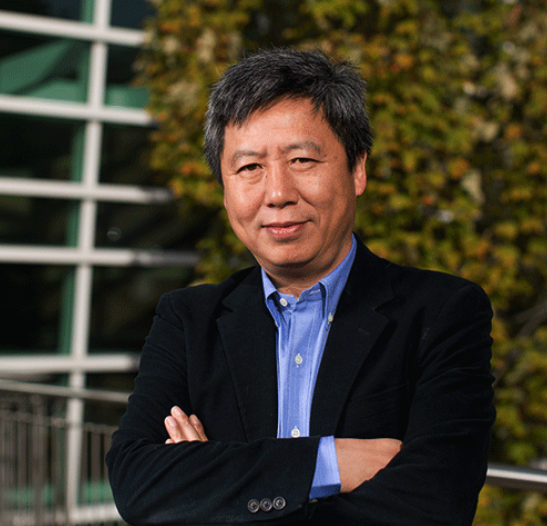
Yong Zhao, Distinguished Professor at the University of Kansas, challenges meritocracy as the organizing principle of education. He proposes the Human Interdependence Paradigm, which centers unique individual strengths, real-world problem-solving, and collaboration. The goal is learning environments that build social intelligence and a more equitable society.
transcript
Speaker 1 I think meritocracy emphasizes more of a very selfish idea that you become better than others. You beat others. You know, like, now in any school, we're always beating others. The top 15%, top 5%, everybody can beat top five if we redefine it. Everybody can be or should be, you know, the bottom five because it depends on the spectrum of merit you wanna measure.
Speaker 2 Hello, and welcome to the Human Restoration Project Podcast. My name is Nick Covington. Before we get started, I wanted to let you know that this episode is brought to you by our supporters, three of whom are David Nuffel, Darren Ushinowski, and Janet Clark. Thank you so much for your ongoing support. We're proud to have hosted hundreds of hours of incredible ad free conversations over years. So if you haven't yet, consider liking and leaving a review in your podcast app to help us reach more listeners. And of course, you can learn more about Human Restoration Project on our website, humanrestorationproject.org, and connect with us everywhere on social media. In a 2021 interview, Michael Sandel, author of the book, The Tyranny of Merit, argues that if merit can be understood as competence, a good thing to be clear, quote, the principle of meritocracy simply put says that if chances are equal, the winners deserve their winnings, end quote. But as we grapple with meritocracy or the systems built around that idea that those who get ahead are deserving, he says, quote, what makes merit a kind of tyranny is the way it attributes deservingness to the successful. End quote. And how are we supposed to understand the great problems of our time? The United States' incredible wealth and income disparities, child poverty, life expectancy gaps, infant mortality, student debt, or even incarceration rates through a lens of meritocracy. Sandell offers, quote, to rethink meritocracy requires, among other things, rethinking the mission and purpose of higher education, end quote. But what about educational inequality and the construction of affluent white suburban public schools as, quote, good schools, where the social and economic advantages of their proximity to wealth compound upward into greater property taxes, more funding, smaller class sizes, more course offerings, and higher test scores and higher graduation rates. That's a lens my guest today, Yong Zhao, distinguished professor of educational leadership and policy studies and educational psychology at the University of Kansas, wants to expand into redefining the purpose of k 12 education more broadly, from meritocracy to human interdependence. He's coauthored an open access piece for the ECNU Review of Education by that name that you can search yourself or find in the show notes, and it's the focus of our conversation today. They write, quote, meritocracy's focus on ranking individuals according to flawed metrics fosters unhealthy competition, overlooks diverse human talents, fails to account for unequal starting points, and ultimately hinders both individual fulfillment and societal progress. We propose an alternative framework, the human interdependence paradigm, which emphasizes cultivating unique individual greatness, realizing it through applying it to solve meaningful real world problems for others, and fostering a sense of purpose and mutual reliance. The human interdependence paradigm for education aims to create learning environments that promote collaboration, social intelligence, and ultimately a more equitable and flourishing society, end quote. And you can email professor Zhao @yongzhao.uoatgmail.com. It had been so long since we talked for the podcast last. I went and looked at the podcast thing. It was February 2020, which I know. My god. Five years. You know? Yeah. Oh, yeah. And, like, a microsecond pre COVID too. Right? So Yeah. Yeah. If we think about everything, the world has shifted since then. And then Well, we have shifted. Right? You have shifted. I mean, look.
Speaker 1 This last five years, it's it's great change for you. You know?
Speaker 2 Oh, it's it's yeah. It is wild to think, like, just where, I mean, this work was at. And then Yeah. Now to, I guess, put front and center the language that you guys use in the piece. I've got it printed off here with all my notes on it. Yeah. Moving from meritocracy to human interdependence redefining the purpose of education. I mean, I saw the title. I was like, I have to, you know, reach out and pick Young's brain about what influenced this and where did you, and your co author take But I'm wondering for the audience's sake, I mean, five years have passed since that past conversation if we're going through the HRP archives. Like, we talked a bit about how we've changed here at the organization, but what have you been up to? What what have you seen in those trends in your travels to Slovenia and and beyond in the last five years, you know?
Speaker 1 Well, I mean, I think over the last five years, you know, COVID was definitely, you know, significant. But the second significant was probably the emergence of generative AI and the widespread, I think. And, of course, with the the wars, human conflicts have increased, political division, you you see, society has become completely disrupted. And and, also, you know, if you remember before COVID, before 2020, the human society was very different than today. And I I would have said today, see a lot more anxiety. You see a lot more depression. You see a lot less hope. You see a lot more, you know, economic downturns, upturns. I I think you see all this disruption. I I think at the same time, you look at the schools. There's also general recognition of the lack of success of traditional school reforms. And, you know, if you look at test scores have not gone up. Achievement gap has not been closed. As I kind of predicted almost ten years ago, you won't be able to close. And, also, you you see the rise in, actually, achievement gap is is increasing. And you you also see the rise in inequity among humanity. Right? You know, the family income, you know, that's a big problem. And division of, you know, the wealthier gets well, you know, the wealth gets wealthier, the poor get poorer, the disappearance of the middle class. So a lot of those things really have, I think, shaped education. You know, unfortunately, right now, I think schools are at a loss many many times because they have to be subject to the increased control of of governments, you know, through standardized testing. That, unfortunately, has really settled in schools. You know, if you go anywhere talking about school change, everybody references the state tests. And it's and, Nick, you know, it's quite interesting to watch that. You know, the education reforms over the last three decades has always been about what I would call centralized decentralization. You know, we centralize testing, centralize accountability, the way allow every school to have their own power to decentralize to do whatever they have to do, which is really sad. Because if you control testing, you're basically driving schools to do that. And no matter how decentralized you are, you are in essence centralized to commit to one common goal, and that does not work in age of AI. So, anyway, the the article you you are referencing to, you know, from meritocracy to human interdependence, is really to point out the obvious that a traditional education paradigm, which everybody seemed to have accepted, you know, is about meritocracy, is about human competition in a very narrow field without accepting that people have different talents, different interests, different context, different family backgrounds. And that is actually what education's ultimate problem we have to solve is because AI is also recreating a world. If we want a better world, we want better future creators. That's our students today.
Speaker 2 You pointed out so much tension in the system just through that phrase, the centralized decentralization. It's almost set up so that way schools can't ever change, so then they'll get docked in the standardized tests. And yet, they're given the freedom to, you know, change if they should so choose, but there's a ton of counterintuitive, I don't know, nonsense in there along the way. And and what I see you pointing to here is maybe that the meritocracy or as you call it and define it, as you call it out in that piece expressed in education systems as sort of the root both of the tension and of the negative side effects. I guess, how how have you seen meritocracy directly related to, you know, these negative trends that you see. Right? Both with declining test scores, increasing anxieties, gaps, all of those things. How in your mind is meritocracy like at the root of those?
Speaker 1 Well, I mean, if you think historically from Plato, the philosopher king in the West to Confucius in the Chinese way says the best educated go serve the government. In education practically has practiced sorting students for a long time. And, of course, you know, you don't have to care so much about, you know, like, 2,000 ago or three even three hundred years ago. Because at that time, only the wealthy, the privileged could have access to education. And emperor's kings, they were sorting people into those leadership positions, so they used to train the governor and the governed in that sense. But the modern education followed the same idea, you know, in essence, that is trying to say, okay, Some people deserve to go to better schools because they have merit or they have more merit than others. So the high score, you know, students who perform well, academic gonna get go to Harvard, MIT, Stanford, Princeton, you know, and the others go to community college as a graduate from high school. And then we redistribute resources that way. And but so that's why, you know, in the nineteen fifties, Michael Young wrote the book The Rise of Meritocracy to criticize meritocracy. And he was actually right as a satire, but unfortunately and the rich, the privileged have been accepted that to say that, you know, we have merit. We deserve to be in better positions. We the merit is defined, right, as intelligence plus effort as if that has nothing to do with the family background, with the community. And so this is a very unfortunate thing. So meritocracy was a bad idea but has been embraced. So today, even the poor people accept that. You know, I'm not good at school, therefore I don't deserve. So when you think about test scores, in essence, it's a reflection of the traditionally defined merit. You know, it's that your your math, your rating, your social studies, your science without counting other things. That's why, you know, one of the things I said, the achievement gap can never be closed because you are measuring achievement based on a few subjects and which favored the more privileged than the immigrants, than the disadvantaged, than the people who are in remote areas. You know, we we did not think about that. So now with standardized testing, if you look at test scores, we're always punishing the disadvantaged. I mean, still very much today, test scores is a reflection of your family background than anything else. So this is why I think now with the the widely accepted meritocracy, we continue to sort people in that way. But, again, with technology, with this modern society development, we don't need to do that. If you look at how many YouTubers have become wealthy, if you look at Instagram, I'm I'm I'm not basically I'm not necessarily endorsing any of this, or I'm just pointing out the useless can be useful. So why would a school stick to the idea of sorting people and pushing people into competition rather than focus on developing individual uniqueness, individual talents, individual passions so they can work to support each other. And another big part in in in the article, I mean, our thinking is also about, you know, your value has to be realized through creating value for others. You know, like, you guys doing the HRP, you're in essence creating value for a lot of people, for the community, for students, for teachers. And when you create value, you have value. I think meritocracy emphasizes more of a very selfish idea that you become better than others. You beat others. You know, like, now in school, you you know this. We're always beating others. The top 15%, top 5%. Everybody can beat top five if we redefine it. Everybody can be or should be, you know, the bottom five because it depends on the spectrum of merit you wanna measure.
Speaker 2 Yeah. In any kind of league table, all other things being equal, someone has to be first and someone has to be last. There there's no way to avoid that. And and things that people think, oh, yeah. You know, you you have you
Speaker 1 have merit because you have intelligence. You work hard. That's not true. You know, most a lot of the so called merits do not necessarily come from so called, you know, intelligence or work hard. A lot of people work hard. A lot of people are smart. They don't never get the chance to do that.
Speaker 2 One note that I wrote in the printed off version of the article that I that I read and took notes on was ringing through my head that old quote from Stephen j Gould. I'm I'm probably paraphrasing, but he says something to the extent of I'm less interested in the folds of Einstein's brain, right, as an appeal to that that IQ part as the people of equal talent that have lived and died in cotton fields and sweatshops. Right? Changing that yeah. Changing that vision of from the ranking and sorting lens of meritocracy, which I I see being as twofold. You know, it not only keeps us trapped in like a scarcity mindset. Yep. You you know, we're we're always only allocating or rationing a scarce resource, whether that's college admissions or school finance or any of those other things based on these particular outcomes. But then the scarcity mindset becomes self justifying of meritocracy. And I think Yeah. You get trapped in, this negative spiral, right, where you say, oh, the only way to do x is y and the only way to do y is x and you can never break out of this paradigm. And I I guess what I'm asking for you, Yong, is how do we transcend, you know, the the meritocratic paradigm, I don't know, in both in school and society? Do we need to do one or the other? Or how do you see those things intertwined?
Speaker 1 Well, Nick, I think the first thing is, you know, through conversations like this with you, we I hope, you know, we will be able to spread the idea that meritocracy is a false statement. You know, it doesn't really exist because that that that's something people have accepted as a fair way to judge people, as a way to justify that your kids are doing better than my kids or my kids are doing better than yours. I think that's first need to do is to say the the fallacy behind the concept, you know, meritocracy. I think that's the first thing we need to to deal with, you know, we need to confront that idea that's been so well embedded in our culture. We need to rethink about that. The second thing, I think, schools or, actually, our human society needs to really embrace the idea that human beings are diverse and that diversity matters, that diversity means everybody has a jagged profile of talents. That no matter what you do, no matter where you are, you can be on, we call, top in some way. So you are great in some every student is truly talented. And I I recently wrote an article several years ago. It said the rise of the useless. Because we have arrived at a time, if you can create value, psychological, physical, whatever value you can create for others, you can become valuable. But our schools have not accepted that. You know, I think our schools are still stuck with the idea of merit. You know, whatever the school subjects are, we think there's merit, you know, in that regard. So we need to change that. And the third thing is schools need to change curriculum. You know, if we want to help everybody to become best in their own way, we have to create opportunities for everyone to become best in their own way. You know, many years ago, I joked about it. I said, no. I wanna go sue school district. Why do they force my child to learn math, but my child only wants to learn music? I mean, that that why can't you create opportunities? You know? So so I think that's something the curriculum shifting. And, of course, you have to move towards assessment. You know? If you we need to rethink about assessing individuals instead of comparing them to a group. I think you you mentioned Steven J. Good, who's really talk a lot about human the human instinct to rank people. That's why standardized test came about. You know? We really want to rank people. And, you know, which we don't really need to, but but, you know, actually, I was thinking about this. You know, ranking is so pervasive. Like like, you take your child, your baby to a pediatrician. You wanna know height. My child is, like, 95%. But what if your child is a bottom 3%? What are you gonna do? I mean, really, but but but what what are you gonna do? Somehow we think height matters. I mean, so so I I think all of this, we need to change assessment because in the age of AI, we need to complete and reimagine the idea. You know, they are I I just actually, yesterday, I just had a new book published. We can talk about this book next time. It's called fixing the past or inventing the future. So this is you know, you let me actually send this to you. So it's it's really talk a lot about in the age of AI, we need to complete and rethink. You know, like John Dewey always talk about education, recreate the society. If we want a different society, we need to recreate education.
Speaker 2 Oh, yeah. Again, another note. I wrote on this. I was like, I wrote like John Dewey. Right? Because that's what it made me think of. And I worry, you know, that this reimagining towards human interdependence sounds very Dewey. And Dewey in his own time, right, was criticized for not necessarily having the the practical to match up with the his his sort of idealistic or the pragmatism that he was talking about at the time. And this is where I think I so appreciate your perspective, Young, just being international, being global, having traveled and seen so many educational contexts as you have. Where or from what context or classroom practices or systemic education models have you seen that, in your mind, have shifted us closer to this ideal model of human interdependence as you envision it? Well, we we I've been experimenting
Speaker 1 programs in China, in Australia, in some US schools, in different influence. Some work in Canada, in Argentina, different places. I think the program I've been running in China with actually my coauthor, Roger and Zhang, It's called ICEE, innovation, creativity, entrepreneurship education, which really has three basic principles. One, personalization of learning. It's not personalized learning. It's really personalization. Make learning personalizable so you give students agency. You give them autonomy so they can exercise self determination to decide what's worth learning instead of trying to prescribe him what's worth learning. And in the age of AI, that's completely possible. Number two is we call problem orientation that we want all teaching starts by asking students to find problems and solve problems. You know, learning to find problems, learning to solve problem is probably the most important skill that we all need in the age of AI is asking the right questions, but schools don't teach that. Then the third one is human interdependence, which is about you finding and solving problems for others. Finding so you sure care. So this is actually interesting because schools teach kids to become selfish. We know everybody's self interested. Selfish means you won't gain your best interest right now, but self interest is really you you will gain what you need by offering something to others. That's much more rational. That's much more, you know, farsighted. So that's the you know, so we've been running this experiment for eight years. We use AI. We also run a summer camp in China to encourage students to highlight the three possibilities. And there are many schools do this, but I don't I have not seen many schools' education paradigms trying to emphasize human interdependence to say, you create value for others. Like, we we have a theme we call explore me through we or understand me through we. If you wanna know yourself, you have to be known in the context of others. You know, like Nick, you cannot be Nick without others. You just well, I don't know what he would do. You know? Just it's your your existence is defined by others.
Speaker 2 There is so much on the spectrum from radical individualism or maybe the rugged individualism that held up as an American ideal and some radical form of collectivism on the other side. We need to learn to ride the the interdependence between these two things, seeing the individual in light of the whole and the whole in the light of the individual. One Even individualism.
Speaker 1 Right? I mean, individualism are self destructive. You know? Right? I mean, so you want even individualism to rise, you know, for the benefit of individuals. Right? I mean, some individualism are completely self destructive if you're so selfish, you know, without thinking about others. So I think our education is really trying to think about how to recreate a potential society where we would not to say, I am better than you. You will say, I'm better than you in some areas, and my betterness is to help you, and your betterness to help me. I think that's the big shift.
Speaker 2 A nation of rugged individuals or, you know, if we're all just independent contractors out here seeking our own zero sum benefit to everybody else is not a society at all. It's just different warring fiefdoms.
Speaker 1 It won't work. I mean, either if you look at our society today Yeah. I I mean, globally. I don't mean even the America. Not many countries don't, you know, now are accepted from political or cultural division. I think right now if you look at The US and other places, we basically have come to a place of, you know, unsustainable. Our societies, if you look at the the income divide, if you look at how the culture, religious, and everything division, division is not what human beings need. Now human beings must find a fund fundamental, economical, and cultural way to exchange your strength with other people's strength. How do we create value for you? So education has to advance more in that direction. But, again, to do so, we need to change our curriculum. We need to be more personalized.
Speaker 2 One interesting way that we're trying to address this with the schools and teachers that we work with is, you know, so much of our attention gets focused on shifting assessment practices away from, say, a a test and move on or a test and forget model towards one where you're curating portfolio artifacts and reflections. And an instructional model that matches it by trying to move away from, say, a prescripted curriculum, you know, that's moving at a certain pace and scope and sequence where you're accumulating that knowledge over the course of the year in theory towards one that is more open ended or project based, problem based, place based, all these based education models. And the other thing going alongside this that frankly we've run into as one of the biggest mindset shifts in the system is really from a model of, like, classroom management, which again, up up implies that there's some sort of hierarchical structure that the teachers are managing the kids to one that we've called community resilience and stewardship, which really we think flips the model away from this idea that, again, who takes care of us? Right? Will we take care of us? Not the teacher doles out punishments and rewards and everything like the like a BF Skinner in his laboratory or something to all of us lab rats in our desks, but one in which we contribute positively to the culture. And when one of us is harmed or ill or falling behind, it makes all of us less well. And so we need to wrap our arms and support around that person, not necessarily view it as a deficit and say, oh, this is my chance to finally get ahead of that person now that they've taken a sick day or something. But those are where I've kind of seen those three shifts happening. Right? Instruction and assessment, but also in this classroom management piece. I'm I'm curious how you see that too. That's very powerful because in our model,
Speaker 1 when we work with students, we always ask them if they are in a state not they come come from different countries, you know, for the summer camp. You know, they can be once they're in a dorm, they the first thing they have to do is negotiate a contract with each other. When they're in a classroom, they always negotiate a contract, and they revise that because everybody has to learn to manage themselves. Everybody has to learn to contribute to the community because, again, that contribution is not altruistic. That contribution is self interested because you want a better environment. What would you do? You know, what would you and you also have to say it has to be agreed upon. You know, like, when this summer in Beijing, we had students from Australia, from Hong Kong, from different cities in China, about 200 of them. You know, in a storm at night, some students began to order food. Because in China, delivery, like DoorDash kind of things, go fast. And then that actually puts pressure on other students because now, you know, you can have extra food. You can invite others to join your food. Some students may not have the money, they may not wanna do it. So the summer camp decided, okay, we should ban this. But the next day, we banned, and then we had a big meeting with everybody to discuss this, to say, what do you think? What should we do? You know, we also have safety reasons. If you go out at night to pick up your food, you know, there's 12 to 18 year olds. I mean, in the end, every different dorm has their own plan. And, you know, adults also have a role too because, you know, we have supervisors and, well, if you drag us into this that night, is that fair? So it's a very longer conversation about who we are, what we want, when do we sacrifice personal things, when do you actually enhance the community, what's better. I mean, that's I think a lot of times, schools don't involve students making those decisions because they may not even be aware of all the implications, the possibilities. Once you become aware, you know, you might be different. So I I like what you said about your classroom management.
Speaker 2 And I'm not even sure which one enables which. Right? It's just as we've been working in this, with schools to ask the questions like, why aren't these shifts in assessment and instruction really, right, taking root or what's sort of the barrier there? The thing that we landed on was like, woah. We have to change our whole perspective of the this interaction and why we're here and why we're doing this. Like, what's really the purpose? Well, I mean, I think, you know, Nick, another thing I've you know, you're asking about what I learned,
Speaker 1 you know, over the years. Another thing is is politics and money. Politics and finance, I think, play a very big role. It's not only about good educational ideas, it's about good political ideas. You know, because politics or politicians want votes. So, you know, like, right now, for example, in The US, a lot of lot of legislate latest, you know, state houses are debating about the science of reading or I mean, America has been overread for a long time. You know, which as a most developed country, we're still debating about reading. It's ironic concept. Right? I mean, took I mean, really, why? It's a lot of money involved in reading. A lot of money involved. A lot of votes involved in reading. And that this is a lot of times so you and I can talk about great educational ideas, but we need to think about political ideas. You know, when would politic politicians come out to talk about human interdependence? You know, you might see some and there I think there will be a few politicians who would like to. They are talking about that, but not by any chance in the mainstream yet. But we need to think and talk about this.
Speaker 2 Yeah. There there's the idea of, you know, sowing seeds in fertile soil. We gotta you know, I don't know. I'm always grappling with this, Young. Like, is this a chicken and egg problem? Do we change the schools to change the society, or do you have to change society to change the schools? It's I think you need to change both. You need to treat them as both. And now you have eggs and chickens. You gotta deal with both. You know?
Speaker 1 You know, you gotta deal both. I would actually be interested to say, if you get your teachers in your Michigan schools and even students to read and paraphrase the article I wrote, how would they respond? What would they do? Because I think students are creative. I think teachers are creative. They're all innovative people. How are they going to react? I'm actually curious what they would create. I bet they will come up with good solutions.
Speaker 2 Oh, that would be so great. And and I'll I'll I'll let you in here too into the into one of the conversations we were having the other week with with schools there about, you know, how projects are going and everything else. And one of the teachers that we were working with, I'm not talking out of school or anything, so I think this is okay, had mentioned they're like, well, what if for the next one, for this next project, we let students, you know, ask these ask and answer these questions. If if the conclusion we're coming to is that, you know, kids might not be engaged or have a lot of buying with this adult designed project, maybe the solution is to have kids ask and answer them to generate engagement and buy in. And that was a solution that they came up with, you know, in their own regard, in their own right to this problem of perceived lack of motivation with the with the current project as it was. And it just wouldn't That's very smart. Teachers came up because in all our programs, we
Speaker 1 we we we never wanna impose questions on students. We want them to be the one to ask that. We want them you know, like project based learning's failure is imposing the projects on students. Because students, no matter what you think, if they are not interested, there's no interest, second motivation. So in our program, where I said personalization, problem orientation is that students have to be the one to pose questions to find problems and justify why it's worth solving, why it's, you know, it's, you know, it's valuable. So I think that's you know, your teachers came up with something great. I really believe teachers, when given their autonomy and opportunity, can do. And students come up with wonderful questions.
Speaker 2 And I'm thinking, Ben, about that what you said about chickens and eggs. We've got chickens and eggs, we gotta deal with it. And I'm thinking about the program that you were talking about situated there in China where I I mean, they're they have a high stakes, you know, college admissions situated in, you know, different ideals perhaps from an American lens of meritocracy, but they're there. That scarcity and meritocracy is there nonetheless. How do right. I'll I'll I'll flip the script and ask you then. How do students and the adults in the society in China perceive,
Speaker 1 you know, the way you're you're turning things upside down on it? You know, about eight, nine years ago, we we work with probably the best school is called Chongqing number eight secondary school in Chongqing. Chongqing is a city of, like, third 1,000,000 people. It's huge. And the school is really historically the number one test score school. You know? It's they they are really they got got over 20,000 students. And and then so but we we did not wanna change the entire school. So when they they approached us because they they see the problem with test taking. Their students may have great test scores, but they are not necessarily happy, not necessarily purposeful, not necessarily, you know, service driven, you know, all those. So we we said, well, we we wanna work with, your willing parents, willing students, willing teachers. So we we developed this school within a school model. We explained, and then they so they they they allowed us to pilot with a 120 students first. And then we changed a big part of the curriculum, a lot more personalization, problem finding, human interdependence development. Now they actually have spread this to several thousand students. And so we we started by actually, we do this a lot in different countries. We always do school within a school. And we had a school in Western Australia. They have been successful in transforming school within a school. So don't try to change everybody. You know, once Nikki reached certain age, I don't have time to convince everybody. You wanna start with those who are willing. And in education, no one model serves all parents or students. But, actually, that's another problem. You are public schools. You are the monopoly. Let's say you're in Muskegon. You're in monopoly, but you are serving one model, which will never be successful anyway, so you should always try to diversify offerings.
Speaker 2 Well, Young, if people wanted to learn more about the program that you're building in China around human interdependence or, you know, your your work abroad in addition to checking out. And I didn't know we were gonna get a get a new book out of this, Young, but fix the past or invent the future moving beyond one size fits all education. We will certainly follow-up for that conversation. But where can people find more about the work that you're doing on the ground? You know,
Speaker 1 the best way to promise to email me. I'm not very much into websites to promote certain things because I really believe every innovation starts with the school. So I would like to work with schools, support that. Mean, we've we've written this, you know, on my website. We have articles about it. And but, you know, actually, the the school principal just shared this with the digital promise event in Shanghai with educators from several countries. So just less lot of information. And, actually, you know, Nick, you and I might wanna talk about we could run a summer camp in The US like what we did in China. We've been running that for eight years in China. We're always from different countries. You know, Muskogee is actually quite cool, you know, Lake Michigan. So which we could chat about that. But, I mean, overall, I mean, they can just send me an email. I think it will be great. Yet, the book, Fixing the Past or Inventing the Future, has chapter about the school within a school reform model. And we are by the way, we have a center at the University of Kansas called called the Center for Reimagining Education, and we are working with schools in Kansas to do the similar kind of paradigm shifting changes in Kansas. And we wrote an article in CAPN, which might come out, you know, in a couple of months about this model.
Speaker 2 Oh, well, I'll have to keep an eye out for that, and then I'll put all the links to emails, websites, books, the University of Kansas, all of that in the show notes for folks. But, Yong Zhao, thank you so much for joining me today. Well, thank you, Nick. Let's keep in touch.
Speaker 3 Thank you again for listening to our podcast at Human Restoration Project. I hope this conversation leaves you inspired and ready to start making change. If you enjoyed listening, please consider leaving us a review on your favorite podcast player. Plus, find a whole host of free resources, writings, and other podcasts all for free on our website, humanrestorationproject.org. Thank you.
resources
- From Meritocracy to Human Interdependence: Redefining the Purpose of Education · Yong Zhao et al. (article) Open-access article in ECNU Review of Education proposing the Human Interdependence Paradigm. link →
- The Dark Side of Meritocracy · Noema Magazine (article) Examines how meritocracy harms individuals and society; recommended in episode show notes. link →
- The Tyranny of Merit · Michael Sandel (book) Argues that meritocracy attributes unearned deservingness to the successful and distorts higher education's mission.
- Yong Zhao (person) Foundation Distinguished Professor at University of Kansas; contact at yongzhao.uo@gmail.com for follow-up.
- Mitchell Institute for Health and Education Policy, Victoria University (organization) Australian institute where Zhao holds a professorial fellowship focused on health and education policy.