
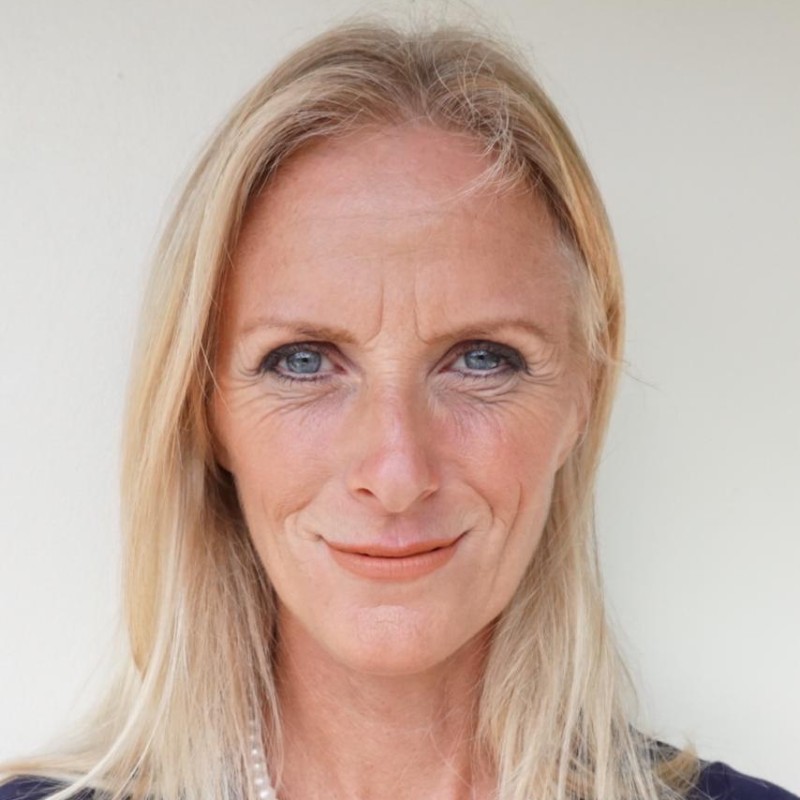
Kate McAllister, co-founder of The Human Hive and founder of The Hive in Cabrera, Dominican Republic, shares her journey as an educator committed to community-centered, self-determined learning. With over 20 years of teaching experience, she explores what education looks like when it is done with, not for, learners.
transcript
Speaker 1 I very quickly became fascinated in young people's learning journeys because I met so many other children that reminded me of me who were not finding it easy to learn. Having put those two things together, actually, I'm not stupid. There's something in the way of me being able to be good at this, and it's the same something that's in the way of them being able to be good at this. So what is in the way?
Speaker 2 Hello, and welcome to the Human Restoration Project Podcast. My name is Nick Covington. Before we get started, I wanted to let you know that this episode is brought to you by our supporters, three of whom are Julia Valenti, Dan Carney, and Sybil Priebe. Thank you so much for your ongoing support. We're proud to have hosted hundreds of hours of incredible ad free conversations over the years. And if you haven't yet, consider liking and leaving a review in your podcast app to help us reach more listeners. And of course, you can learn more about Human Restoration Project on our website, humanrestorationproject.org, and connect with us everywhere on social media. When I sat down with James Mannion to talk about the educational poly crisis back in July, his longtime colleague, friend, and collaborator, Kate McAllister, was right there by his side. After the recording, Kate and I spent a long time catching up about her work and its intersection with our own here at HRP. And we immediately vowed to remember to hit record the next time we chatted. Kate McAllister is both the cofounder of The Human Hive and the founder of The Hive in Cabrera, a school for changemakers in The Dominican Republic, where she joined me from for this conversation. Kate has over twenty years teaching experience and has spent much of that time training and developing teachers and educators all over the world. She's a passionate educator, published author, fellow of the Chartered College of Teachers, and the RSA. The Hive, founded back in 2020, was Kate's answer to the question what if? What if learning could be different? What if we did education with, not for, others? What if we can become more self determined in our learning? What if education can help regenerate the planet? And as you'll hear in this episode, Kate's personal and educational journey is a remarkable reflection dedication to the fully human messiness of growing and learning in community with others. But then again, on the flip side, I you know, the background, for him there in, in Southern UK was not as glamorous or or glorious as the palm trees that you're sitting behind. So I'm wondering who who really got the better end of the deal. Right? Says because my thing is self regulation. Right? Nervous system regulation. And he says, got so good at it that I regulated myself out of my old life and into this one. I mean, honestly, that's such a great, entree into the conversation situated, of course, you know, in in your context there. But, Kate, for, listeners who may not be familiar with yourself and the and the work that you do, who are you, and where are you joining us from and how in the world did you end up there? So I'm Kate McAllister.
Speaker 1 I'm English. I was I'm a mother. I have two children. I was a teacher for a long time in UK mainstream education, but my pathway into education wasn't standard. I wasn't a good student who'd always played schools and wanted to grow up being a teacher. That was not my story at all. I didn't do very well at school at all. I found it very difficult. And I you know, back in the eighties, if you found school difficult, it was generally speaking because you weren't very clever. So I just assumed that I wasn't very clever, and I left school at 15 with no qualifications, and I went and got a job. And I've that eventually took me to another country, and I met someone and I got married and unexpectedly had a child. So very quickly was unexpectedly not married anymore and had to figure out what I was going to do. So I came to the logical conclusion that I could speak French, and if I became a teacher, I could be a French teacher, and then I could spend more time with my child because it was just the two of us, and I could earn a sensible wage, have a good study job, and also get to spend three months a year with my son. So I went off to university where it was the first time that I discovered that actually I wasn't stupid. I just had a different way of seeing world. And I think if I were 12 years old now, I would probably have been given a diagnosis would have put me on a special educational needs register, and it would have got me support. But, anyway, all of that to say, I ended up as a teacher, and it turned out that I had a natural affinity for it, and I really enjoyed it. And I loved spending time with teenagers and tweenagers, kind of 11, 12, 13, that age. And I very quickly became fascinated in young people's learning journeys because I met so many other children that reminded me of me who were not finding it easy to learn. And having put those two things together, actually, I'm not stupid. There's something in the way of me being able to be good at this, and it's the same something that's in the way of them being able to be good at this. So what is in the way? And so that's what started my journey looking into not how teaching works, but how learning works or doesn't work, and why doesn't it work. And so that sort of led me along this spectrum from being a a French grammar teacher in a very traditional English secondary school to what I now call a barefoot unschool, and I'm in Dominican Republic. So it was a long journey, and it kind of went all the way along the spectrum from very traditional to as far as you could go alternative inside mainstream UK, and then kind of hopping out of the education system. And then about five or six years ago, hopping off of the map and into the void and discovering that there's a whole other world out there, and no dragons, and it's not scary, And the world of home education and alternative education is now where I'm finding my finding my groove.
Speaker 2 Right. I'm always fascinated in the stories of educators who were were angular to the system as students and then decide that, oh, that actually is a role that I want to inhabit. And those tend to be teachers that end up being angular to the system as teachers and pushing the envelope and finding a niche for themselves. I And wonder if you could speak to that at all. Obviously, you you ended up finding that life was gonna take you in a different direction, but how did you feel about that experience coming back into being a classroom teacher after having the experiences that you had as a student?
Speaker 1 I think I would I I have what I would now describe to other family as as school wounds. You know? Like, it it damaged me thinking that I wasn't clever and that I didn't fit and that I was always in the way. And I suppose, fortunately for me in the eighties, if you were an awkward student, you could just kind of not go to class and everybody was kind of grateful that you weren't there being awkward. So I missed a lot of school, like months, a year, really, in the middle. And so I didn't pass any exams. And so school for me was a just a massive flop and quite soul destroying. So when I went back in, I was really nervous of going back in. I kinda had this sense that it might it could be the same again for me, but I'd also had a really positive experience at university. So I'd got it was my first experience of having positive feedback from, my teachers, if you like. And so I kinda had these two sides going on. I was reliving my childhood experience, and I was also having an adult experience on top. So it gave me quite an interesting lens, you know, two different lenses to look at that experience through and to think about how my students were experiencing me as their teacher, how I would have experienced me as their teacher, and how I was filtering what I was being told to do through that filter of how it would then be experienced. And so I think I figured out quite quickly that part of my role was to block some of it. Like, it was my job to stop some of that rolling downhill, and and I felt very protective in my role as an educator.
Speaker 2 That was gonna be my follow-up, was just gonna be in what ways, right, did you find yourself intentionally, you know, blocking, or making room, or or anything else? Did it occur over a period of time, or was there an inciting incident that caused you to think, hey, this aspect of education is not how I envisioned
Speaker 1 living out my purpose in education, and then prompting the prompting the shift. So I yes. Really quickly. When I was a a newly qualified teacher that had my first experience in a big school, and it was a good school. Like, I'd I'd lucked out. I got put you know, like, I was at the top of the I got the best school to go to when you're training to be a teacher. And very early on, I was brought to my door out to the corridor. There was a teenager who's probably about 14 or 15, and he wanted to leave the corridor, and there were staff like, all I can say is kettling him. There were three at one end and two at the other, and they were moving towards him. And I could I could feel I could feel because gosh. It was like twenty it's twenty years ago, and I can still feel it now coming up in my body. The panic that was in his lad, or he just needed to run, and he wasn't being allowed to run. He wasn't being allowed to do what he what his body was telling him to do. And I remember thinking then, what is so important that is happening in this corridor that he has to stay when everything about him needs to leave? There has to be a better way to do this. Like, this can't be this can't be right. This can't be good for me, and that was years before I understood trauma and nervous systems and dysregulation and fight or flight or any of that, but I felt it. And and I remember thinking, need to be more aware. I need to be more sensitive. I need to understand what would make a teenager feel like they wanted I mean, he looked like he was gonna throw himself off the balcony to get away. And I know that sounds dramatic, but it really was like that. And and and so from there, that happened really early on in my career, right at the beginning. And I remember thinking that the child and their experience was more important than the school and the school's experience. And if I could figure out how to get those two sometimes conflicting objectives to line up, then the school could enjoy being a school and the child could enjoy being a child at school, you know, like it was naive, but I still believe that. I still am looking to try to make those two worlds collide in a way that means that we can that, you know, that they can both coexist in a healthy way.
Speaker 2 My goodness. It sounds like over the course of both your experience, right, figuring out both the way that these institutions are gonna work, either from the in inside perspective as a student or a teacher, or, you know, from an outsider perspective too. And you said that, like, this incident occurred before you really had an understanding of, trauma or perhaps internally what's what's going on in the mind of that student. It doesn't sound like a situation that was deescalating. It doesn't sound like a situation where that student was grounded, making rational decisions. Right? Probably would have been a healthier first step instead of, right, kettling them from across the corridor. But I wonder then what was there a formal aspect of this too then to give you the language to think like, oh, yeah. That's what was experiencing this. Were there other experiences or works or
Speaker 1 people ideas that you encountered that help inform that aspect of it? It came gradually over time. So then we sort of moved into Yeah. The Okay. Social and emotional aspects of learning language. It was the every child matters agenda in kind of the two thousands, and so there was a space for that. Then we'd look then we were talking about climate for learning, emotional intelligence. That was starting to get woven into education model in The UK. It was a new thing. And, of course, that lined up very nicely with how I naturally felt about children and learning and, you know, like that, oh, that fit really nicely. So I I took that and ran with it, and that's where I began to develop. I mean, the first thing that I developed was language awareness because I'm still only a languages teacher at this time. And so I had this understanding and that my colleague was, she'd been at a Steiner school, a Waldorf school. So she'd been alternatively educated her whole life. And so together, we designed we designed this language awareness program, which was about getting your ears ready and the muscles in your mouth ready and having a a concept of language and and just, like, getting ready for learning languages so that you were keen to do it and you felt safe doing it. I think now I realize that that was me underpinning or or the sort of foundations upon which safety is the foundation upon which everything else gets built. And so without having the language for it or really understanding what I was doing, I now understand that everything about what I did back then was about psychosocial safety. Do they feel safe with you in relationship with you? Do they feel safe in the space that they're in to become to put themselves into a situation where they feel vulnerable? Learning something new means that you sometimes have to feel silly or stupid or it's uncomfortable because you struggle. So, if you also feel vulnerable, you're not gonna put you're not gonna walk out onto that limb, right, and make yourself vulnerable. So everything was about creating a sense of safety in the classroom so that children could walk into learning, walk into the challenge of learning in relationship with you, and it made you feel safe. So everything kind of came from that point. And my colleague or my very good friend, James Mannion, who's doctor James Mannion, started out as a colleague, he and I developed a program sort of, you know, ten, fifteen years later that really brought that to life. So I was sort of gently putting pieces of that puzzle together, all of the time, and then and I still am. Right? I'm still including new things in, but I only really understood trauma and nervous system reggie regulation of the languaging for what to describe what I was doing afterwards. So it was only when I left mainstream education and I went to work in a refugee camp, which is a whole other story, and I worked with a trauma therapist, and I spent a year doing that. I went, oh, so everything that I was doing was about nervous system regulation and everything that I was picking up. And I had been drawing images, maps of how children are connected in this sort of connective web. And what I was drawing was the invisible vibration of all of their nervous systems interacting in a classroom environment. And so we used to call it climate for learning. And the the responsibility on on creating the climate for learning was on the teacher. And so the teacher had to get in early and set up their room properly and make the lighting and bring the food and and and be the thermostat, not just the thermometer in the room. All of that, like, you know and then after a few years of doing that, and I got quite good at it, I was exhausted. I was just so close to burnout. And I went, this is not this is not, sustainable. This is not we're going up the wrong path. If we're giving if we're making teachers responsible for everybody else's nervous system being regulated, which I now understand that's what I was doing, they they've got to co regulate thirty thirty different nervous systems and five like, a 150 different nervous systems a day. Right? One adult cannot co regulate effectively a 150 different nervous systems a day without burning out. It's not possible. So how do we get children to co regulate with one another to rely upon one another, to lean upon one another, to support one another, and fill in the gaps for one another so that we can all just, like so that we can all learn in a much more relaxed way. And so that's been that's really what my work is about now, is about being able to show people where those invisible connections are and make them visible and make that the foundation that learning goes on top of.
Speaker 2 And I think what we're learning more and more about now is that those practices, that understanding, those the structures that support what you're talking about here are actually key. They're like the forefront to preparing for learning, to creating psychological, intellectual, physical, emotional safety, to prepare for right? These aren't just like an add on that you can decide to do on the side. It's like a prerequisite for everything else that's to come. And what's so interesting is, you know, I pulled up the human hive, which is what I think we'll start to talk about next year, and just looking at or thinking about the experiences that you've just discussed, that journey that you've been on, and seeing all of that expressed through that work there. You've you lead on the website with these three values. We believe that real change happens when you super char supercharge the power of people to help themselves, giving them tools to rebuild psychological and emotional safety, connections to others to feel a sense of belonging, and then access to to meaningful opportunities to regain purpose. Those three things, safety, belonging, and purpose. Those don't feel optional to me in any learning environment. How do those inform the work that you do at the human hive, and what's what's that about?
Speaker 1 So the Human Hive came about so I was a teacher for a long time, did all this work inside the system, got stuck banging my head against the wall, couldn't get my ideas any further, and so I I left. And at that time, there was something happening in Europe. There was a huge influx of people coming into France from countries like Syria, Afghanistan, Iran, Sudan, Eritrea. It was just like the it was a whole the world was on fire and everybody was coming our way. And so I found myself at a point where I was watching watching TV, right, and and I was seeing it happening, and I had been sending clothes for years. And I heard myself say out loud, why? This has been going on for years. Why isn't anyone doing anything about this? And I and it you know, that light bulb moment, it dawned on me. Well, I'm someone. What am I doing? I'm just like sending clothes. That's not enough. You could do more. What could you do? I was like, well, they're stuck in France. I speak French. I've got time on my hands. They're mostly teenagers. I'm quite good with teenagers. Maybe I could go and see if I can be helpful. So that's what I ended up doing and that's where I met Darren Abrahams, and he's a trauma therapist. And so together, we formed what became the human hive because we got there and there were lots of peep loads of like, it was really just the best place and the worst place I've ever been in my whole life. The conditions were inhumane and awful, and the but the the beauty of the human spirit just shone through every day. And and so we realized there were lots of people who wanted to volunteer, and they just didn't know how. There was, like, just like this headless chicken, really compassionate headless chicken thing going on. And so together, we we we put our skills and our knowledge and all of our sort of, you know, collective experience together. And we formed the human hive, and we started by training volunteers in this human centered practice, how you support people without, dehumanizing them. How do you support them to feel human again and to be able to support themselves in an experience which is so disempowering and so dehumanizing. And and that's where it started. So that's where the framework was born. I was sitting in a cafe, and I saw it, and I drew it, and it and I kept trying the model out again and again. I was like, oh, I think this keeps working. So that's still the same framework that we developed then. And so the human hive now supports anybody who wants to take action to make the world a better place, whether that's in schools, at work. We've worked with police teams. We've worked with social workers, parents, volunteers. We did a an online course with Cambridge University called volunteering with refugees. It's a free well, it was free when we made it. I think something like 15,000 volunteers who now support refugees with language development have taken our course. So it's just it's that thing. Right? I was staring at the television going, why isn't somebody doing something about that? I'm not the right person. The right people should be helping. Everyone is the right person. That's what the human hive is for. Everyone is the right person and with a little bit of training and support, you can find a way to connect with other human beings and it doesn't matter what you do in that space. It just matters how you do it. And so that's that's what we do. That's what we train people to do. So whether you're doing needlework or cookery or building websites, it doesn't matter what you do together. It's about being alongside somebody, co regulating with them, creating these conditions for psychological safety to grow, giving them the opportunity to feel that they belong and can rehumanize, and then supporting them in finding a purpose which allows them to ground and root and become who they were always supposed to be before their lives got turned upside down. And so that doesn't just apply, obviously, to people living the refugee experience. That's every human being on the planet. Right? Sometimes life is ticking along and everything's fine, and sometimes a crisis just comes in from nowhere. You lose a family member. You lose a job. There's a hurricane. It doesn't matter what it is, but your whole world falls apart. And so being able to rebuild from there is really important, and being able to support other people to rebuild from there is really important. And so that's that's what the human hive does. We support people who want to get better at doing that.
Speaker 2 And I can't imagine a more urgent need, especially in this moment. Right? There I think people around the world feel particularly helpless and disheartened by what they see, and they think I wish someone could do something about that. And having a tool, an organization, somebody else just to connect with to talk about these and to activate and help build that capacity. So, right, it's not just all heat, right, built up inside you, but then you can turn that into light somewhere out in the world. I just love the framing on here on the website of people, place, and planet asking how can you help regenerate those around you? How can you take action to regenerate your community? How can you take wider acts to regenerate the earth? Like, again, it's all focused on this collaboration, this regeneration, this restoration of so many parts of life. I could you speak to, like, a particular project that either people who've gone through your program have engaged with or you've engaged with yourself that you found, again, particularly empowering either for you or the participants or had a impact that you felt was particularly powerful?
Speaker 1 So one one person springs to mind. So a young man called Elliot first came to volunteer with us in around Calais time, 2016, 2017. He took our training. He was just coming out of school, not sure what he wanted to do in the world, but he knew that he wanted to be helpful and and do something meaningful. So he he took our training and he did some volunteer work with us in The UK, And then he came out to stay at the hive in Dominican Republic with me, and he did another training and became did some education work, started working with children. And there, he really developed his passion for permaculture. And so he was helping us with the garden here, and it became his real passion. He's now gone back to United Kingdom and developed a whole program for introducing permaculture into schools. So he's now got his own organization that supports children to reconnect through permaculture so that they can stay in mainstream school and have a way to be successful inside the system, and continue learning. So he took he came as a teenager, grew into a man, and has now got a whole thing going that's paying that forward to the next generation of children who are gonna grow up and have a passion. And so him being able to become a change maker is the language that we use. Right? Whatever you want to do in the world that you feel, alright, I can do that. Right? You notice something that's not working and you think, I can fix that. I can contribute towards that being better. He's really a poster boy for us, and we're still friends, and it's lovely. And he's just asked me for a reference for a job with a university. So he's he's really turning it into something big, which is fabulous.
Speaker 2 So that idea of change making is not just for educators or people looking to get into education, although that is certainly the story of that young man, but change making for communities, you have a section for the arts as well for individuals, students, businesses. Can anybody then just become a change maker kind of learning and connecting to your program and the processes?
Speaker 1 Yeah. Absolutely. That there's a a woman who's just been in, and she it's got nothing to do with education at all. She's in the healing arts, and she's done the training, and it has changed the way that she interacts with her prospective clients. So she had, she learned that her enthusiasm for what she did, her passion for what she did was so strongly energetic that it could be, like, that her the people that she wanted to work with could sometimes be pushed backwards by it. And so her understanding of nervous system co regulation and how to deal with people has had a huge impact on now who she can work with, and that's got nothing to do with teaching. She's just found it has had a big impact on how she connects with her her own children and how she connects with her clients in her business.
Speaker 2 And honestly, I mean, kind of remarkable that the things that we've been talking about this whole time just are, like, aren't front and center in any formal education. Right? You're talking about somebody who probably was was well educated, right, and had those experiences and perhaps at a point in that formal education was never made explicit. Again, that grounding understanding yourself in relation, right, weighing those that co regulation, those relationships. And it seems like maybe that was the missing piece, right, to really help her connect not just in her professional life, but, you know, person to person as they engage in that work too. I'm I'm wondering, Kate, learn this stuff. No. We don't learn this stuff. Yeah. Yeah. Story to interject.
Speaker 1 And often often your life has to completely fall apart, and if you're lucky and you've got enough money, you can go into therapy and you might learn some of this stuff. Right? Or if you can afford a business coach, you might learn some of this stuff. And so there's a whole swathe of humanity who are feeling that they are just the way that they are and the world works the way that it works, and they have no agency to change their human experience. And I think that's where it it all comes back to that for me, this the the sense of feeling that if something is not sitting well with you, if it is not making you feel comfortable and content, that you have the power to change it. You have the power to change how you feel in your mind, how you feel inside your body, and that ripples out into, I can change the dynamics in my friendship group. I can change the dynamics in my family, in my work, in in just every aspect of my life. I have the power to make change if I want to. And, yeah, that's that's I guess that's at the core of all of it.
Speaker 2 Yeah. And and again, that's not that's not like woo woo or that's not metaphysical or supernatural. There's not an appeal to that. Like, that's just human stuff. And, yeah, it's it's not made a focus of, you know, that that formal education, so people can get through all of that and realize that those are really the missing pieces that they didn't pick up along the way. Now I'm wondering, Kate, like, even in, the best classroom context, right, that I'm thinking that I that I taught in, you know, the best day was not necessarily all sunshine and rainbows. What are some of the significant challenges, you know, that you all have to overcome there? What are the what are the hurdles that you face in engaging in, like, this real, frank, honest human stuff?
Speaker 1 I think, like, the key issue is nearly always that that we are responsible. Right? So this is hard. This is the hardest bit. So we are responsible for the vibrations that are coming towards us that we allow to dysregulate us, and we are responsible for the vibration that we're pushing out towards everybody else. Right? So when you find yourself in a situation that feels uncomfortable, there was probably an opportunity somewhere further back that you did not take that could have changed where you are. So if so that's the hardest thing when I'm teaching people about this model is the resistance and the unwillingness to accept that if you have the power to change everything, they go, yeah. Yeah. Like the way that feels. Like, the things that haven't changed in your life, they're on you as well. Right? Like, that's that's that's where it's sometimes tricky.
Speaker 2 Yeah. The mantra, you know, if you can't change the world, change yourself. And that's I don't think that's a call to just be comfortable with injustice or be, you know, become comfortable with the status quo. But, right, it's a call, I think, to then direct your energies in an action that could eventually be productive and make you know, lead to a better regulated feeling for yourself and then feeling like you have agency and you do have some sort of control over the world. And again, as we were saying earlier, I think things like this are urgent in this time especially and something that I've personally grappled with with that notion of, like, what's within my locus of control right now? Right? In a world that's on fire, you know, or, you know, your your social media feed is is is burning through with all the bad news constantly every day. Like, what can I change about either myself or my behavior or, you know, my environment and my ecosystem that, yes, right, helps me feel grounded and regulated, but then lets that be a platform for action for me later on at the small scale? Right? The small is all sort of idea. If I can be if I can be good to myself, right, and understand how I'm doing, then I can be a good parent for my kids. Right? And that has that has impact as they go to school, and they can be, you know, role models or good friends and peers. Right? They can be stewards of their environment in those in those small little ways trickle, you know, outwards. I guess I'm trying to justify it or or rationalize it, right, as people I think people overlook it. Right? They want action, action, action, and sometimes the first step is actually, no. Stop. Understand, you know, yourself. It could be trauma. It could be triggers. It could be your own barriers to getting through those, but ultimately, working through that is like an investment in the action that you're gonna take later on.
Speaker 1 I don't know. I'm just vibing, but do you what are your thoughts on that? No. I I agree with you because when you when you I mean, this isn't like an expression of of educators. All behavior is communication. Right? But that's it's true. So when you understand that, when you think about your own behavior from a nervous system, when you stop right right at the court and they go, my behavior is driven by my feelings. My feelings are driven by some kind of stimuli. Well, that means everybody else's are too. Right? So if somebody's a jerk to you in the street, that's probably there was a stimuli further back. There was a big feeling that they've not been able to deal with, so they're being a jerk. Now, you now have the that's the stimuli to you. Someone's been a jerk to me. It's created a big feeling. I wanna tell them what a jerk they are. And actually, what you can do is respond with compassionate curiosity. I wonder why that person is being such a jerk. And if you just assume that people do not wish to be a jerk all day, right, like their loved ones know that there's a version of them that isn't a jerk, I just assume that that person is in there somewhere and that they're having a bad day. And so understanding nervous system disregulation allows me to be more human in how I go through the world. Right? It just allows me to be a bit more compassionate, and that's just a bit of knowledge. Just because I have an extra bit of knowledge, it changes the way that I behave in the world. And so that changes the way the people around me behave, and it and it goes out. So I deliberately try to smile more. I deliberately try to slow myself down. I deliberately try to do things that will not dysregulate somebody further who's already having a bad day. You know, I just have a little extra awareness, and that doesn't mean that I don't lose my temper. It doesn't mean that I don't get triggered when somebody cuts me up in traffic. But I have learned that when I do that, I can go back and repair. All of that's part of it. So I think once people have that awareness, it stops feeling personal. It's like, kind of wasn't me. It was my nervous system. I'm responsible for regulating my nervous system and not letting it get out of its box, right, and just run rampant in in public. And when that happens, I go back and fix it.
Speaker 2 Yeah. I think as we had talked about, off camera post James, you know, the the Manion podcast there was like that pause. Right? Just that pause that allows that shift in in mentality from, you know, the reactive nervous system brain. Like, you touch a hot stove, it you don't have to sit there for five seconds and think about a rational response. Right? Your body acts. And I think a lot of times, people let that action, you know, or that reaction guide actions and their intentions and only reflect on it later on as like, oh, shoot. You know, like, I overreacted or I had the wrong action in that moment, and then and then feel awkward or ashamed or anything else. And something as easy as that pause, you know, to help understand that sensation of what you're feeling, can help lead to, I don't know, I guess, better intentional actions. And really, it sounds like what we're talking about is just understanding yourself as a human being and how we're all gonna deal with those emotions on a daily basis. We're gonna get angry. We're gonna be frustrated and sad. We're gonna, you know, be elated and happy. How do we not let all those vibes out to the world to, you know, perhaps trigger or, you know, set off other folks sometimes? But understanding yourself as a messy, complicated human being is like the first step towards understanding others and empathizing with them and humanizing them in whatever context of of difference or, you know, language barriers or, you know, they're just, different interaction speeds. Sorry. I'm processing I'm I'm do I have to pay for this therapy session, Kate? Is this No. No. No. It's fine. I'll Venmo you $50.
Speaker 1 But it it seems so simple, doesn't it? Like It does. That's what I'm saying. I'm sitting here talking to you and thinking, you've not got much to say, Kate. Like, this is not that interesting. And then I think about all the people that I meet all the people that I meet in their adult life, and then and they do this training, and they go, oh, like, it's like, what? Really? Like, if I just woke up in the morning and journaled, if I just took a breath, if I just checked in with myself regularly to notice when my, like, nervous system was getting close to the, could have a completely different life. And you're like, yeah. You could. You know, like every time you got fired or this happened or that happened or actually there's a pattern in your life that you have the power to disrupt, and here are some tools that you can use to disrupt those patterns.
Speaker 2 It's both very empowering and intimidating, you know, to know that I have or I have had that ability in myself and that need for so long, and perhaps it's gone unaddressed. And yet, yeah, maybe there is, you know, like, some shame and baggage associated with that. But, really, I think the the thing that keeps popping into my mind is, like, that's the missing link. Right? That's sort of the key that unlocks the success of so many other human endeavors, not just in education, but in any anything that involves interpersonal relations. And I can't right now think of something that doesn't unless you're, you know, just sitting in front of a computer all day, not interacting with human beings. But for for the rest of us, we're gonna have to figure out how to how to interact. Kate, I I really wanna know We are getting closer to to that being a future.
Speaker 1 Right? If we don't learn how to interact with each other as humans, at the moment, we have to. Right? So we have to push ourselves through the cheese grater of life and keep having uncomfortable experiences with other humans. But it won't be long before we don't have to do that. So if we don't learn how to get good at it, we can choose not to do it. And I'm not sure that that's a great pathway for for growing up and feeling good about yourself. I mean, I could be wrong, but it doesn't feel like it's gonna go well. And so when I started doing this work, I was thinking about playground fights and wars and what they have in common. Right? That's that's what happened in my head. I was like, this is the same stuff that's playing out in the playground that has sent all of these teenagers to walk across the world, and some of them perish on that journey. Like, there has to be a way of teaching children how to manage their big feelings so they don't get out of hand. Right? That's what started it, and I didn't know that AI was coming back then. I had no concept of it. But now, suddenly, it feels it feels like this is a really important piece that needs to go in so that as children are growing up into this new world, they can they can feel their buttons being pressed. Right? It's all that is. Your nervous system is pressing buttons, and it's moving the levers, and it's making decisions for you if you don't notice. If you notice, you have the opportunity to go, no. Not not that lever. I don't need to do that right now. No. I'm gonna employ this one instead. Right? So you can notice when your outrage button is being pushed. You can notice when you've drifted offline and you've just zoned out. You can notice when you're deeply in flow and it's really good and expansive and you wanna stay in it. Right? You're not on autopilot through life. You're in the driving seat, And that applies to learning, it applies to human relationships, it applies to everything,
Speaker 2 or at least that's how I feel about it. Well, I wonder, Kate, if other people hear what you're saying and they're vibing with that too, right, they think that describes a lot of what I wanna learn about. How can people connect with you? How do they connect with the human hive? What's the what's the best way to learn about it and perhaps to take the step to to get involved in the work you're doing?
Speaker 1 So there's the Human Hive website or you can email me kate@thehumanhive.org, and we can have a chat about how you wanna interact with the human hive. I also I live in The Dominican Republic because I have a place called The Hive. So The Human Hive is there's in person training, but a lot of it is at distance. And so I really do like a bit of human interaction being in the same room. I wanna be able to pick up on your nervous system and you be able to pick up on mine. And so I have this sort of I have an actual place in the Dominican Republic where you can come and you can bring your children and we can all learn how to do this together. So it's like not a school, it's an unschool. It's like deliberately not school, but in that sense that you've come together as families with children and you learn how to be more human, that exists as well. So there's like the grown up version, which is the human hive, and I'll you can do training with me and I'll teach you all of these tools and strategies and and coach you through applying them in your life. And then there's the children's version, which is the sand pit for doing all of this. There's tree houses and gardens and a swimming pool and animals and all the things.
Speaker 2 I honestly kind of thought that it was all wrapped up under that human hive, but if you wanna take a couple more minutes and just speak to, like, the work of the hive and of those kids specifically, because I'd love to hear you speak a bit more at length about what that looks like, how many kids typically participate, you know, what what about the families you're serving? What is that the work that you're doing there? So doing the work with the human hive took me out of one to one interactions
Speaker 1 with children and young people, and I missed it. And so the hive is a physical space. It's like a it's a campus. Right? So there's rooms that we inhabit, and there's a swimming pool, and there's a garden, and there's a food forest. And so it's the perfect playground, the perfect place really for developing these, autonomous skills in children and young people. So we we pick a global goal to work on around the United Nations sustainable development goals, and we look at a global challenge through the local lens of here in Dominican Republic and also the lenses of all the different places that the children who are there are from. So families fly in from all over the world, like little bees, and we all cross pollinate ideas, and we all learn how to do new things together. They stay for six weeks, and then they go back from whence they came. And the idea is that they can then use their change making skills in their local context. So they can then recognize an issue in their local context and they go, oh, I know how to do something about that. I've just done something about that at the hive, and they can start their own little change maker project back where they live. So that's how the hive works. So it's a really it's like a live version where it's not just I teach you the concept and you go off and practice on your own. This is like, I teach you the concept, you practice alongside me. We build it up together so that you feel really strong and confident in your change making skills, and then you go off and do it by yourself.
Speaker 2 And as I click through the website, I'm also finding not just those six week courses, you offer maybe some mini experiences in here as well, sort of on a smaller scale. Do you wanna speak to any of those?
Speaker 1 Yes. So we do six week change that's big six week change maker program, and then there's and and that's mostly for families who homeschool. Right? So you have to have already stepped off the map a little bit. Right? Stepped off of the traditional education model for your children and be be looking for something like that. We then do, like, three week version. It's like a almost like a summer camp in the summer holidays in June. And so that's a a a shorter, more concentrated version. And then we also do family experiences. So you can come for a week as a whole family and go on this journey together. So we we just it's a way of understanding self regulation and your dynamic in your family and rebuilding with some new strategies and things that you can use and just a new way of communicating. So we do things like, we've just done a regenerative family adventure where we've learned how to make things from scratch. I know it doesn't like, so we got coconut from the tree, and we drank coconut water, and then we made coconut oil, and we made coconut milk, and we made coconut sweets, and we made cacao from scratch together. And it's just that sense of, again, getting out of autopilot. Right? Getting into the driving seat, doing things together as a family where the child is a novice and the parents are a novice, and everybody's going, wow. Coconuts can do all that. And we're doing it together so that there's a shared a shared a truly shared experience for families to reconnect in and and then a sense that hopefully they will want to continue learning and doing new things together and and and creating that sense of positivity and connectedness together, you know, just like human restoration stuff.
Speaker 2 Oh, yeah. Who who would know anything about that? Who who would care about restoring humanity to the to the world? Wow. I mean, it sounds so comprehensive. It sounds sounds like you keep yourself busy, Kate.
Speaker 1 I mean, it's taken me like twenty years. This has been twenty years of my life.
Speaker 2 Is just that's so amazing. And I'm not gonna lie, I have about 14 tabs open with all those little things, and I'm like, man, I wonder if I could, you know, float one of those with one of one of my kids, either a six week thing perhaps that November to spring or one of those summer excursions would be would be really interesting. Yeah. It just looks like a real incredible, connective, powerful, meaningful learning experience.
Speaker 1 Well, goodness. You're so welcome.
Speaker 2 I'd love to have you. Well, thank you. Thank you so much for taking the time to talk with me today.
Speaker 1 No. Thank you for inviting me on. I've been following following your journey for many years. I was on a something, some kind of educational call in back in like 2017, something like that, and I heard you guys speaking. And so I was following you on Twitter from then, and then when James said he was on your podcast, I was like, that's not fair. I've been following on with what they're doing for years and years. So thank you for inviting me back, and it's been really, really enjoyable waffling on about all the things that I care quite deeply about.
Speaker 2 It's so great to, yeah, to finally connect and, give you the platform to talk about your experiences and the awesome stuff that you're doing too. I think it's so so necessary.
Speaker 3 Thank you again for listening to our podcast at Human Restoration Project. I hope this conversation leaves you inspired and ready to start making change. If you enjoyed listening, please consider leaving us a review on your favorite podcast player. Plus, find a whole host of free resources, writings, and other podcasts all for free on our website, humanrestorationproject.org. Thank you.
resources
- The Human Hive · Kate McAllister (organization) Co-founded by McAllister, focused on community-centered and self-determined learning models. link →
- The Hive in Cabrera · Kate McAllister (organization) A school for ChangeMakers in the Dominican Republic founded in 2020 by McAllister.
- Kate McAllister (person) Published author, educator, and fellow of the Chartered College of Teachers and The RSA.
- The Chartered College of Teaching (organization) Professional body of which McAllister is a fellow, supporting evidence-informed teaching practice.
- The RSA (organization) Fellowship organization focused on social change; McAllister is a named fellow.
- James Mannion (person) McAllister's long-time colleague and collaborator, previously interviewed on the educational polycrisis.