

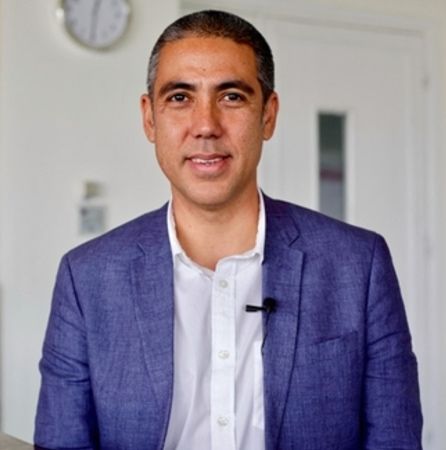
Dr. Kapono Ciotti, former Executive Director of What School Could Be, discusses the Landscape Model of Learning and how schools can position students as protagonists of their own futures. Ciotti draws on experience in over one hundred schools across four continents, including work with the National Association of Independent Schools in diversity, equity, and justice.
transcript
Speaker 1 Hello, Hello, and welcome to the latest episode of our podcast. My name is Chris McNutt, and I'm part of the progressive education nonprofit Human Restoration Project. Before we get started, I want to let you know that this is brought to you by our supporters, three of whom are Gruber, Julia Valenti, and Jennifer Mann. Thank you for your ongoing support. You can learn more about the Human Restoration Project on our website, humanrestorationproject.org, or find us on social media and YouTube. We're proud to have hosted hundreds of hours of ad free conversations over the years. So if you haven't yet, consider rating our podcast in your app to help us reach more listeners. Today, we are joined by doctor Kapono Ciatti. Doctor Ciatti is the executive director of What School Could Be, an organization offering a whole host of things, free resources, a flourishing community, coaching services, graduate coursework and more. Plus What School Could Be is one of HRP's partners. Prior to this work, Doctor. Sciadi grew up in Honolulu, Hawaii in a progressive constructivist school and taught in the same area. Then in Senegal, he's joining us from Cairo. He's been a school leader in The United States and internationally. He's worked in over 100 schools across four continents, including as national faculty for the National Association of Independent Schools in Diversity, Equity, and Justice. You can find his website and social links in our show notes. Thank you for joining us today, Capono.
Speaker 2 It's a real privilege to be here. A huge fan of Human Restoration Project and everything you guys are doing, and it's really, it's nice to join you. Thanks for having
Speaker 1 Yeah. Of course. And I I appreciate your work as well. We're huge fans of what school could be just generally, and I got to dive into your work. I read the book that you coauthored. And particularly, I started watching through the series that you did. I'm not sure if you're still updating it, that what's working now series. And it it was really cool. So for people that aren't aware, it's a video series where you're connecting with educators, family members, oftentimes young people, to basically talk about that question, what is working in education? And in order to introduce yourselves to folks that perhaps aren't familiar with your work, I'd just love to know kind of it's a two part question. One, what do you feel like is working in education today? So how would you answer that question of what's working now? And then how are young people just generally informing those ideas?
Speaker 2 I'm really glad you brought me blast back from the past on what's working now. I haven't updated it. It was a really neat, I had fun doing that as a COVID quarantine project, and, connecting with lots of, really neat people around the world, including young people. What am I seeing working now? I'm glad you brought that up because I see a lot of things not working now. But Sure. Youth as protagonists. So I appreciate that, you know, you were able to dig into the landscape model, a learning book that I was able to coauthor with Jennifer Klein. And, you know, one of the ideas of the books of the book came out of Jennifer's time in in Latin America. And the the core idea was protagonism, students as the main actors of their education. And so if I think back to my education from junior kindergarten to sixth grade at a John Dewey and social constructivist progressive education school, I had the gift of being the main character of the movie that was my education. I I was the Jason Bourne of my action film, of going to school. And, my brothers who went to the same school as I, we we commented into in our adulthood that, you know, it wasn't till we got to middle school that we realized why kids in the movies were trying to cut school. Like, it it was not even something that we would have thought of. School was a place we wanted to be. And that idea of of protagonism, student protagonism is the line that goes straight through the landscape model of learning book. And I see lots that's working now with regard to student protagonism. There's so many challenges to our education system that is, in my humble opinion, deprofessionalizing teachers and education, and by doing so, really plugging kids into an a nouveau matrix. And I don't say that being, like, anti technology. I'm I'm super into into technology, and I I I really think AI plays a a potentially big and powerful role, in the future of what will work. But what's working now so, two schools ago, I was a school leader of, YLI Public Elementary, YLI Elementary Public Charter School in Honolulu. And we used to take educators around, And it was the educators who'd been teaching for thirty, thirty five, forty, forty five years who would walk around and being like, how are you getting away with doing these same good things that we were doing forty years ago? And, every other school had gone through, you know, flavor of the month after flavor of the month and and all these compliance metrics. And I think, while we were doing tons of, forward thinking progressive, you know, lab school trying new practice stuff, There were cores of what we were doing that was all about student agency and students owning their work, being protagonists, and it's stuff that we've been doing forever in many schools. So what's working now? Everything that I'm seeing that's working connects somehow to student protagonism and or teacher protagonism, teachers being the the main actors of their professional careers as well.
Speaker 1 What does that look like for you now either being at what school could be or in a in a in a school leadership role? What does it literally look like to be a protagonist? Like, what would be an example of that, occurring at the school?
Speaker 2 I'm actually working with a a couple schools right now on an instructional assessment strategy, authentic assessments, which is not magic. It's not overly complicated. But the idea of an assessment being grounded in something authentic that makes a difference to people outside of the four walls of your classroom. And I'll give you one really, really concrete idea and a concrete example. This came from, coauthor of the landscape model, Jennifer Klein. So Jennifer, I don't think she'll mind me telling her story. We tell each other stories a lot. So Jennifer was working as a PBL coach with a a school group, and this was during two I can't believe I'm saying this. Two two Ebola pandemics ago. So before COVID, before that last small Ebola pandemic, there was a larger one where there was a scare with Ebola coming into New York. And, she was working with this group, and this group of high school kids, wanted to explore ways that they could actually do something. It was authentic assessment. Could they do something that really impacted the walls outside of the classroom? Not the typical I was I was a social studies teacher for twelve years. So, social studies teachers, we love the PSA. Right? Like, we go to the public service announcement. And this one, the teacher, with Jennifer's help, really wanted them to to to engage in learning and the assessment, the presentation of learning that really did impact outside the four walls of the classroom. It was more than just turning something in for the teacher or presenting to their peers. And so they'd come up with several ways that they could help impact, positively this Ebola epidemic. And one of the groups, came up with a public service announcement. But instead of having it be a video or a poster that they shared with their class, and 18 of them shared the very similar posters over and over again, Jennifer helped the teacher actually find a connection in Sierra Leone, somebody who's a radio DJ. K. So this might be a little bit of an ambitious, exemplar. It doesn't need to be that far across, you know, oceans and into another country, But it's just such a good one. So kids produced this public service announcement much like kids in, you know, my social studies class when I was a far less sophisticated teacher when I was, you know, 23 and I had no idea what I was doing. Not that 23 year olds all don't know what they're doing. I didn't at 23. And, they produced a public service announcement to help people understand, how to actually stop the spread of Ebola. And and just so this wasn't, like, you know, the the all knowing west helping, a developing nation, other groups were producing public service announcements for an audience in The United States as to why they should not be xenophobic against this disease. But I'll I'll go with this the Sierra Leone side of this. So on the Sierra Leone side of it, you know, the teacher was able to tell her students what you do and what you produce is gonna make a difference in actual lives. What you say, your research, the product of that research, the quality of your production could save lives. And if we do it wrong, it could hurt lives. And she said, you know, I'm not gonna let you send it if it's gonna hurt lives. Right? Like, I won't I won't put you in that position. But we have the opportunity to, you know, do something real. So, you know, I I guess it would be it would be a fine end to the story to say that, you know, that that authentic side of it, them being the main actors of learning and and feeling like their actions knowing that their actions not just feeling, knowing that their actions was making a real difference in the world and impact. But the story has a couple different steps. So, the teacher went back the next year because she had been accepted to present this PBL, this authentic assessment at a conference. And she went back to ask the kids if if they would be if they were okay with her sharing their PSAs with this conference because it wasn't her work. Right? They they owned it. They created it. She wanted to give them that respect. All of them said yes. And I Jennifer will correct me if I'm wrong, but I think nine of the 10 groups came back to her and said, but, miss, like, we wanna do one more edit before you take it to the adults. Like, this was a year after the grade was done. Right? A year after the the the Ebola epidemic hit our but they had such strong ownership of it and such strong pride in it because it had that impact. And that might be a a kind of a a a pretty pinnacle and extreme example, but there's so many schools we're working with that are allowing kids to do real things, allowing, first graders to do real things and be, real reading buddies with real kindergartners and really publish books that really go in the library. So, you know, just a few examples.
Speaker 1 No. No. I think that's beautiful. I I love the idea of purposeful classrooms being entirely based around what actually matters. And that sounds like common sense, but it is a quite radical action. And what's interesting is, I'm sure you find this in your work as well. Also, shout out former social studies teacher myself, similar story, did a lot of PSAs. But I found as well that kids really resonated and appreciated projects that didn't work. So, obviously, this is not the goal. You want it to be that pinnacle situation where things, pan out and you have this really cool story to tell. But one that comes to the forefront of my mind, I I remember we were working on this project in, I wanna say, like, November 2019, where the idea was going to be that our school lunch sucked. It was one of the first things that kids identified as a problem with the school. Our school lunch was not good. And we basically did research on how can we improve school lunches in our social studies class. And we landed on this organization called the Chef Anne Foundation, which is a really cool nonprofit. People should look it up. And they help you write grants and give you a lot of resources to do from scratch kitchens. And we built ostensibly an entire design thinking project around this where kids would travel around to different schools, see how their food sources work. There's one that was within thirty minutes of us that used a very similar process, and it was the best school lunch I ever had. And, basically, once we did that field trip, they were sold. So we had all this, like like, authentic PSA slash board presentation slash kids navigating the contractual codes of how school lunch workers work and doing empathy interviews with them. Was really complicated. And then March 2020 hit, and, it basically never, materialized into anything real. A whole year had passed. I think a lot of hype around it had fallen. And honestly, navigating that post 2020 was very complex to a point where it wasn't worth it. But, I I left the classroom in 2022. I still receive emails from students regarding that specific project on how much they, one, learn from it. But two, some of them work in schools. And they were talking about how they are using the Chef Ann Foundation to improve on their school lunches based on that work that we did. So even though it's not necessarily coming to fruition, the authenticity of it still translates because in real life, it doesn't always work out, and that's okay. It doesn't have to be this fake manufactured thing.
Speaker 2 I I actually I don't I don't wanna take up too much of the podcast on these types of exemplars. But because I think in the work that you and I are doing now, people seeing, hearing, getting that, like, visceral, like, what could this look like is so important. And what you said about, like, things not working, Wylie Elementary Public Charter School that I was at, you know, the the the younger kid example of this is we did a market day, with fifth graders. You know, the the typical, like, dragon's den, the shark tank Yeah. Come up Yeah. Project. And they they did get $20 investment from friends and family. We did the shark tank thing. They built it. They did one in of in winter break, they sold it for this, like, winter festival. Made some money, and that money if or or they didn't make money, and that money, they they donate they they did research and donated to a local nonprofit. And and the team were brilliant. And, like you said, letting kids succeed or fail on their own. And their grade wasn't tied to how much money they made, but they really felt ownership over how much money they made because they wanted to donate money to this, to this nonprofit. Right? But the the I think, you know, in that design thinking, vein that you were just talking about, you know, I I I I've I I love design thinking. I do a lot of design thinking trainings myself, and it's so tempting in how little time we have to do, like, one design thinking cycle and stop right before you get to, like, the reiteration of it. Like, oh, you got feedback. And now if we had time, you'd rebuild that. But we don't, so we're going on to the next thing. These teachers were dedicated to learning from the reflection, so they redid market day in the spring. And by default, almost every kid did better, not everyone. Not every group made more money or even money. Some groups, did worse. But in the spring, instead of donating the proceeds from the class, to a local nonprofit, they, put the proceeds together and opened up a class Kiva loan account. So every year, they put month Kiva loan microloans. And, when I left YLI, the fifth grade class fifth graders were managing a portfolio a real portfolio of real $15,000 that they were really lending out to real people, that they were deciding what their loan which loan applications they would they would approve. They watched loans get repaid or not, and learned a lot of lessons from that. So lots of really good, exemplars of what protagonism might look like.
Speaker 1 Yeah. I I love how that relates back to, in the book with with Klein, you have those eight different principles. And the very first principle that I I love that really resonated was you say, it is false to set up education like a racetrack because students vary in their gifts and needs. And when you design systems like you and I are talking about, the language of pitting people against each other or meeting some common assessment guide or planning guide doesn't really make sense anymore. Because if someone asks, well, what is the thing that everyone's making? The it's like, it depends. I don't know. I I don't actually have the end product in mind yet outside of maybe some stipulations that relate to some standard. But it's gonna look very different student to student on what's being presented and how it's being presented. And there's a certain comfort level you have to have with the ambiguity of the process, both in terms of the design of it, but also the assessment of it. And We need to do a whole other episode just on design thinking and this idea. For sure. I think that that's where,
Speaker 2 there's a there's a whole conversation to be had just about that. It's really powerful.
Speaker 1 For sure. Let's talk about what that looks like to scale, both from, like, a student classroom lens up to then the school lens in terms of school leadership, also using an element from the landscape model for learning, which is this idea of the ecosystem, the horizon, and the pathway, which is ostensibly the ecosystem of learning, the landscape model. Could you describe a little bit about what that is and then how that relates to scalability of these systems to school?
Speaker 2 Yeah. Thanks. I if I if I deviate and don't get to scalability, push me back to that. But the landscape model learning came from that that, that metaphor that I think I felt as an educator at certain points in my career. I I was lucky. I've I I've always worked in schools that have been progressive in nature. But I I certainly felt, and I know other people around me have felt at times, and specifically those in more traditional schools, that we were asked as teachers to start the school year first, you know, August 1, September 1, whatever it was. Principal waved a checkered flag, and, you know, we're and the kids were off. And if it were only that simple, right, if it were only that simple, if every kid started the year at the same day, if every kid started with the same, you know, metaphorical f one racer, if they all started with a full tank of gas metaphorically, if they all already knew how to drive at the skill same skill level, if if if. Right? But it's not. And so, the metaphor, we Jennifer and I did tons of interviews. We look we we talked to educators. We looked at this from a systems level, And our takeaway from the research was we set up a metaphor that is false, and therefore, working in that metaphor becomes more work than finding the right metaphor and working in that metaphor. So I it it it is more work. It is more work than a racetrack to start on a landscape and say, you know, it's the first day of school. 13 of my 25 kids join me on the meadow. But there's three kids, like, playing up on the hill over there with a different vantage point. And two of them haven't showed up yet. And as as I kind of shepherd them across the landscape, inevitably, at one point, one kid's gonna be stuck in the bog over there. And I'm gonna have most of my kids here with me, and I'm gonna have to make a decision as teacher. I mean, I I I could I feel this viscerally as a teacher. Right? I I do I leave these kids there, and do I go? How much time do I have to go help this kid? I go get them out of the bog and to go meet the rest of the class. I have to decide. Am I you know, do I have the time to teach him how to swim and traverse the metaphorical river, you know, the skill that he might need to catch up with everybody else, or just slap him on my back? Let's cross the river. I'll teach you that skill later. If we plan, and this is what I think progressive education schools do really well. If we plan for a landscape of learning. Yes. It's more work and planning. Yes. It's a more complex metaphor. But if we lean in and acknowledge that learning is messy, learning is complex, learning is not four c's, three r's. It it can't be alliterated into a a clean number of things. And if we plan for that living dynamic diversity that is a landscape, the learning process itself is act the teaching process that that that that symbiosis is actually quite a bit easier. Whether you're planning in a, you know, some progressive schools like a multi age setting, planning multi age is really difficult. But if you plan and do it well, it can be so much easier because you are already starting from the acknowledge it's starting from the point of acknowledging that kids are different. And because, I I actually worked with an amazing, child psychologist, and, she always made this point. She said, you know, until kids' brains are settled in and developed somewhere between the ages of nine and 11, grouping them by 12 random chronological months is almost as random as grouping them by hair color or eye color. And and and and that was her take on it. And multi age is not the only answer for for for sure. But by, the landscape model of learning asks us to, number one, understand the ecosystem and understand that the different students, the teacher, the culture, the place, the school, the the community around us, all of this plays a role in the ecosystem. We shouldn't be setting up a situation where we feel like we're on the freeway and we get into road range, which is what we feel in school a lot, that we are in an ecosystem. We all push and pull and and and and interact with each other. The second element, is the horizon, that as kinda pushes on some of the work Yang Zhao has done, the jagged profile, that every kid has their own strengths, their own talents. Sure. As educators, we want to help them fill in their valleys, but, also, we shouldn't be filing down or or or ignoring their their peaks and their, genius. The kid who's gonna go to Juilliard has a different profile than the kid who's gonna go to Harvard Law, a different profile than the kid who I want as my ethical mechanic when my car breaks down, a different profile than somebody who's gonna be a general in the army or a chef at a restaurant. And if we want you know, that that that's the fallacy of much of the implementation of Portrait of a Graduate, that we're creating this, like, profile, silhouette of a kid, and everybody's supposed to fit into it. Right? So that's the second element, the horizon. And the third element is a pathway, which, pulls a lot from personalized learning, individualized learning. How do we help kids be their own protagonists, power their own pathway, but help them with goal setting, and an individualized learning plan to navigate, and power their own journey across the landscape? Systems wise, to make a a quicker point about that, we strongly believe from the research, from these case studies we've done, from all the reading we've we've gathered together and put into the book, the landscape model learning, that it does start with shifting the metaphor. And when we shift the metaphor from an industrial model to a living garden model, like sir Ken Robinson said, from a racetrack model to a landscape model, like we've proposed very similar metaphor shifts, institutions need to do that. You could do it in your own class, but to really transform this at a at a profound way, schools and institutions need to make that shift. I think the the other thing I would say from an institutional and scale level is I'll give a shout out to a really good friend of mine, Ross Winter from World Leadership School, and I'll I'll steal a quote of his. Education is humans teaching humans to be human. And we are at a point where I believe I've seen this because as as a as a former school head, I get marketed, products from software companies and publishers. The balanced literacy, science of reading war, in my humble opinion, and this may annoy people, we're caught in the middle of a publisher war, not a real philosophical war about reading. There there's a great philosophical discussion to have, a pedagogical discussion, an instructional discussion to actually have about reading. But that's not what's happening. We're in the middle of a of a publisher board who's gonna sell more more curriculum and make more money. And, you know, what I've seen coming out of software companies right now is, like I said earlier, a Nuvo matrix. And my fear is is certainly for kids. Kids at the center, but secondarily and almost as strongly that we are deprofessionalizing teaching. And we are moving away from humans teaching humans to be human with the aid of technology by using and leveraging AI, certainly by, okay, learning coding, of course, by designing, planning, building robotics, all of those things, sure. But when we plug kids into the matrix and, give up our professional our professional duties as as educators. And when when that's taken away from us by the system, everybody loses. So at a systems level, I think getting back towards a human centered progressive ed, living dynamic landscape model of learning, there are some very complex steps. But at its core, it's really simple. It's just a really simple mindset shift.
Speaker 1 Yeah. I mean, you're definitely, pulling up my heartstrings with the the human centered language because that is, like, the whole point of, like, what we're going for at least. And the there's, like, 17 different routes to go, from what you just said. But the the one I'll choose, is there there's something very interesting about how leaning into kind of abstract thinking, abstraction is at the cornerstone of what it means to be a progressive educator in many ways because humans are complex and abstract. So although it requires a lot more work from a planning angle because you're doing something real. And when something's real, it's messy. And people have messy personalities. There's a lot of different things to think about, and they don't fit within that, that little box that's laid out for them. But once you get into that work, I found that although it is more work, the work feels different, and therefore, it's more rewarding as opposed to the person down the hall who is teaching the same as that curriculum for the last twenty years. They're taking home the same stack of papers they've taken home for the last twenty years, and they grade it every Friday and Saturday or whatever that might be. Whereas my idea of messy work is, hey. Monday after school, I have to go down to the zoo to meet with this person to figure out how this field trip's gonna work, and then I need to go meet with so and so's parents because they know this one person. It's just more complex and rich and rewarding. But with that said, from that scalability perspective, I did wanna dive into the course correction to that, which is it seems like especially since the growth of education technology, and even more curriculum work in twenty nineteen, twenty twenty, there's been a regression of sorts toward more and more, scripted scripted curriculums, educational technology. The learning loss narrative was a big part of this, where it's becoming more and more difficult for folks to embrace this work because it's assumed that you're just gonna follow the a b c d curriculum. You read this book this quarter. Every kid reads it, and then we're gonna do this predefined project for the last week over that thing. I'm not really sure if there's a question baked into this, but I'm curious how you go about navigating that, maybe from like a what school could be perspective. Oh, I got thoughts. I got tons of thoughts on that. Oh,
Speaker 2 I let's start with the with the learning loss narrative. You know, I I I'll start by saying learning loss is and was real. COVID did impact kids. I'm seeing outputs with regards to speech and, increased speech needs. And and we you know, what what school could be, we've done we've done the research. We've pulled the graphs. And the learning loss on average, two percent, maybe a little bit more, maybe four percent if, you know, if you look at certain, certain indicators. When when from the beginning of, of stat of these standardized tests that have been measuring these things to today. When we dropped everything and no child left behind and we stopped doing art, we reduced recess, we stopped we did science once a month, maybe. We stopped doing social studies, Social emotional out the out the window. No more advisory. No more homeroom. We're gonna just hyper focus on reading and math. Our scores went up about two and a half percent. Then in the most disruptive two years of education ever, the Spanish flu during the Spanish flu, there wasn't k 12 schools organized the way they are now. Since k 12 schools with distinct disciplines have been around, the most two disruptive years of school ever, our scores dropped only by as much as they gained by it it it went did doing no child child look behind. If you zoom out of those hyperbolic graphs that were published, the line is literally flat. Like, you can't even perceive the difference from the start of testing to today. So, yeah, learning loss, of course. I have my own kids. I wish COVID went down differently from that for them. But if you really ask teachers, right, you really talk to teachers, what are they missing? They're like, kids are coming back, and they don't know how to interact with each other. The discipline is off the charts. They they've lost self even more so, the executive functioning, the empathy. Those are the things that teachers I'm talking to are most concerned about. And I think all the teachers I'm talking to are saying if those things are in place, I can get the reading and math on track. I can do it. But when these things aren't in place, but the we don't have the strategies in most schools. We don't have the resources. We don't have the personnel, the expertise, the focus in most schools to have human humans do human centered education. We need human restoration project. We need what school could be. Sure. We need the landscape model learning. So, you know, I I think it's that it's that, learning loss narrative that I'm most focused on as far as what's not working right now. And I I guess one of the things I would I would offer to people, what school could be .org/survey. What school could be school could be singular school. What school could be .org/survey. I'll I'll send you the, the link. It's fun. It's kinda like one of those, like, what Harry Potter houses are you? Yeah. It literally take, like, fourteen and a half seconds. But the survey asked the question, what decade is your school preparing kids for? Nineteen fifty, nineteen eighty four, today, or the future? And we're looking at that through seven different, lenses, and we've developed a process called peak through which we're able to provide schools, a tool to reflect on their readiness for students to thrive in their 2050. Not our, you know, not today, but the the students' future in a human centered, and but yet forward thinking way. And from this, assessment tool, we're working with schools and school districts right now on understanding what the data's saying, helping them figure out what their organic, dynamic growth pans plans are moving forward, and conferring to schools and school districts, what school could be powered peak distinction, to help schools elevate and differentiate themselves, give value to this type of work. Because so much of the work that you know, I know human restoration projects doing, landscape model learning proposes, what school could be does. People ask us all the time, like, where is the data to show that it works, and where is my test score at the end that I'm gonna improve? And my educational mentor, Bob Peters, has always said, you know, Kupono, good learning is good learning. Your test scores will go up because good learning is good learning. If you have if you have the oomph to bear it and grin and bear it and and just see that through, it'll probably happen. You know, your test scores may not skyrocket in a year or two of these types of practices, but certainly good learning is good learning. You work with the human restoration project for, you know, two, three, four, five years, what school could be, landscape model. Your test scores are not gonna be lower five years from now than they are today. It good learning is good learning. Human beings interacting with each other, valuing being there, wanting to be there, understanding how their own minds, hearts, and bodies work, in in a learning environment is it it will will improve these things. But what what the peak distinction process does is in the short term, medium term, long term, it allows schools to have a third party acknowledge the, positives they're doing and the innovation and progressive pedagogies, and structures and be able to celebrate that publicly powered by, you know, all of the, gravitas that is, what school could be. So I just ask, invite people to check out the survey and, let us know if you need some help with that.
Speaker 1 No. I mean, I I know that what school could be at a minimum is doing such amazing work, in online communities that we've been super involved with by inviting people into the fold who, even if their school is not necessarily ready to take on a contract with any organization to promote this work, they feel less isolated as an individual to start promoting these practices at a grassroots level and then pushing it up from there. Because at the end of the day, going back to that analogy or or not even analogy, the the real point of when you zoom out from, let's say, the NAEP scores and you look at them over time, you don't really see the graph move. Where you would see the graph move is mental health, student engagement, the other things that we don't necessarily measure as rigorously as test scores, but at least in my opinion, are of a hell lot more important. And it just makes sense to me that if you believe that if you increase engagement in mental health at school, the test scores are gonna follow no matter what. And if they don't, who cares? Like, the kids are more engaged and they're happier and healthier. It it shouldn't be the end all be all that they got two more questions right on a multiple choice test on average. I would hope that isn't really what people show up to work for.
Speaker 2 I was just talking to this high school kid maybe four days ago, asking him he's a senior this year. What's he gonna do next year? And he said, need to take a gap year. I said, said, why do you need to take a gap year? They got a 1.67 GPA. And I'm like, what did you do to get that? He's like, I I didn't I didn't know what I was doing in high school, but I think I do now. And I was telling him, you know, I think your 1.6 GPA in reflection is probably gonna make you significantly more successful than if you'd, you know, just slid through with a three point o whatever and and and did everything you needed to do. The learning that he had from having a 1.67 GPA, I'm sure was far superior than anything that a NAEP score could, could capture. And and to your point, like, NAEP, SHMAIP, like, those aren't the skills that are gonna have students be successful in 2050. Those aren't the skills that are gonna ensure that we don't find ourselves in the same election scenario four years from now. Those aren't the skills that are gonna allow, students to understand and deal with the potential dangers of misinformation, due due to anything, but specifically the dangers of AI. None of that is measured on NAEP scores. And all of that, I would propose, is far more important.
Speaker 1 Yeah. Yeah. There's definitely, like, almost accelerationist rhetoric that comes from the danger of continuing the course, especially when you simply go out into the community beyond the K-twelve system and you ask business leaders, small business owners, volunteering efforts, even ironically, like admissions officers at colleges. What is it that you're looking for from young people? And we conduct a lot of these focus groups, and we find they're not mentioning GPA at all. What they're primarily concerned with are kids who, one, actually want to do something. Like, are motivated by some greater purpose to either major in a certain field or do the job or whatever that thing might be. And they want people that are critical, creative thinkers that can learn how to do things on their own. And that's so counterintuitive to the entire roots of how traditional education is currently embracing things like scripted curriculum, both for the learner but also for the teacher. The teacher also doesn't have the capacity to engage in that way even though they are far more than capable. And it it feels very, kind of, I guess, prison like or carceral, from everyone involved. But that said, the greatest irony I find in this work if we talk about individuals who could, let's say, go on what school could be and learn more about your work is that I this is all anecdotal. But both personally, but also with every educator that I've ever known that has engaged in progressive education, they always get highlighted by their school or by the state department or through some kind of award. It's like by intentionally disobeying the bureaucratic structures that are imposed that everyone thinks you have to follow, that's what gets you all the recognition on how great of a job that you're doing. I received an Ohio Department of Education award for some project I developed that hit half the standards of what I was supposed to be doing. And no one ever came and lectured me about it. We had a lot of fears about doing it, but it seems like it went okay. And that seems to be a tale as old as time. And that's just it it's both novel but also heartening to know that, like, if you just embrace this stuff and try doing it, a lot of those fears can be admonished. Although I do recognize the the real tangible fear of, like, well, what if it doesn't? Because there are spaces where that's a little more, enforced.
Speaker 2 Yeah. That risk for people is hard. I get it. The systems change, therefore, is important to provide, some cover. Right? I think, a a little rain does have a thousand flowers bloom in the desert. That's awesome. But without the, irrigation infrastructure, they can wilt really quickly. So I I feel it. Like, there's teachers who are out there sticking their neck out day after day. And, you know, school leaders like me, we need to we need to, even if small steps, help to put in that, irrigation infrastructure that helps support teachers who are are are making this move. And through, the peak distinction process, working with human restoration project, whatever it is. Right? Like, finding those celebrations and celebrating them is so important. I I I remember my my first parent teacher meeting at YLAI, elementary walking in to get the cafeteria set up and opening the door. And to the left was a group of about 40 kids. It was school about 600, and 40 of them were sitting there, multi age, like, literally from preschool to fifth grade, all different ages, reading. And they were reading because they wanted to be after school because that's where they went to hang out and read while they were waiting for their parents. Like, how much of a value would a parent me as a parent, put on our my kid coming home and wanting to read? Because this is a positive, and it's something fun. I mean, there's so many things that we can measure, highlight, and celebrate beyond those test scores. And at YLA, that's one of the things we we would tell par after that experience when I did parent, orientations for admissions. I'd say, you know, like, our reading scores are fine. And if you wanna send your kid to the school because of reading scores, this might not be that school. But I just walked in on 40 kids in the cafeteria reading because I want to. And if that's what you want, come on in.
Speaker 1 Yeah. That's beautiful. I love I love everything about that. I figured I'd just give you a chance to talk about the work that you're doing right now at what school could be. I know you have the survey. You have the the peak stuff going on. How are can other folks get involved? What are your current things you're working on? What do you wanna hype up? Yeah. Awesome. Thanks. I appreciate the opportunity.
Speaker 2 I am really excited about the Peak Distinction process. We are currently working with schools, school districts and provinces in Canada, as well as a couple international schools and an international school consortium of forties 41 schools, using this peak assessment tool that we've designed to look at our seven areas. Right? So we were looking at our five, what school could be, playlist areas, so to speak, mobilizing your community towards an uplifting vision, students driving their own learning, that protagonism we were talking about. Real world challenge, bringing the real world into school and students out into the real world. Evidence of deeper learning, finding, elevating, and celebrating evidence of learning beyond the test scores, which is what we're just talking about, and caring and connected communities, creating communities that have a strong sense of belonging and caring. From the five playlists, from what school could be, we've added to the peak distinction assessment, leading the change, how well is your school ready to lead the change, which does include some you know, how well is your system and system leaders and senior leadership ready to lead the change, but also includes how well are we doing teacher leadership, distributive leadership, and community leadership, and then being future ready, which obviously touches on things like AI, but not just AI because that is maybe the tip of a much bigger iceberg that I feel also has, you know, climate change and social injustice and political unrest and disinformation and all those things under the iceberg even though maybe, AI is a tip of it that just, it's gonna about to breach the hole. So, we're working with schools, school districts, provinces, some international schools with this. I'm super excited about it. We're helping schools and school districts understand where they're strong in these areas, where they can develop. If they if we can help them develop, we have, professional learning opportunities for schools to develop with us. If that's areas beyond what we do, we're connecting them with trusted partners like, Institute for Human Education and others, and, sharing information about people that we work with. And then I think the part that, like I said earlier, that I'm most excited about, we're able to confer a distinction. Not because any of us in progressive ed are all about medals and and distinctions, but because we do need the ability to stand up and celebrate in a vigorous way the learning and the and the the joyous successes that we're having because there is so much weight on these NAEP scores and other things in those stupid supermarket tabloids of your, you know, 10 best rated schools in your district. We need other metrics, and we need other ways to celebrate. So, they can find out more, by filling out the survey at whatschoolcouldbe.org/survey, and we'll get back to you. They can email peak,peak,@whatschoolcouldbe.org. They can pick up the landscape model, a learning book, and engage with anything with what school could be and our amazing partners at Human Restoration Project.
Speaker 1 Hey. Well, thanks, Kapono. I'll put all of those links in the show notes. That way folks can check them out and be sure to reach out to you. But thank you again for joining us on the podcast, it's been a pleasure. It's been amazing, thanks for having me. Thank you again for listening to our podcast at Human Restoration Project. I hope this conversation leaves you inspired and ready to start making change. If you enjoyed listening, please consider leaving us a review on your favorite podcast player. Plus, find a whole host of free resources, writings, and other podcasts all for free on our website, humanrestorationproject.org. Thank you.
resources
- Dr. Kapono Ciotti (person) Educator and author with experience in over one hundred schools across four continents. link →
- What School Could Be (organization) Offers free resources, coaching, community, and graduate coursework for educators. link →
- Dr. Kapono Ciotti at Solution Tree · Dr. Kapono Ciotti (website) Solution Tree profile with additional professional learning resources from Dr. Ciotti. link →
- National Association of Independent Schools (organization) Dr. Ciotti served as national faculty here, focusing on diversity, equity, and justice.