

the kuleshov effect
Reviewed November 2026
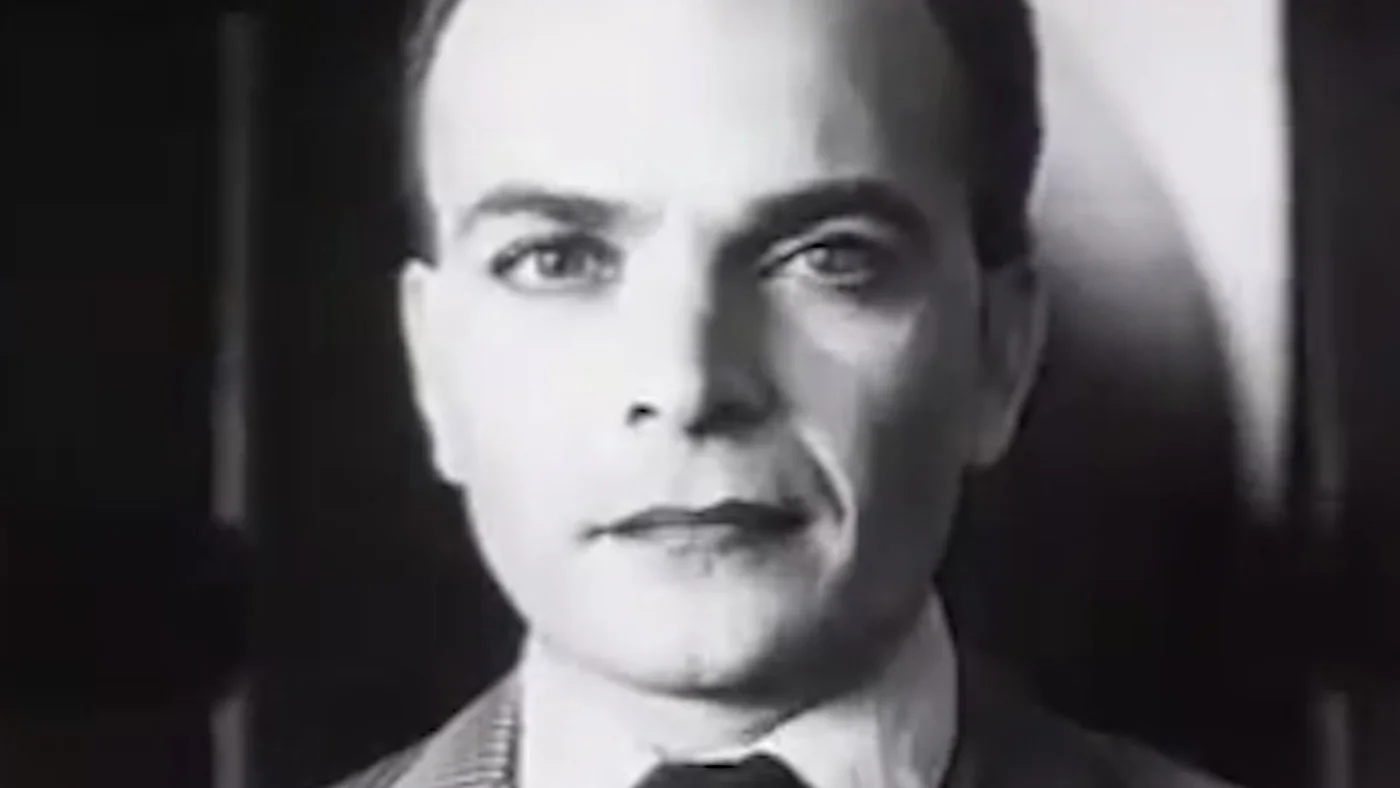
Around 1920 the Soviet filmmaker Lev Kuleshov cut one shot of an actor's expressionless face against three others: a bowl of soup, a child in a coffin, and a woman reclining on a divan. Audiences praised the actor's range. They saw hunger, then grief, then desire. Every time, it was the same shot.
The feeling came from the viewer, who filled it in from the context. The same thing happens with AI. A reply in a chat window, signed with a friendly name and preceded by typing dots, reads as thoughtful or caring. Those qualities are something we bring to the text, and this activity lets students catch themselves doing it.
in class
try with students
Run it with the slides on the projector. Don't name the effect until the end, so students commit to an answer first.
-
read the face 6 min
Build each row one click at a time: the face, then the soup, then the face again. After each row ask what the actor is feeling and take a few answers. Do the coffin row and the divan row the same way.
-
same face every time 4 min
Point out that all six faces are the same shot. Ask where the hunger, grief, and desire came from, if not from the actor.
-
connect it to AI 5 min
Ask what surrounds a chatbot's answer: the chat window, its name, its polite tone, the fact that it replies to you. How does that change the way students read the answer? Close on the three reflection questions.
slide overview
-
On screen The title and the actor's face on its own, with the question "What emotion/feeling is the actor portraying?"
Say or ask Ask for a first read of the face before anything is cut against it.
-
On screen Two clicks: a bowl of soup, then the face again.
Say or ask Ask what he is feeling now. Expect hunger or longing.
-
On screen Three clicks for the second row: the face, a child in a coffin, the face.
Say or ask Ask again. Expect grief or sorrow.
-
On screen Three clicks for the third row: the face, a woman on a divan, the face.
Say or ask Ask again. Expect desire or attraction. Leave the whole board up and let someone notice the faces match.
-
On screen Four film stills and the line: despite being the exact same shot, audiences believed the actor gave an incredible performance.
Say or ask Filmmakers still use this. Ask for other places where context tells us how to feel.
-
On screen The three reflection questions.
Say or ask Discuss them together, then ask what the "soup" is when you read an AI's answer.
takeaways
Meaning is partly made by the viewer, from whatever surrounds the thing being read. Chatbots are designed so that what surrounds the text says a person is on the other end, which makes it easy to read care, intention, or certainty into words that were predicted.
Students don't need to stop reading meaning into things. They need to notice when they're doing it, and ask what in the context is doing the work.