
The following is an excerpt from the upcoming Human Restoration Project Primer.
How would you describe the perfect lawn?
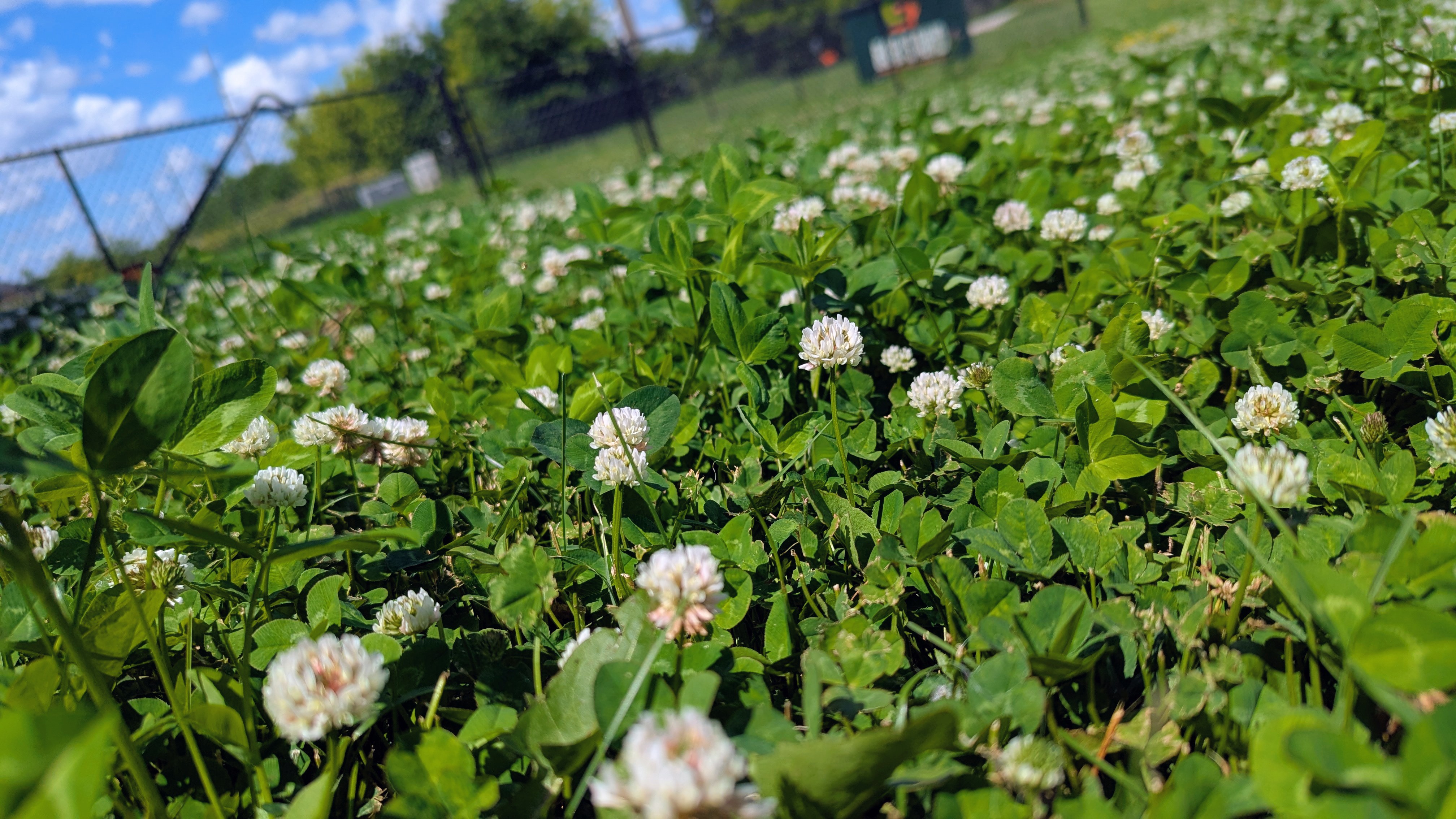
If you live in the United States, the perfect lawn likely looks like hundreds of square feet of perfectly green and uniform two-and-a-half inch tall Kentucky Bluegrass. But this conventional HOA-approved lawn aesthetic hides a cascading ecological disaster. Enforcing turf lawn monoculture requires a host of herbicides and fungicides to kill off nutritious plants like dandelions and clover. In the absence of these collaborations that would otherwise naturally break up the soil and fix nutrients back into the ground, we apply nitrogen fertilizer that further reduces biodiversity and pollutes local waterways. Frequent mowing burns fossil fuels and keeps root systems shallow, requiring additional watering. Native insects that didn’t evolve to live in or eat Eurasian turf grasses stay away, and without a sustaining insect population, native birds and other fauna also steer clear. All of this is a calamity for the microbiome as well, as fungi/herbi/insecticides and fertilizers leave the soil impoverished and dependent.
Looking at the ideal American lawn through an ecological lens reveals an ecosystem deliberately held in a state of crisis, where monoculture is enforced and biodiversity is squashed. Zooming out, we see what amounts to an ecological desert of turf grass as the single largest irrigated crop in the country that requires billions of dollars of resources to maintain. On the other hand, healthy ecosystems with appropriate human stewardship are self-sustaining and self-regulating with minimal intervention, even if they may be perceived as unkempt or disorderly. If we all simply did less with our lawns, the cumulative effect would lead to cleaner air, water, and healthier, more diverse suburban ecosystems. So why don’t we? Wouldn’t we save so much time, energy, and resources if we just did less?
The Labor of Monoculture
The answer is that the American lawn isn’t actually about a national passion for turf grasses. Instead the lawn is where suburban culture, values, and status anxiety get written into local law, property values, and enforced by social pressure. We forget that just as the ideal lawn is not naturally occurring, it’s also not exactly an ancient tradition. As an aesthetic import from British aristocracy, our modern image of the perfect lawn was constructed in the post-war 20th century as a shared language of middle-class affluence, consumption, and control. Turf grass monoculture became a disciplining force, not just the imposition of white suburban American monoculture writ large, but a reflection of who you were as a person. As the creator of the first mass-produced suburb in Levittown wrote, “A fine carpet of green grass stamps the inhabitants as good neighbors, as desirable citizens.” Turf WarThe New YorkerKolbert examines the American lawn as a cultural and ecological artifact, tracing its history, the industry and social pressures that sustain it, and the environmental costs of water use, fertilizer,...View source →
Its opposite—letting your lawn go—became a distress signal, an indicator of slacking values, and few want to be the first on the block to be perceived as a bad neighbor or risk having a “messy yard” (especially if it comes with HOA fees).
But the lawn is not inevitable. Just as suburban lawn culture was constructed around and intended to impose a particular set of values, so too can we reconstruct the American lawn as a space to enact different ones. For most of us, though, the biggest source of discomfort keeping us from changing our actions isn’t out there in the yard, it’s in our heads. If turf grass and all of its attendant values is itself a disciplining force, then before you can rewild your lawn, you have to rewild your mind: valuing cooperation over control, stewardship over conspicuous consumption, and biodiversity over monoculture. You have to be willing to take a stance while others may literally shame your “imperfect” space.
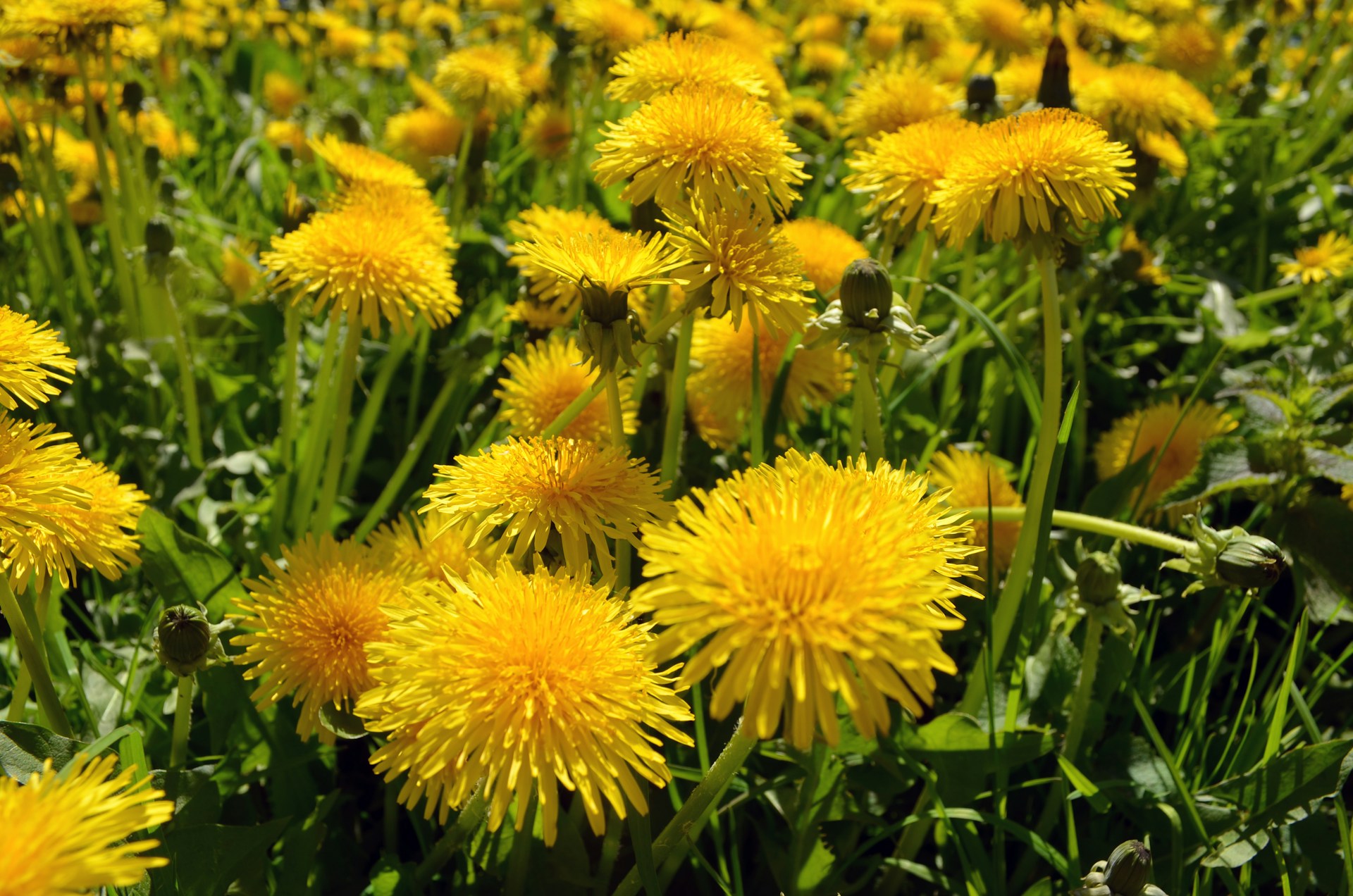
Here’s the good news: the best first thing you can do is do less. Stop fertilizing and watering your lawn. Give the mower a break. Leave the leaves and grass clippings where they fall. Cancel the private lawn service and work with your neighbors to cultivate intentional habitats for native flora and fauna. Remind yourself that in an environment of total control, every dandelion is a triumph.
Now describe the perfect classroom
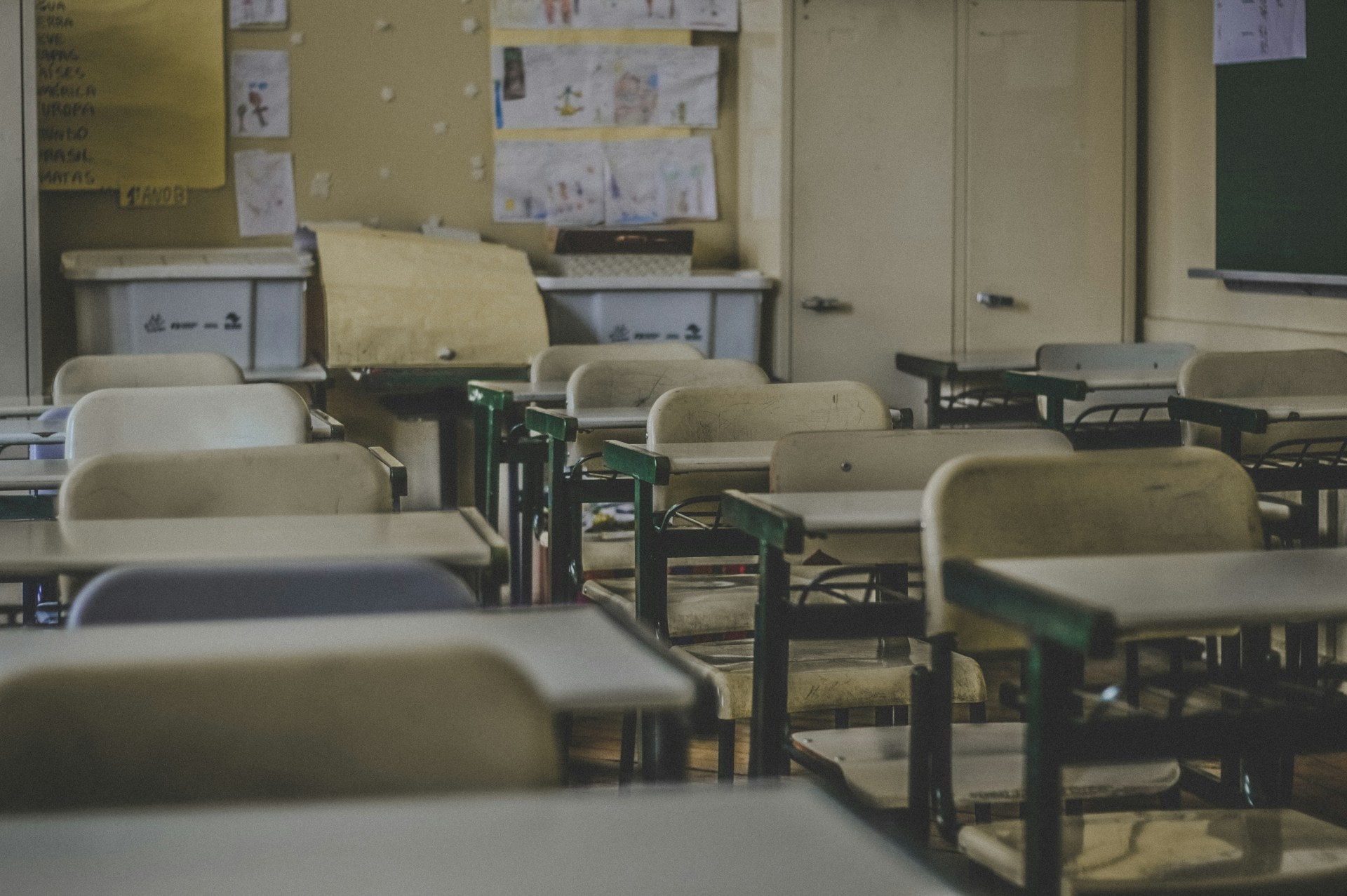
Ironically, wherever you are in the world, the perfect classroom probably sounds a lot like the American lawn: dozens of students in a schoolhouse facing the front of a square room in uniform rows (maybe even in uniforms themselves) all given the same material at the same time by a single teacher and expected to grow on the same timetable. Regardless of interest, context, language, experience, developmental level, dis/ability, or agency, students and schools—and frequently entire nations—are measured and sorted by the same benchmarks, and interventions are applied accordingly. The teacher teaches and the students learn, the bell rings and the learning stops.
While it is true that classrooms like this have existed in different times and cultures around the world, like the construction of turf grass monoculture in the United States, the Global Education Reform Movement (GERM, in Pasi Sahlberg’s framing) helped create a modern education monoculture for the entire planet, focused on a narrow set of academic outcomes aligned to economic growth. How GERM is infecting schools around the world?Sahlberg's account of the Global Education Reform Movement (GERM): the transnational spread of standardized testing, competition, test-based accountability, and prescribed curricula, and the ways...View source →
GERM also tied national economic interests to standardized models of teaching and learning, making it likely that wherever you go in the world the way teachers teach, students learn, and the facilities they use look, sound, and feel the same. Raising the stakes by hitching future economic potential, notions of human capital, and international competitiveness to these outcomes has contributed to anxiety and burnout for millions of schoolchildren and their teachers alike.
From an ecological lens, GERM as a monoculture has fully colonized our imagination about the purposes and practices of schooling in its relation to learning and society, leaving us more vulnerable to disruption and less able to respond to local and global change. During the COVID pandemic, fear of test score driven “learning loss” fueled vicious fights over school closures that ended by sending students back into unsafe buildings and deputizing school workers as triage nurses. The opportunity for remote learning to meet the needs of families was squandered by a “return to normalcy.”
As if financial interests weren’t obvious enough, like a company attempting to wrestle profits from a tough quarter, panicked predictions about trillions in lost earning potential pressured schools to “accelerate learning” as the new mandate to recover learning that was misplaced in the disruption. The cumulative effect of our response was that by the end of 2022, one-hundred million COVID infections had been reported in the United States, over one million Americans had died of and more than two-hundred thousand children had lost a parent or caregiver to it, the Surgeon General issued warnings about youth mental health, and K-12 workers had the highest rates of burnout of any profession in the United States. We were back to work, back to school, and back to normal. Global COVID-19 TrackerInteractive tracker providing cumulative confirmed COVID-19 cases and deaths, plus rates of daily cases and deaths by country, income group, region, and globally. Updated weekly as new data are...View source → Parental and Other Caregiver Loss Due to COVID-19 in the United States: Prevalence by Race, State, Relationship, and Child AgeJournal of Child and Family StudiesThe more than one million COVID-19 deaths in the United States include parents, grandparents, and other caregivers for children. These losses can disrupt the social, emotional, and economic...View source → Marken & Agrawal, 2022
Taken one step further, business-as-usual schooling has struggled to adapt to fossil-fuel driven climate emergencies. As one 2024 report aggregated heat-related global school closures impacting tens of millions of children the concern remained primarily on test scores rather than the contingencies of a dying planet: “We are deeply concerned that the number of extreme heat days is going to indirectly lead to learning loss.” A photo attached to the piece shows the ideal classroom sitting perfectly vacant during heat-related school closures in Bangladesh. Extreme Heat and Floods Are Disrupting Schools and EducationThe New York TimesReporting on how extreme heat and flooding forced school closures and disrupted instruction worldwide in 2024, and on warnings that climate-driven closures and unsafe classroom conditions can...View source →
Coverage of a record-breaking early summer heatwave impacting Europe and the UK in 2026 focused again on efforts to mitigate learning loss amidst climate-related school closures. As heat advisories disrupted schedules and closed thousands of schools on the continent, the British Department for Education issued a statement rejecting school closures, offering instead that “School attendance is the best way for pupils to learn and reach their potential, and hot weather can usually be managed safely.” One photo features elementary students shiny with sweat, some in their school uniforms, eating ice pops in an English classroom. “I feel like I’m in an oven. It is really hot,” a student tells the reporter. That same week, European officials reported 10,000 excess deaths related to the heatwave, with another 2,700 in the UK. Windows Are Open and Shoes Are Off, but Class Is Still On in Extreme HeatThe New York TimesCoverage of how schools in France and the United Kingdom responded to the extreme late-June 2026 heat wave, including closures, shortened days, a UK Department for Education statement, and the...View source → Europe recorded 10,000 excess deaths during late-June heatwave, data showReutersReporting on mortality data indicating roughly 10,000 excess deaths across European countries during the late-June 2026 heatwave, with attribution analysis linking a large share of the deaths to...View source →
For all of the hand-wringing over projected economic costs of learning loss, the costs of climate change have been estimated as high as $38 trillion per year by 2049, not including global reductions in incomes and productivity estimated by 2100. In a vicious cycle, climate emergencies will drive further school disruption, and more pressure will be put on schools to make up the difference in lost learning, even as resources are diverted to remedy other climate impacts. As climate emergencies increasingly disrupt schooling, we can be responsive to the changing climate, responsive to student learning — or both — but we can’t do neither and expect the outcome to lead to better learning or a more livable planet. Climate Change May Cost $38 Trillion a Year by 2049, Study SaysEPIC news summary of research projecting that climate change already locked in by past emissions will reduce global income by roughly 19 percent by mid-century — on the order of $38 trillion annually...View source → Global non-linear effect of temperature on economic productionNatureUsing data from 166 countries over 50 years, the authors show that economic productivity is a non-linear function of temperature, peaking at an annual average of about 13°C and declining sharply at...View source → The impact of climate conditions on economic production: Evidence from a global panel of regionsJournal of Environmental Economics and ManagementUsing a panel of over 1,500 subnational regions, the authors estimate the effect of temperature and other climate conditions on gross regional product, finding substantial negative impacts of warming...View source →
Like the turf grass lawn, the values and practices of GERM-era schooling have proven to be maladaptive if our shared goal is sustainable and thriving global society in an age of pandemics and fossil-fuel driven climate disruption. As Ginie Servant-Miklos, author of Pedagogies of Collapse, challenges:
The first step to solving a problem is admitting that it exists. In this regard, the education systems of the world are in hard denial about the reality of the world, their accountability for breeding ecocidal behaviour among the young, and their responsibility to do better. This isn’t a case of bad faith among educators, although some of that definitely exists. Rather, modern mass schooling has been instrumental to the development of global capitalism, and prying the two apart may require breaking both before an educational system fit for a warmed and depleted future can emerge.
Pedagogies of Collapse: A Hopeful Education for the End of the World as We Know ItServant-Miklos argues that education must reckon with ecological collapse rather than defer to techno-optimism or business-as-usual schooling, and sketches pedagogies grounded in hope, community, and...View source →
Nothing in this Primer is an argument for privatization, which has only exacerbated the climate crisis impacting schools along with every other educational inequity we’ve previously discussed. This is an opportunity to reimagine our relationship to each other, our communities, and the planet through our relationship to learning and schooling. We must recognize that this GERM-era model is not naturally occurring or ancient, and even if it is not something we personally built, we play a role in maintaining it.
Real Change Takes Real Change
Schools themselves are complex ecosystems that can, without intention and stewardship, also become monocultures held in place by convention, policy, and the “grammar of schooling.” In the face of such pressures, teachers and school leaders who don’t share a passion for standardized instruction and testing nevertheless play a role in maintaining it. Even when teachers and students tell us this isn’t working, the appeal gets passed upward until ultimately reality itself gets asserted: “I can’t do anything about it. That’s just the way it is.”
Thinking ecologically about our own classrooms and schools can help us evaluate and intentionally cultivate biodiversity in the formal learning environments we create for young people. Unlike lawns, where the first step is to do less, Etta Kralovec argues that real change takes real change in school.
The ways we spend time and money in schools are not facts of nature. They are decisions we have made as communities, and they are decisions we can unmake. We need to see what’s wrong with the way we spend time and money and we need to give teachers, parents, and community members a new set of questions to ask, because we all have a part to play in the solutions…The strong, even radical, recommendations I argue for are premised on the notion that real change takes real change.
Schools That Do Too Much: Wasting Time and Money in Schools and What We Can All Do About ItKralovec argues that American schools have taken on too many non-academic functions — athletics, extracurriculars, and social services among them — and that this sprawl consumes time and money while...View source →
This tension is a result of the labor of monoculture, which we spend by the hundreds of hours, dollars, and gallons enforcing it on our lawns and build into the pacing guides, data walls, assessments, and interventions—the structures, systems, and practices—that discipline our lives at school. In education, our structures are the time, space, and roles we all work within: the school building, calendar, and organizational charts, for example. Systems are the ways people and information move through the structure though scheduling, grading and reporting, and PBIS/MTSS or other behavior and learning management systems. Practices are what we do within structures and systems to enact monoculture, or its opposite, day to day.
If cultivating biodiversity at home means withholding the labor of monoculture to restore natural processes, the labor of monoculture in school is an active result of structures, systems, and practices working, intentionally or not, to produce it. Withholding that labor at school in the same way you might stop mowing your lawn doesn’t change the outcome because it doesn’t change the structures, systems, and practices producing them. Real change demands we take inventory and take action if we want to see a difference in what our schools do and how they do it.
Taking a Soil Sample
A soil sample is the first step toward understanding the conditions you’re working within and inform which actions to take. Use these questions to take a “soil sample” and help guide you and your staff through an investigation of your values, structures, systems, and practices away from the labor of monoculture to build a school ecosystem where students can thrive.
Values
Take an inventory of your classroom and school values.
- What do we value? How do we know that?
- What kind of young person is this environment built for?
- What is the institutional response toward young people who don’t thrive within it?
- What does it look like to value interdependence over competition?
- What does it mean to practice resilience and community stewardship?
Structures, Systems, and Practices
List the structures, systems, and practices of your school.
- How do the structures, systems, and practices of our school enact our values?
- Is this structure, system, or practice working? To do what? And for whom?
- How do students feel about the structures, systems, and practices of our school?
- Which structures, systems, and practices conflict with one another?
Real Change
- Which structures, systems, or practices do we have leverage, capital, and ability to change or not?
- What structures, systems, or practices can we remove or simplify to make the whole work better?
- How do these changes put us in tension with structures, systems, and practices outside of school? How do we communicate, resolve, and live in these tensions?
- What’s a permanent change we could make tomorrow that would make the system work better?