

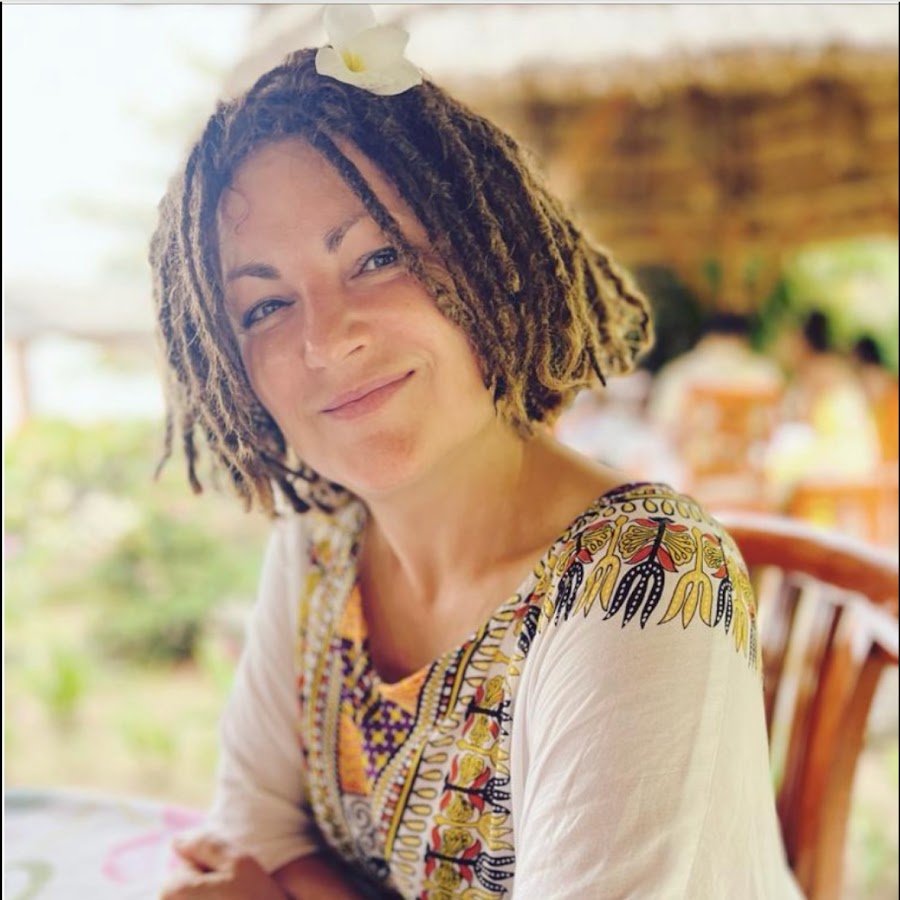
Artist and writer Nika Dubrovsky discusses Anthropology For Kids, an open-source platform experimenting with new educational formats, and her Playground of the Future project, which imagines community-built playgrounds as spaces for collective decision-making, play, and care.
transcript
Speaker 1 In different countries, it's always repeated two things. So first, the dystopian city is always poetic. So kids start to invent all kind of like crazy things like vampires, you know. Like, it's it's all very much a poetry. But utopian city is very practical. They always try to solve practical problems. They're like, okay. We don't want to have hungry people. Where are we gonna produce food? What kind of food we're gonna produce? Like, kids in Amsterdam, they will, like, really spend a lot of time negotiating between each other. Should we have farms with animals? And, like, who will kill them? Or they will just become all vegetarian, you know? So that was, like, a big topic of discussion. But they were, like, super practical.
Speaker 2 Hello, and welcome to episode 167 of our podcast here at Human Restoration Project. My name is Nick Covington. Before we get started, I wanted to let you know that this episode is brought to you by our supporters, three of whom are Julia Valenti, Kimberly Baker, and Brandon Peters. Thank you all so much for your ongoing support. And with the help of teacher powered schools, so called Moran Partners, StimPunks, and What School Could Be, the lineup for our fourth annual Virtual Conference to Restore Humanity is complete. Focused this year on the quest for connection, running from July 21 to the twenty third. Between now and then, with each episode, we'll briefly spotlight one of our conference keynotes, workshops, and panel discussions. For ninety minutes on Tuesday, July 22, join V Dao, sociologist and director of learning and practice at Cortico. Shaina v. White, director of CS Equity Initiatives at the Kapoor Foundation Charles Logan, PhD student at Northwestern University and Audrey Waters, creator of Hack Education, writer of the Second Breakfast newsletter, and author of Teaching Machines. As we try to answer the question, what, if anything, should be the relationship of AI and ed tech to education? I'll be leading the panel in a q and a with questions from the audience, and it should be a great conversation. If that sounds interesting, tickets for the whole conference start at just $50, and you can find the full lineup at humanrestorationproject.org/conference. My guest today is Nika Dubrovsky. Nika is an artist and writer whose work has been exhibited internationally. Her children's books have been translated into several languages and, remarkably, as you'll hear in the episode, Nika is directly responsible for bringing Russian translations of Doctor. Seuss to post Soviet Russia. Nika is also the co creator of Anthropology for Kids, alongside her late husband, anthropologist, best selling author and activist David Graeber, who passed away suddenly in 2020. Aforkids.org is an open source platform which experiments with new educational formats. After David's passing, Nika also founded the David Graeber Institute as a platform to develop ideas and projects that continue his legacy. Most of Nika's projects are dedicated to the building and maintaining of social relationships, among which are the Museum of Care, a nomadic anti institute, and the Playground of the Future, a collaborative and interactive art project imagining playgrounds as a space of collectivity and care. Playgrounds are vital public spaces, she writes. They bring communities together, bridging generations and social divides. They're also about fun and play, which is exactly the kind of atmosphere we need when making collective decisions. A network of community built playgrounds designed around visual assemblies could become spaces where people gather, play, and make decisions together. Thank you so much for joining me today, Nika. Thank you so much for having me. So before we get into the incredible projects that you have been involved with and the plans that you must have for the future, you were born in the former Soviet Union. Is that right? Yes.
Speaker 1 Yes. And I left when the Soviet Union was still together. It was 1989. So I'm I left a town called Leningrad. Yeah. So I'm a little bit like I I I left a country that didn't exist. The city that didn't exist. Soviet Union was the yeah. My motherland and the big part of what formed me. And that's big part of the project, Anthropologie for Kids, that is based on the ideas of the Soviet literature, avant garde Soviet literature.
Speaker 2 And you write about your childhood growing up there. I read the wonderful little biography you have on your website that I was never sure I was sure I was never going anywhere. And you have several excerpts on the site about your adolescence and your experience at school. You say, I was a serious girl, studied a lot. The characteristic they gave me at school was she is withdrawn, has no friends, engaged only and exclusively in art projects for public work politely but firmly refuses. And you say, I'm still proud of that piece of paper. And I'm I'm incredibly curious. I'm sure listeners are too about that background and to hear you speak about some experiences that most shaped you, be they inside of school or outside of it. Outside of school, of course. And it's very interesting how the word activist changed,
Speaker 1 if you compare it in Soviet Union. Because in Soviet Union, the public sphere was totally, organized by administration and by officials, and there was no freedom or, you know, privacy in this public sphere. So between in Soviet times, a lot of artists and a lot of public space, what we call now, would exist in the private spaces like Soviet kitchen. That's where people feel themselves free and liberated. And a lot of practices, ritual practices came out of Soviet Union, like apartment art exhibitions or self made magazines called Samizdad and other cultural institution, I would say, that that was formed to preserve and to to develop freedom and reproduction of culture. So it was very strange combination of private and public in Soviet Union, very different from the from The US.
Speaker 2 And you had mentioned the anthropology for kids books sort of began as a reaction to those books that you experienced growing up. There's another great excerpt I I pulled out here that says, what horrible children's books are published in Russia? Nasty, glossy pictures, hyperdrawn illustrations that are the worst mixture of advertising drawings on kafir and half forgotten ideas about cartoon childhood. So I'm so curious then about how those memories of those horrible children's books influenced the the the art that you create today and your work with Anthropology for Kids. This is very interesting. Maybe I should revisit the the biography that I put on my website because,
Speaker 1 actually, Soviet children literature and Soviet books children books was brilliant. Despite the fact that the Soviet Union was quite suppressive regime, they produced an amazing Soviet literature. But after Soviet Union collapsed and then came and the wild market came as well, then the Russian the post Soviet Russian literature was a disaster. And that's exactly the time when I had kids. And my kids were born outside of Russia or Soviet Union, but I wanted to share my culture with them. So I started to buy these books and started to read it to to my kids, and then I was, like, horrified. And I said, no. No. No. No. No. I have to make my own because, you know, this is not this is this is very bad. And I was also living in The US at that time, so that's when I started to read doctor Seuss. And that was amazing. And this is another project that, I did. I, I bought the rights, and I published doctor Seuss, in Russia in Russian. Just just to to want to share, with my former Russian fellows the the great, great literature that I found in The US.
Speaker 2 That is incredible. So is it safe to say that a Russian translation of doctor Seuss exists because of you then? Yes. Yes. It's not I wasn't a translator,
Speaker 1 but I was in this case, I was a publisher and producer of this project. But, definitely, it was a lot of research and absolutely a lot of a lot of work. My work was put into that. It's also for me was in the research project trying to merge the Soviet literature and American literature and to try to find these differences in similarities. Doctor Seuss was published once in nineteen sixties by the Soviet children writer called Tchoukovsky, who was was born before evolution. So that was still this earlier Russian avant garde, Soviet literature, that was very close to to doctor Seuss, who is who is absolutely amazing offer for me. I was so proud to bring it to to
Speaker 2 to Russia. Yeah. That is such an awesome accomplishment. What a what an awesome thing to to be able to attribute yourself to.
Speaker 1 Yeah. I also think doctor Seuss is in very rare oath for now because his children literature was absolutely political. So he was just writing anti war books and climate change books, you know, and so on and so forth. And it also was very folk, you know. So it's like so much for me, the beauty of English language is all in doctor Seuss. It's almost like singing. Yeah. Amazing person.
Speaker 2 And I'm also curious then too, Nika. Getting past the the growing up that you had in the Soviet Union, obviously, you've traveled the world, had these wonderful experiences. What values and ideas most influence your world and your work today or in in the course of your life?
Speaker 1 So here, I should say that before I met David, I didn't really know what is anthropology. And and yeah. And then he was so I met him after he was kicked out of Yale when he appeared on this his first TV program with Charlie Rose. And then he was writing in that moment, writing five thousand years of death that he was sending me chapter by chapter in board. And and that was, like, I was reading that, and it's literally changed my old perspective. And I also was wondering what is could be a good education for my kids in general because human beings is all about reproduction of culture. And then I was like, yes. So this is how to be actually. You know, this you have to share people not a one culture and one perspective, but, of course, you should share the same core value through the lenses of of different different cultures. And so from Soviet Union, I think the the major things that was also in Soviet literature is internationalism. So despite the fact that Soviet Union was an empire, it still was carrying out all these anti colonial international values, at least declaring them. And this declaration was happening through children literature. And the things that would be censored in the adult literature would still exist in the children literature. So that's why this was a very unique moment for children literature to to bloom.
Speaker 2 And that's a fascinating transition to speaking directly to the work that you and David collaborated on for anthropology for kids. It describes itself as redescribing essential aspects of human life in simple terms, accessible for everyone, challenging people to reconsider who we are and how we see ourselves and others. And for the benefit of our listeners, I'll just describe a little bit of what it is. There are these wonderful free downloadable doodle books with incredible illustrations that you and David co wrote. They're act sort of as invitations for kids to explore and recreate these ideas. There's titles like cities made differently, what are kings. There's one that challenges kids to invent a new nation together and think about where nationality comes from. They reflect on school and when and how schools were created. It's such a fun resource. It's a joyful resource, and it's one that we at HRP first encountered, when we were working on our global interdisciplinary curriculum that we made a few years ago and sort of stuck with us since. How did that project get started between you and David, and what were its goals and mission at the time?
Speaker 1 So I think David is a is a teacher mostly, so he was always in academia, and he he was a really really good teacher in a way that he was absolutely not suppressive and really not snobbish. And that's you can see it in his books. And so that's yeah. First time I encountered this guy who who was totally smart, absolutely, like, absolutely genius, but he also was, like, super eye to eye, you know, very supportive. And yeah. I I I just talked to yesterday to one person who a student, in fact, who just wrote me an email describing how he fell in love with David, how he he encountered his books, and they changed his life, and so on and so forth. And I just, like, was thinking, okay. Generally, we can tell about family members or about, you know, loved ones that they change our lives. They they kind of did they they they mean the world for us. Actually, they did did it to so many people around the world, so many people can can tell it about him. So the Anthropologie for Kids was just I was thinking, okay. How actually how I can connect it to myself? What can I contribute to to to all of this enormous new world that I opened through through the sex and through being in touch with him? And and also I had a son who was very small back then, and and I was just doing projects with him and for him, and that's how it's all merged. And I I also should say that I had I was living in New York, in Lewis Side. That's and suddenly, not only David, but to bunch of my friends was anthropologists around me, like, of, who's now a professor in Harvard, and Nico Davidov, who is also professor in New York University. So they we we all were, like, kind of young I'm an artist, and they were like anthropologists and and a bunch of other people. Anthropology, that's become probably a buzz at that time in in the very early two thousand
Speaker 2 two thousands. It's kind of an unexpected through line that I wasn't anticipating to come up with this conversation, but it's like your involvement in work that's directly targeted towards kids. I mean, I didn't know about this Doctor. Seuss story. Would would you say that that's influenced by, you know, your own experiences as a child and a parent and, education and the resources you would want your own kids to have access to or what you wish you had access to as a child? Absolutely.
Speaker 1 I I actually read so much about doctor Zeus. I was I was surprised to find out that his books were kicked out of the libraries, you know, like, Cat in a Hat was was really, like Irish Americans didn't like it. And he he wasn't able to find a publishing house, and Random House was so tiny. And only way doctor chooses with us is because his commercial success. So schools, libraries, all the regional all the government institutions didn't like him. I want to repeat now. I'd make a mistake. I don't want to say that average Americans didn't like him. I want to say that American institution in in this times didn't like him. That's, that's what I want to say. And I don't know. You probably I'm not now don't want to to but maybe I should share my admiration for doctor Seuss too, because his first book was published as a reversal textbook. Because in that time in America, some in the in The US, some crazy lobby won that was trying to teach kids to read with non phonetical way. So when they just remember the words as as they were Chinese hieroglyphs. And so that's why in in the skating ahead, he's using, I think, 203 or 220 words. But what he did with that, he created songs, and this is subversive songs. And it's very, like, mind blowing. And that's why he was kicked out of the libraries because librarians would say that, you know, what is that? Where are the moms? Where where actually mom? And why did she go away? You know? And who is this fix one and fix two? That's like that sounds like really, like, not okay. And and yeah. And so I think it's it's just was so brilliant that by being so amazingly beautiful and taking a roots in, like, very deep folk American culture, it's gonna push it way through through all the censorship that also exist there. And I hope, like, our books will do the same. We still cannot publish find a publisher in English for what are kings. These books didn't publish. Also, pirates didn't publish. But the MIT book, cities made differently, it was sold out the whole cop copies was sold out in twenty days. So now it's a second run. So I just and and it's it's a quite expensive book to buy that I'm I'm not happy with. But yeah. But it's it's looks like it's doing very well on the market. And in this case, market maybe maybe will help us once once in a while.
Speaker 2 It is fascinating to think about how subversive doctor Seuss was in his own time and to think about the evolution of culture and our perspectives on childhood. You don't really see childhood as a place of exploration and subversion of topics. It's mostly fantastical or otherworldly, and I think that's where, you know, the anthropology for kids work really brings it brings the joy, the exploration, the reimagination space that that kids have in droves to actual real world topics to ask kids to invent and reinvent institutions. Why do you think that publishers won't take on What Are Kings and won't publish a third round of of the cities and everything else like that? Where where No. They did publish a check. Oh, okay. They didn't publish immediately the first round because
Speaker 1 but they but city made differently. They removed everything about kids. This is not a kids book anymore. Yeah? And it's not a doodle book. It's just cities made differently published by MIT. Thanks very much that they did it. And so they they sold all the first run of the books, and they immediately published another one. Why publishers didn't publish the children books publishers? To my understanding, you have, like, a big mainstream publishers who just want to publish books about kittens and, you know, flowers and so on. And then you have a niche publishers. You do have them in The US, and then then you speak an old book about, like, gay rights and, you know, whatever. But it's it's never it's never common to the like, we didn't want to do a niche books. David and I wanted to do books that will be for everyone, you know, like an anthropology is for everyone because the major attempt of anthropology is try to figure out how we're similar to each other with keeping our differences. So it's not like the book for a leftist kids, you know, or for the right kids. It's it's try to it's try to make bridges.
Speaker 2 Yeah. I think there there's just such like a a a dirt. There's such a lack of actual substantive nonfiction material for children. It's it's a real fascinating topic that I wasn't expecting to to get to unpack with you today. I I wonder too, Nika, about just perspectives generally about education. I mean, David was quoted as saying revolution happens when there's a transformation of common sense and that, of course, we're all in this process of mutual creation together. I'm curious too about your own perspectives about student the relationships between students, teachers, and schools perhaps coming out of that anthropology for kids exploration. What should learning in society look like in your mind?
Speaker 1 Yeah. I just come back from Amsterdam where in the central library, we did a workshop with kids about city of care, so build the city together. And this was extremely interesting. The kids were, like, from, like, seven to 12 years old. But I would say each of them were already had a formed political opinion. They didn't pronounce it. Nobody asked them, but they did have. And I can give you an example so far what what was the topics to discuss between them. But another thing was very interesting that when I'm doing these workshops with kids, almost none of them had an experience of how to to work together and how to make a decisions together. You know? This is, the first things in their life happens. So when you when when this workshop is generally started from each kids is drawing from their own side of pre prepared big piece of paper. And then that's that's worked very well because everybody's like to do to draw their cows. So, like, if it's a playground, something that they're gonna play with. But then they have to go out, they have to do, you know, shopping, they need roads, they need to and then they come to other people, and then they need to negotiate. Are the people on the same table? Yeah? How they will build this social space together? And they they don't know how to do that because in schools, in every institution, they they trained how to compete, how to become better than others. But nobody's providing them with the space where they actually can do things with us. And that's, like, the major survival skills for every human being. You know? That's that's what we should teach children and ourselves to do.
Speaker 2 Are there plans to bring city of is this the first time that you've done a city of care with with kids? Are there plans to bring this to a bigger audience outside of Amsterdam?
Speaker 1 No. I did it in many countries, actually. You can see on the website, and it's it's was done in in Iceland and in Berlin. But the the the maybe so what it's it's always like an artistic project that I'm doing. And now what I'm trying to do, I'm trying to print these maps and find the partners who will just print them or download them from the website where I'm gonna put them and do it themselves and start to do it on their own because this is in a way, you can look at this as in our educational technique that the people are welcome to use. And it's gonna be great to find some organization or some group of people who will help to facilitate that and will be able to do it in their own communities because I I absolutely convinced that this is, like, crucial knowledge. And it's also, like, a lot of fun. So kids love to do that. Especially, like, I didn't do it in Amsterdam this time. It was a city a utopian city, the city of Kiev. But generally, what's working really well, if you put two table cloth, I call them, one is dystopian and with the proposal to build a city that you don't want to leave, And then another one is utopian. And then this is, like, such an amazing relationship between these two groups of people, kids, and the way how they react to to that and what is in their minds, place that they don't want to be in. And it's very interesting that in different countries, it's always repeated two things. So first, the dystopian city is always poetic. So kids start to invent all kind of, like, crazy things like vampires, you know. Like, it's it's all very much a poetry. But utopian city is very practical. They always try to solve practical problems. They're like, okay. We don't want to have hungry people. Where are we gonna produce food? What kind of food we're gonna produce? Like, these kids in Amsterdam, they were, like, really spend a lot of time negotiating between each other. Should we have farms with animals? And, like, who will kill them? Or they will just become all vegetarian, you know. So that was, like, a big topic of discussion. But they were, like, super practical. Like, how do we deal with trash? What we gonna how we can deal with the migrants if they come, if they build such a great city? And, like, all these people come, and so what what we gonna do? And then, like, the kids in Amsterdam is a multiracial city. They suddenly start to tell something that, oh, we will let them stay for two years, but then they have to leave. That was one of the concept. And I was like, oh, they invented temporary visas. So and so so that was a lot of fun. Yeah.
Speaker 2 That's great. And they build they essentially build these side by sides. So just visually, you can you can get the sense of comparison and just kind of reflect on that together as they're going through it. Is that the process? Yes.
Speaker 1 Yes. Yes. So cool.
Speaker 2 How neat to watch. How how long does it take them to go through that and collaborate and do that altogether? What Is it what's timeline? On the kids, of course. But so because I did it in many different settings, like in Iceland,
Speaker 1 for example, we we got a grant from Ministry of Culture. So my partner was an Icelandic artist and also quite famous rock star. So everybody knew him, and he also knew how to control the crowds. So Icelandic government gave us a little plane. So we were, like, flying for these different villages, starting from and then in different places. And so it's a isolated places. Kids have nothing to do. So they make us to to go do, like, one workshop was with, I think, 200 kids. They just bring them from all different places together. So we put them in the different tables, and then while they were, like, drawing the city that they want to leave, we asked them to move to the other people's table and then rearrange the rules. And that was also, like, really strange social exercise because, for example, one group of kids, the the boys immediately said that the woman would not have rights in this in this city. And Iceland is like a famous feminist place. You know? They have, like, a first female prime minister. And so the girls immediately said, oh, okay. So no kids. This is the border. This is a part of the town for the female. Let's you live alone. But then we moved them to another table, and then somebody else came, some other group, and they were rearranging their rules. I reflected what these other kids were saying. So I it's it's many ways to do that, and I think if it's hopefully will spread, then maybe other groups will invent their own rules how to how to arrange the social situation. But it's also you have to think about physical part. So kids, even as 12 years old, they don't want to stay in the same place more than an hour. So with a lot of trying out, I figure out that one hour is, like, the best the best time to spend. But then you can, you know, invite another group on the same place sometime later or hour later, and they can do it. You know? So that's that's that's would be, like, the best. So I did, I think, in my opinion, every school should have some place in the, you know, lobby or library where they have the the special place where the kids can elaborate, fantasize, comment on the social places they build together. That will be super useful for for the for the students, you know, for and and for the teachers, I think, for humans in general.
Speaker 2 That is so fascinating. We we will have to have a sidebar conversation about the city of Care because I'm I'm so fascinated by this and bringing that to other places. And I think that's a great bridge to build into another thing that I was looking at. One of the exhibits that you have in the Museum of Care is about playgrounds. And you say the playground is an amazing way that gathers the hopes and despair of today's society, perhaps much more than any other public art project because it needs fewer resources to build and is immediately accessible to to the public. And we had met a few weeks ago to talk about developing a playground project that seems aligned to this idea. So I guess as an artist in the scope of your work, where does your interest in playgrounds come from, and where do you hope that project really is? Is that related to the City of Care idea?
Speaker 1 Yeah. Definitely. Because playground is such a so ideally, you want it to not to build to the school the place for visual assembly. You want to build it in the middle of the playground because playground is like desirable place. Yeah. Not the school is not always something the way kids wants to go. And, yeah, I have a long interest in a playground also as a mom. Many moms spent many parents spent hours and hours in the playground. And often, they are annoyed about what they see, and they want to rearrange it and fantasize about that. So, of course, there is a whole theory that's slowly building up. And also recently, my friend Jana did this big exhibition in in Berlin that's called radical playground, she invited artists from many different countries that did projects about playgrounds. So exhibition was outside of museum, and for quite some time, people were able to visit and use the exhibition. So this exhibition was suffering from the very specific problem. It has too many people who want to visit it. You know? And I just was in New York in this exhibition called Luna Luna about it's a it's a it's an exhibition about project in seventies in Germany about construction of Luna Park, like, I don't know, amusement park. And it's also has so many people. So I think people like wanted to to build together, to be part of something fun and collective. And that's how we have hoped to to solve most of our problems. So, yeah. Like, playgrounds is kind of a bigger, longer term, and like a dream project how to how to build up on top of all these experiences in in visual assemblies.
Speaker 2 Yeah. This radical playground project, this exhibit looks so cool. And I think I what I so appreciate about your perspective and and the the one that you, cocreated with David as well through all of this is just, like, again, that idea that this reimagination isn't it is, on the one hand, you know, serious academic. You know? There's a discourse and a dialogue happening there, but it's also playful, joyful, you know, collaborative, collective work of of play, in getting through this together. And I think the more that we can embrace those things in schools, in public places, in places where kids and adults can congregate, collaborate, and reflect together. So often, those spaces are separated. Right? Adults go on the one side and do serious adult work, and kids are out on the playground playing, and very rarely do those spaces intersect. And it sounds like you're headed in a direction and and a vision where it's like bringing those playful imaginative spaces together. So looking ahead to the future, what's what's next? I mean, we've talked about anthropology for kids, the Museum of Care, the City of Care. Where where do you imagine the next five years of Nika Dubrovsky going? What's the next big thing?
Speaker 1 Yeah. So I'm I'm doing the series of books. So the next so the first book was city made differently, and the second book was will be museums made differently. So cities is about so collection of the social situation. Museums is about collection where value created. Why do we find something valuable so it should go to museum and something should go to a trash bin? And the third book is about artists made differently. So it's about different ideas of what is human being. So artist as a business person, artist as an activist, artist as a philosopher, or artist as a madman. That's a very common common western idea actually about artists. So that's and then and then I'm working on a a book with Michael Hudson, a very good friend of David, about times made differently. So that's a fascinating project. So mostly, I hope to write books, but I also hope to have a partners who will help to organize the the playground project, visual assembly projects. So make my work not private, but more, you know, collective and in the real world. So, you know, change life of people to the best, hopefully.
Speaker 2 And if people wanted to reach out to help or get involved or learn more about any of the projects that we've been talking about, what would be, like, the best way for them to do that?
Speaker 1 So one of the things we're running is David Grader Institute, davidgrader.institute website, where now actually a lot of volunteers are congregated. So we hope to, yeah, to to make this project collective. And then Anthropologie for Kids, a forkids.org, is mostly a site where the free resources about Anthropologie for Kids series is distributed.
Speaker 2 Well, thank you so much, Nika, for taking the time to chat with me today. Thank you so very much for inviting me. Thank you.
Speaker 3 Thank you again for listening to our podcast at Human Restoration Project. I hope this conversation leaves you inspired and ready to start making change. You enjoyed listening, please consider leaving us a review on your favorite podcast player. Plus, find a whole host of free resources, writings, and other podcasts all for free on our website, humanrestorationproject.org. Thank you.
resources
- Anthropology For Kids · Nika Dubrovsky and David Graeber (website) Open-source platform experimenting with new educational formats for children. link →
- Playgrounds: Notes from the Curator · Nika Dubrovsky (article) Dubrovsky outlines her vision for playgrounds as spaces of collectivity and care.
- Museum of Care · Nika Dubrovsky (organization) Nomadic anti-institute dedicated to building and maintaining social relationships.
- Radical Playgrounds: From Competition to Collaboration (website) Exhibition exploring collaborative approaches to playground design and public space. link →
- Cities Made Differently (book) MIT Press book linked in show notes; relevant to community-centered design and public space. link →
- David Graeber Institute (organization) Platform continuing David Graeber's ideas and projects after his death in 2020. link →