

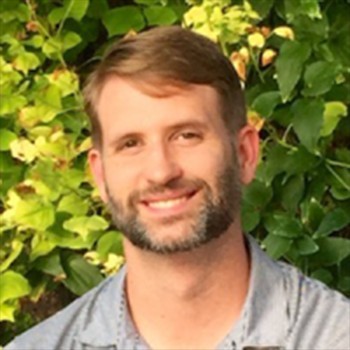
Ryan Sprott, Director of National Faculty at PBLWorks, shares how his Texas students used part-time project-based inquiry to explore contentious topics like immigration and energy policy. Students visited the border, oil fields, and immigrant aid organizations, then documented their learning through field journals and community art projects.
transcript
Speaker 1 But this conversation that we had with the border patrol with the students was was much different. It was like a scared straight presentation about why a student shouldn't join the the cartel, basically. And it was, I would say, the tone was belittling to students, you know, and it wasn't what we had requested. We had requested a dialogue, not a presentation, and it was a lot of propaganda. There were pictures of people being, you know, arrested and militarized helicopters and and a lot of things where I was just, like, sitting there. And at many points, I wanted to interrupt the conversation and and jump in because I wanted to, like, protect students. But I didn't know what to do, honestly, so I just sat there. And I was at the front of the room. I couldn't see how the students were receiving it. And at the end of this presentation, he said, you probably don't have any questions, do you? And I felt it. I felt a whoosh of hands come up.
Speaker 2 Hello, and welcome to episode 169 of our podcast here at Human Restoration Project. My name is Nick Covington. Before we get started, I wanted to let you know that this episode is brought to you by our supporters, three of whom are Anna Wentlundt, Kevin Gannon, and Kimberly Baker. Thank you all so much for your ongoing support. Our conversation today is with educator, author, and director of National Faculty at PBLWorks, Ryan Sprott, about one of the most contentious topics in education today, that is Teaching Contentious Topics in a A Memoir and Primer for Pedagogical Transformation, which is also the title of his book. In this conversation, we'll be talking about his experience teaching an inquiry based approach to teaching contentious topics. In a part time project based inquiry course, his students in Texas, of all places, engaged with some of the most difficult, open ended, wicked questions around, or as Ryan refers to them, questions to open hearts and minds. What is the purpose of a border, and what has shaped your answer to this question? How can we improve energy policy, and what has shaped your answer to this question? And what is the purpose of school, and what has shaped your answer to this question? To accomplish this, students visited the Texas border with Mexico. They worked with immigration aid organizations and hosted dialogue with border patrol agents. They visited Texas oil fields to speak with oilmen on the ground, engaged in interviews, documented their experiences in field journals, created collaborative community art projects, and so much more. You'll hear student testimonials about how they came away transformed forever by the experience. Ryan, thank you so much for joining me today.
Speaker 1 Well, thank you, Nick. It's great to be here.
Speaker 2 So for listeners who may not know who you are and what the educational journey that led you to teaching contentious topics in a divided nation, can you speak about yourself and, what brought you to this today?
Speaker 1 I think that the best description that I can have of of my work is I I refer to myself as a teacher from West Texas. I I've held a lot of different roles in education, but I think that everything that I approach is is still through that lens as a as a as a teacher trying to do good work in in in in a place like West Texas. And so I started my career in a town called Big Lake, Texas, a very small remote town. Couple things to know about Big Lake, Texas. There is no lake. It's a super, super dry area. It's in the middle of the Permian Basin, which is one of if not, like, the leading producer of energy now in in the world. And so it was a oil filled community, oil and gas. A lot of the the students and families worked in the oil and gas industry out there. Big Lake, Texas for some geographical to tell you how geographically remote it was, 70 miles from the nearest Walmart or McDonald's. And so it was, you know, a very rural, very conservative politically conservative community. And I worked there for five years, not that far from where I grew up in San Angelo, Texas, which was more of a ranching community. I worked there at at Reagan County High School. It was the only high school in the the entire county. And then I moved to San Antonio, Texas, where I pursued my doctorate in educational leadership. And in that role, I had a really interesting experience really diving deeply into very different fields. One was, like, participatory action research, which is really grounded in critical pedagogy. And then my other role was working as a research assistant in what's now referred to as education big data. So looking at large groups of quantitative, and doing large scale quantitative analysis, thinking about efficient systems. And so these two very different experiences very much shaped the way that I think about education and and have lifted up many questions for me as well as I've gone through this journey. After that, I worked at an incredibly diverse elementary school in in San Antonio for a little bit, public school. And then I served for eight years at the International School of the Americas, which is a an open enrollment public school, which I'll talk a little bit more about. I've served as a instructional coach in Downtown San Antonio at a public school. And then, as you mentioned, I currently hold the role as director of national faculty for PBLWorks where I get to support our wonderful facilitators out in the field who are doing work to to help teachers build project based learning experiences for their community. So that's kind of a long intro of who I am, but I think that it it's important to know that as I talk about why contentious topics are important to me and kind of how it has shaped the way that I think about contentious topics. So there's a couple of things about my journey in contentious topics that I wanna I wanna share. One is that I found working across political spheres and schools that have, communities that are maybe really far left or far to the right is that across the board, students are drawn towards contentious topics because one is they're super complex, and students are interested at digging into complexity. And they have a tremendous capacity for handling complexity, I think, in many ways, a stronger capacity than adults do. That's one of the reasons. Another reason is that there is a a desire to do just important work, And these topics are things that are affecting their lives right now and are very much affecting the world that they will inherit. And so that's an important part of it as well. I found that across the board that parents are supportive of anything that builds critical thinking skills in students for the most part. I mean, there's a few exceptions, but for the most part, parents really want teachers to build students' capacities to think well. They're less interested in teaching students what to think, more interested in supporting students and how to think. That's another kind of unifying thing. And then the last one, I would say, is that, and this may not be like a popular opinion, it may not be a universal experience, but in my personal experience, the biggest obstacle for teaching contentious topics to me has always been this efficiency model of education, not necessarily, like, divisive political rhetoric because as teachers, we're so often pushed to move forward, to go fast, to moves to push students towards some sort of standardized outcome and to actually, like, build students thinking that there is a right answer on complex questions and to arrive at that answer quickly is something that is good and and valued. I wanted to use teaching contentious topics to disrupt what I see as, like, a a really pervasive and insidious problem in education where there's there's just not much room for allowing for uncertainty, allowing students to be okay with not knowing the answer, to a difficult question. And because people grasp two contentious topics in really strong ways, I thought that this was the perfect place to push against that efficiency model and allow for more space of ambiguity, more space of exploration. These topics, like, as I'll talk about them more and more, my intention behind this is never to have students land on a particular understanding. Sometimes we finish a year of study on a unit, and I don't even know where students stand on it. But I do know that they have deepened and expanded their capacity to think about a complex question in really meaningful ways, and they've been stretched in thinking about how people come to a topic based on their own positionality, their own experience. Those are some of the reasons that it was important to me. The other thing, just real quick, was that I didn't spend a lot of my time teaching contentious topics as a teacher. Most of the time, I was teaching things like the Han dynasty or early in my career, like the lord of the flies or whatever. Right? Like, that's what I was doing. And this probably spent was like, if you add it all up, I don't know, between one to 5% of my time was contentious topics. But always the most valuable experiences for students were when we dug into these things of meaning, where we carved somehow carved out space to do this. And for me as a teacher, it was the most important, like, growing thing for me to hear and listen to students' experiences around these and and learn alongside them.
Speaker 2 And it's so powerful just to hear you recount the importance of teaching contentious topics. And sort of remarkable too to hear how you're saying even though it may not be an intentional outcome of the systems of efficiency, it's still where the system of efficiency pushes people towards certain answers or certain ways of thinking or certain pedagogies within the realm of, you know, contentious topics or so called divisive topics that tend more towards one off debates as opposed to, like, deep and meaningful discourse that brings in a lot of perspectives. And so it's really interesting to hear you say that one of the biggest motivations was not necessarily it wasn't an explicit political agenda so much as it was disrupting those efficiency measures that push us into ways that are are counterintuitive and counterfactual to the goals of education, which is to broaden our perspectives and experiences.
Speaker 1 And I wanna can I add something real quick? Of course. Can I even think that I don't know this to be true, but I have a wondering about might our political division and how people are so quick to grasp onto conclusions with very little with, like, very little authentic investigation, might that be a system I mean, a symptom of this larger system that we have? Right? And so I I I really wanna push against those things in order to hopefully, you know, like, explore different options to build people capacity just to sit with uncertainty a little bit longer as they explore these topics.
Speaker 2 Yeah. There's just so much to be said about an environment today, be it media or political discourse or other things that privileges and values the quick answer. You know, if you get on national television, you say, I don't know or I'm not the right person to ask about this. Talk to somebody who's closer to the issue and their experiences or somebody who has a more nuanced perspective. Well, they're not gonna get airtime again. So it's sort of a self selection process of, you know, certainty begets certainty. And ultimately, it's just sort of a hollow facsimile of of all of those things because you're not actually arriving at certain answers. You're projection just or the performance of those things when really meaning and understanding comes through recognizing your own uncertainty and grappling with different perspectives around those same issues. I wonder if you could speak to because I think people here at the top that, you know, you're the director of national faculty for PBL works and, you know, you've said how these experiences teaching contentious topics made up 1% of your teaching experience. Maybe they'd think that you taught at an inquiry based school or a PBL model or something like that, but that is absolutely not the case. Right? You were you were inserting these wonderful inquiry models in between the periods of the school day in a really interesting way. I was wondering if you could speak to that, for learners or for listeners.
Speaker 1 Yeah. For sure. That's a such a an important thing to lift up. I I did teach like, I did a lot of these projects at a wonderful school, and I wanna name that. Like, it was the International School of the Americas public school of choice in a large Texas district. But this school was one of the flagship schools for the International Study School Network, and so we were built on this foundation of global competence. And and we had these this graduate port portfolio and profile that were built around ideas that included investigating the world and recognizing and weighing perspectives. Each grade level took a trip outside of state. Like, the juniors would go along the civil rights trail. We that we had the largest student run model united nation in model united nations in the country. So there were a lot of, like, really, really innovative things happening happening at the school. But at the same time, you know, we were a public school in Texas. We were a school within a school. We had a fifty minute bell schedule. Everybody took certain classes. Our at our school, every student took AP world history, which was the the course that I I, taught at ISA. We had report cards. We had grades. At that time, we had class ranking. We all took the state standardized test. And so it was a little bit of a blend, right, to do this. But in these these deep dives and contentious topics, we had to hold them outside of the regular school day. Right? I had principals that were like, hey. We can find a place to weave this into the schedule. Was super supportive. But the kids didn't. They weren't willing even though they wanted to study it more than anything, they weren't willing to to give up an opportunity to take another AP course because the AP course was what was gonna give them the grade point average that was be a little higher. These there was, like, a multiplier effect on the grade point average. And so although they would much rather take my Bordeaux course than my AP World history course or or whatever, they, like, they it was so much pressure to to be in this, like, larger machinery of in this competitive standardized machinery that disallowed for this opportunity for what they really wanted. What I really wanted was this deep deeper inquiry in something that was highly relevant. And so we ended up having these courses before school, during lunch. So people would would rush to to the classroom to talk about, like, the Monroe Doctrine with with the red cafeteria tray in hand, right, to do this. And and we only met for these courses, we only met once every two weeks, and we would maybe have, like, one one field trip or two trip trips throughout the year. So we spent a lot more time in my AP World History class with with the students than we did in these specialized classes. But I would argue, and I think the students would say the same, and they would probably be more adamant about it than I am that these peripheral experiences to the school day were far more important, far more valuable than they were having in in my mainstream classroom.
Speaker 2 And we'll talk more, I think, about the student reflections and the testimonials of those experiences. I think for listeners, approaching contentious topics, thinking in the context of Texas and the structure of how you structure that inquiry that you just spoke to here, you were really only able to pick four topics, I think, over the four years that you ran sort of these year long inquiries. And it's not like you started off with the the least contentious topic in the book. Right? Capital punishment in Texas, followed by the land trilogy, right, with borderland, oilland, and schoolland, I think in that order. Some of the most you call them third rails, hot buttons, or whatever that imaginable in these contexts. So I I'm super curious to hear from you then just about that model. Whereas the borderland project is a cornerstone of that narrative, it's an iteration of that inquiry model that you explored first with capital punishment in Texas and then improved upon and iterated upon for oil land and school land as variations on that theme. Can you speak to how that idea and that model and those themes that you connected to it originated and how those developed over time?
Speaker 1 On capital punishment in Texas and all of these ideas, right, I wanna be clear that we didn't enter with some clear framework or foundation about how we wanted to approach it. It was very much trial and error. And the biggest influencers in creating this model that we I wrote about in the book were students. Like, just listening to students and what was working for them, observing how they were engaging in these conversations. So I wanna start with that. I wanna talk too about, like, none of these things were done by me as a alone. They were all, everything that I anything that I've ever done in with value as a teacher has been highly collaborative. And so I I drew upon my friends in the art community. Really, all of these topics have stemmed from what was something that was really important in our, like, the news cycle, what were students caring about, and also who do these art I I worked with a a a lot of artists and was fortunate to to be connected to in our community. What were they also interested in doing work as as professional artists? And and all these artists who I worked with in each of these projects, like Mark Minjevar, who I worked with in Capital Punishment in Texas, he said something along the lines that, you know, whenever I have a question, I find it best to pursue it in collaboration with others. And he was particularly interested in working with students, to see their perspectives and also just because of the nimbleness of their of of teenagers' thinkings on these, these issues and their deep curiosity. And so it stemmed from a blend of, like, hot topics,
Speaker 2 student interest, and who are these outside professionals that we could bring in to to kind of partner. You mentioned in the book that one of the things that drew you to the question of capital punishment was the fact that somebody had been executed in Texas by lethal injection, I think, the first time since it correct me if I'm wrong. Texas maybe had, like, changed death penalty laws, and somebody had just recently been executed via that. So it was fresh in the in the headlines, a fresh topic or, I guess, a wound, you know, that needed to be explored
Speaker 1 in the politic there. Yeah. It was actually, like, most of this work was focused on Charlie Brooks junior, who was the first man to be killed by lethal injection after the death penalty was reinstated, and then he was the first African American to be executed anywhere in The United States in the post Greg era, which was, like, after this reinstatement of of capital punishment. And so my this he was he was executed in 1982. So it was a long it was it was a while ago, but Mark had been in close conversation with his sons. And Mark had also had, like, these really interested conversations with, like, sister Mary Prejean, who was a lead advocate for abolishing the death penalty. And Mark had kind of a traumatic and fascinating experience of interrupting mob lynching in a in a place in South America that still was practicing some vigilante justice. And so he was was just intensely interested in in a lot of questions about capital punishment and living in a state, right, where his tax dollars will in part fund capital punishment. And so but he came to the class with such a stance of wonder, but also a stance like, a rich archive of information. Right? And so he had letters from the family that Charlie Brooks had sent back to to his who his sons. We we listened to, to court cases. We, we visited archives at at the University of Texas around capital punishment. So I I think that, you know, Mark was a was a big part of showing me early on, like, how to as a teacher, like, the tenor of these classes was much different than sometimes happened in in in my AP world history class. And so although I'd worked with many artists before, it was was one of the first times in the class where I saw how Mark centered art practices in our inquiry into this incredibly, like, emotionally complex issue. And it was just vastly different than what I saw in class when I tried to sometimes present a contentious topic, and students were, like, ready to jump to a conclusion, ready to debate. They were ready to take a stand, right, to write an essay, to make a presentation. Right? But Mark, instead, we were just drawing. Right? Or we were just like and we did this thing called jamming where we were writing on the the drawing and writing on the court transcripts with, like, there was no no push to come to a quick conclusion about anything. It was using art as a way to to allow us to stay in that space of curiosity without coming with a concrete answer. And so I think, like, that was a huge moment for me to to see how he was weaving that in. And and I I don't consider myself an artist, but I I could engage in those practices. Right? Like, he and and a lot of the art that he does and that a lot of the folks I've worked with, who are in this, like, called the social practice art, art world or contemporary art world is about, like, sparking sparking dialogue and conversation and using art, to just deepen our inquiry and ask more questions.
Speaker 2 There's such an interesting through line from what we were talking about earlier about efficiency and then to bring it back to art and situate that within the context of student performance in school, which so often, right, demands some sort of convergent thinking on some idea. Right? Where regardless of thinking about things, you have to defend with evidence some sort of proposition. And maybe it's contentious or maybe it's related to the content of a course, but the artistic processes that you're describing really sent a lead to divergent thinking. Right? An expansion rather than a contraction of of possibility and performance and really lead students to perhaps ask more questions at the end of the learning than have answers in the part of that. And, yeah, I I love the activity that you describe of the the jamming on the actual court transcripts, how you all had read that there, the art artistic expression and drawing. At some point, maybe it was your artist friend or someone made this wonderful dialogue table where people could sit at this and it had questions related to capital punishment and things that you could engage with dialogue and not necessarily have answers about. And then I think using the capital punishment in Texas both as a model for teaching contentious topics, but then as your own personal model for how you iterated upon that in the subsequent years. Let's talk about the land trilogy here then. And what question was the focus of exploring borderlands and the meaningful context? How did that get into oil land, and then finally to look inward at the model of school?
Speaker 1 Yeah. So one thing I'll say kind of as a bridge towards from from capital punishment until the the land trilogy was this really important idea of centering art, but moving away from an idea of art that we sometimes see as a genre in art education. Right? Like, art education is sometimes its own genre, which is about, like, producing a product that is building on an example and who can ever do that best project product wins. Right? Like, it has it has the rubric check boxes with all the skills you need to show as you're going through this. Yeah. Yeah. And so I think that the the the one of the ways that that Mark and Jason and a lot of people I've worked with pushed my thinking was, like, this idea that we're not think we're not interested necessarily as art as a product, as itself, like people creating some sort of product. It's really about processing information and using art as a way to spark more questions for learners themselves, but also for the broader community. And so, moving away from a prescribed kind of top down approach to art instruction, to something really far more in, like, the contemporary art space. And so there's that. But moving to the work that we did with Borderlands, Oillands, and and Schoolland, and all of these courses were very much influenced with by my friend and artist, Jason Reed, who I've known for years and we've worked with together with this organization, called Borderland Collective for many years. We used a lot of the centering of the same art practices that, Mark and I had used, but we we started making some adjustments. And one adjustment that we did was really wrap the project around a a central question. So for Borderland, our question was, what is the purpose of the border, and what has shaped your answer to that question? And in capital punishment, we spoke with a lot of different perspectives of and people who hold different perspectives. But in borderland and oilland, we went full throttle with that. In borderland, we asked the question, what is the purpose of a border, and what has shaped your answer to that question to border patrol agents at the border. We went to the border, and we saw the border at Santa Ana Wildlife Refuge, which at the time was one of the few places without a border wall, in this region of Texas. And we saw the border just as a tranquil river with butterflies floating around and and migratory birds. Is that the cover of the book? That is the cover of book. This is this situates it for the reader as well. Yeah. That was a picture taken by a student, Lee Huang, who was in the in the class. And so that was yeah. That was that peaceful river and thinking about like, wow. The border can look like this. And then two miles or a few miles down the river, we took the bus. We always had amazing bus drivers when we took these trips. They were like, yeah. Well, whatever. We'll do it. We found out that there was a militarized outpost close to this. And we went there, and we went from this tranquil river to seeing a heavily armed guarded, like, two story fence and gate that was there with Humvees and all kinds of machine guns and everything. And so I was like, what is the purpose of the border there? And you're thinking about it. We we worked at the, Sacred Heart Respite Center, which was run by sister Norma, who provides aid for many years has provided aid to asylum seekers in the area. So we met some asylum seekers and made some soup. We we we, sorted clothes and helped people get ready for the next part of their journey. We spoke with Eddie Kanales from the the South Texas Human Rights Center. And Eddie, for many years, he passed away this past year, but an incredibly, like, dedicated person who, for years, put out water barrels in this part of Texas. That was one of the most dangerous crossings in in The United States where people from Mexico were, traveling in from Mexico were, trying to avoid a border patrol checkpoint and would would die from dehydration in this large area, the brush brush country of of South Texas. So, I mean, we talked with global ambassadors who were visiting San Antonio on a wholly totally different thing, but they were experiencing immigration in a different way due to the Syrian refugee crisis around the same time. I mean, just person after person after person and just trying to get we were trying to understand the complexity of of a simple, seemingly simple question. Right? And we asked this question over and over and over to people to ourselves from the beginning of the year to the end of the year. And the goal of the class, really, if it was anything, was to see how our answers were shifting and changing over time and becoming more complex and nuanced. It wasn't about, like, you have a right or wrong question or yours is different than this person. It wasn't about a stance. Right? It was about just deepening understanding, about this very complex topic.
Speaker 2 Shifting to that that concept then of deepening and problematizing, complicating student understandings and reflections, one of the coolest parts of the book that I that I found is not just the inclusion of student reflections from journals and things that they had kept at the time, but also you had reached out to students who, you know, had since graduated, were out in the world, some of them working in a lot of these capacities in and around Texas too. But ask them about the impact of these experiences, especially as it relates to Borderlands. And I'll maybe just read one or two of these so people can get a sense of of the impact here. And this to me, as I was reading this too, thinking about the context of efficiency and school measurement, and I kept saying, where is this valued in our measurements of school success and achievement and everything else? Right? Like, it's one thing to take a dipstick of a test score or something at a certain time, entirely other one to reach out years later and hear from students about the things that impacted them. One of the students says, currently, as a young professional, I realize how much the course opened up my eyes to to the use of art to explore complex social issues as I continue my graduate classes as part of Colorado State University's arts leadership and cultural management program, it is impossible to ignore the ways experiences like these impacted my own awareness, activism, and drive to create space for intersectional education through creative expression. There's no doubt in Ellie's response here that she's channeling a little bit of of Ryan. I'm I and and that experience a bit. I'll read another one. I'm not cherry picking. I'm just picking a random page in the book and trying to trying to find one. This is great too. When we traveled as a class to McAllen, Texas, the border as a concept suddenly became quite real and personal. The border had names, faces, and a story to tell. The headlines flashed on my TV at home became tangible tangible and and human. Human. The time we spent at the Catholic Respite Center in McAllen and the Santa Ana Wildlife Refuge breathed life into the CNN updates that pop up on my phone. I could no longer sit idly by. I wanted a better, happy, and fair future for No, the boy I worked with at the Catholic Respite Center and the thousands of other migrant children like him. I now work as a legal assistant for the races, children children's program in Austin. A lot has changed since the Borderland course, but I'm happy to say that the core values Borderland taught me remain very much relevant. I continue to greet my community and current events with a curious mind and a driven heart. I continue to seek out and uplift humanity in the face of rigid immigration policies and callous indifferent towards human rights issues. I continue to ask better of myself and those around me. I'm committed. I'm passionate. I have borderland to thank. What a testament to the power of of this. Is this what you had expected when you reached out to students? What No. No. What surprised you when when Paige and Ellie and Noah and and Daniela reached back out all these years later?
Speaker 1 You know, I was just supremely moved by by what they shared about the influence. And and I'll I'll make a note. Nobody's saying that about mother classes. So, I mean, like so it's like it's it really is like the I mean, that's what I wanted this book to be about is the pedagogical imperatives really can just redefine a relationship with with students between students and teachers, with students in the world. And so pedagogy the pedagogical foundations of an experience are just so important. So I think, like like, I was always moved by these students. Right? Like and that they moved me honestly. Like, if you want me to be transparent, like, they moved me to do these classes. Right? Like, because it was their curiosity, their their goodness, right, that, like, I wanted to just provide spaces for them to more fully become the people who they already were. And so I think, like, that that was a big part of it. But I I do think that, yes, what surprised me. I think what surprised me was not that it was a meaningful experience. I I I had a sense, right, at the end that it was a meaningful experience, but that how many of them are doing things that are directly connected to this one topic that we probably spent, like, I don't know, not that long. I don't even know how many hours, but not not that many hours on it. I think some people entered the course because they were already interested in the these topics. But it certainly like, it's evident if you look at these quotes and where people are now that it did have an impact on some some career trajectory for sure. And I think it's such a testament to
Speaker 2 that approach to contentious topics, not that students left feeling like they knew the right answer or they felt like they could better engage in a political debate or whatever. But the fact then that their experiences with Borderland in particular activated them to get involved in the issue Regardless of, you know, what angle or what lane that they picked to get involved with that, it really activated something in themselves at the level of purpose and meaning to say, well, this is not something I you heard it in that last test testimonial. This is not something I can ignore. Right? I know the people that are impacted by the headlines that pop up on my phone notifications. Right? Like, now that I know I can't help but act in the world, and that to me, I think, is is just such a testament to this kind of education that again, you're saying was one to 5% of the total time teaching and not necessarily a component of the other coursework that they were taking. Yeah. Absolutely. This was a course I don't know if you'd call it a course. This was an inquiry that occurred sort of as an extracurricular club to explore these issues. And given the quality and depth of student experiences and reflections that we're referring to then, how did you put a grade on this? Or how did kids know that they were learning and what they were learning if you weren't grading the things that they were doing? How did you approach that? Everybody got a 100.
Speaker 1 Yeah. That that that means that you gave them a 100, and then they just didn't show up and try. They didn't care anymore? Right. Yeah. They didn't. Yeah. No. I That's why I've heard this happened. Yeah. That's what happened. Right? I mean, I will say and I I can talk about this a little bit more. Like, I think that if there's one learning that I would go back and do differently, I I would have a clearer imperative to have stronger assessment. At that point in my career, I hadn't fully decoupled the idea of assessment from grades or assessment from, like, a coercive measure. I do believe that assessment is super it's essential. Right? And it's, like, super powerful to help people move along the path towards learning, but assessment should be something that's collaborative and side by side and focused on important goals and less worried about I'm I had always you know, as a student myself, the only reason I did much many things was because there was a grade for it. Right? It was a coercive measure. I was recently just a couple weeks ago, I've been reconnecting with some of the folks in this class, and I was having a conversation with several of the students. And one of the students said, you know, not having a grade, that was the first time in my life I'd ever done academic work that wasn't graded. And you know what? It was the first time in my life where I ever felt free to really ask critical questions because I'd always worried about need to ask a question that's going to lead me to what the teacher wants. Right? Like or or to what the test wants or whatever, but it was really about the teacher. Like, she had been so concerned about, like, well, this is what the school thing is all about is is getting the grade. And and she said that it opened up the possibility to ask questions that without even thinking about what was the appropriate question to ask or the right question to ask or what was gonna lead to something. And so I thought that was a super powerful comment. The the other thing about like, when we're talking about teaching contentious topics and we're moving away from an efficiency model, if people are worried about what a teacher wants, this isn't gonna be effective. It's not about trying to read the teacher's mind. And I'll say, like, the worst way to do any of these courses are try is trying to move students towards your own political viewpoint about on a on a genuinely con complex topic. And so grades muddle all of that. I I think that you don't have to move away from grades all the time, but in situations like this and contentious topics, we're really trying to get people to be okay with not knowing and and be uncertain for a little bit. Grades are kinda counter run counter to that.
Speaker 2 Yeah. Because what would it mean to say, oh, I've participated in this process. I've opened my mind to this dialogue. What do you mean I got a c? Yeah. For for what'd you take off points for? Then they're gonna be doubting, you know, that this process is beneficial and effective, right? The again, recognizing how vital feedback loops and assessment and and reflection play a role in that, but also the actual harm that grades can cause to a safe learning environment where you're supposed to be exploring and asking the quote unquote wrong question or you're supposed to be proposing answers that are gonna be disagreeable, you know, to some people to probe and prod. Right? How does that fit into the topic here? Right? It it stifles that emotional and intellectual safety if they're going to be judged and evaluated and receive a low grade for for that experience. Yeah. Thanks for bringing that up because it is
Speaker 1 that's another thing about these these courses is they were really communal experiences and that it was all about relationships and building something together. Although it was like we all had different perspectives, we were all moving towards a final presentation of our learning. And and and Mark, again, and Jason, they had many ways that they were able to combine different perspectives into beautiful art. Like, Mark had this manifesto, which, he gave the students prompts at the end of the year where it was like, I am for a border that dot dot dot, and the students would fill out that stem. And in their their answering of that that stem, you could begin to see that everybody had different perspectives, but we also had, like, this common learning experience.
Speaker 2 I can read a couple of those. For listeners, it was all compiled into this one book for basically public display. And I think what a cool recognition of the collaborative nature of this that this is the culminating exercise, not our answers to test questions, but here is the culmination, I suppose, of all of our questions and our process we asked, we contributed to this topic together.
Speaker 1 Yes. Exactly. And, like, on this manifesto, some some students' answers were and they they all stood up, right, in class at the end and said, I am for a border that like, and so one student said, I am for a a border that treats people on both sides as human. Another student rose up and says, I am for a border that rips a closed door off its hinges. And another claimed, I am for a border, which is a who rem that remembers my grand my grandmother. And so it was a collaborative thing and it felt so different. It almost felt to me akin to being on a sports team or being in a band where it's like, we're in this thing together. You don't grade your basketball team. Right? You don't grade you don't grade the the band. I mean, maybe you do, but that's not what drives those experiences. Right? It's being part of a of a community that's about doing something that's important. I also say, like, not every student was it wasn't just, like, magic. I I there were students who I had to encourage to to attend at first, and had to, like, track some people down until things got rolling. And so it's, but, like, as the experiences unfolded and people kind of felt like, oh, this is this is different than your other class, mister Sprott. Like, I I can I I can do this thing? Right? Like, it it became it it did feel like a like a team
Speaker 2 more than my class did. And I think too there's a level of, like, unlearning or deprogramming that has to happen for students too. Right? They can't think about experiences in school except through oftentimes the lens of grades and grading and testing. And so when you say, well, this space isn't gonna have those things, there's a lot of risk involved for kids in that. It's a big it's a big shift to move from a largely, like, extrinsic driven system to one that's, like, filled with meaning and purpose. And you you have to bring to the issue into this class, like, your whole person. You don't just get to dip a toe in and take the test and and disconnect.
Speaker 1 And, thankfully, I was in a place where, like, this wasn't the only experience that they were having like that. It was, like, a a place that valued learning over coercion as a whole, and so most students had experiences, like that. So it wasn't a, like, a totally unfamiliar
Speaker 2 feeling. But it was for me, it was it was pretty new. The question that we so often get as educators and classroom teachers get, right, is how do you know that kids are learning, right, if you're not measuring and and assessing perhaps in a particular way or applying grades or whatever. And I think the antidote to that is exactly what you've provided here through these student journals, the reflections, the ones coming from, I don't know, you know, almost ten years on here in preparation as you wrote the book. And the products, you know, the collaborative products that they created at the end here too, I mean, you could hand that to anybody. Send them through the art gallery. You read the manifesto. Right? You look at the art that the kids created and well, you tell me, did they learn something? Right? You read in their own words, and that to me is so much more powerful. It's self evident. It makes the learning self evident on the page compared to having to have an interpreter guide you between, okay, what differentiates an 87 to between an 88? Did that kid learn 1% more of the content than the other kid? We gotta weigh them on the same scale. Like, that's not we know that's not how learning works, but we try to pretend that's the objective way of doing it in school. And it really does. I mean, especially, like, at the high school level, it can pit students against one another. Right? Like and
Speaker 1 and this class was different in that way, I think.
Speaker 2 In stressful uncertain times, when cynical powers attempt to divide and isolate us, community and solidarity are acts of resistance. But there are no superheroes here and no simple answers to be found, only the quest for connection. In 2025, we are responding to the need for community and solidarity in uncertain times by turning Conference to Restore Humanity into a model for humanizing critical discourse and dialogue. Bringing together students and teachers, researchers and doers, thinkers and visionaries to explore complex topics in education and illuminate a path forward together. What if, instead of viewing the fringes as an educational afterthought, we treated them as a blueprint for what schools could become? In our opening flipped keynote, Doctor. Sarah Fine will explore what can be learned from spaces that are often seen as peripheral to the core purposes of school. Elective courses, career and technical education pathways, alternative education programs, and extracurricular activities. These spaces carry powerful lessons about how to design for authentic relationships and deeper learning. And, we are taking our flipped keynote model one step further by adding fireside chats, moderated panel discussions followed by audience q and a. Shanay Bond, Maria Munroe Shuster, Luckett Keesh and Will Richardson will lead us in dialogue about the challenges facing education today and how we can collectively address them in 2025 and beyond. Audrey Waters, Shaina V. White, V. Dow, and Charles Logan will help us answer what, if anything, should be the relationship of AI and EdTech to education. We'll also be hosting a student panel of young people from Great Plains Action Society, an indigenous led grassroots organization advocating for indigenous rights, to speak to their experiences and perspectives as indigenous youth today. And instead of week long learning tracks as we've had in the past, we are including two hour daily workshops with expert practitioners. Nawal Karouni will help participants understand and connect family practices to curriculum to create deeper, more authentic caregiver collaborations. Doctor Emma McMain reimagines SEL as open dialogue, not a checklist. Connecting social and emotional learning to culture and society. Angela Stockman invites participants to explore how pedagogical documentation can serve as an act of stewardship. Honoring, preserving, and nurturing rich narratives about learners and learning. And, we'll continue to use our Discord as a hub for camaraderie, community, and to keep the conversation going beyond the live events. Our Virtual Conference to restore humanity twenty twenty five runs July 21 through the twenty third. To make this year as accessible and sustainable as ever, we've cut the ticket price to just $50. You can learn more about Conference to Restore Humanity and register on our website at humanrestorationproject.org/conference. Thank you so much for joining us on our quest for connection as we continue the journey to restore humanity to education together. For listeners, this might sound real wishy washy. Yeah. And that's maybe intimidating. I think the book provides a little bit more of like, this is a process. Right? It's not like a pedagogical practice that you can say, oh, this is like a do now. Right? Or you could do this immediately. You have in the book these little kind of recipe almost guides in here that say this is a thing that can connect to this value or this idea, but all of those practices are rooted in these five tenets that guided every single project. And I'm curious about two things. First, if you could just read those so so listeners know. And then describe, were those intentional at the beginning, a foundation that you built on? Or were those values that emerged as a result of the inquiry that you planned and participated in with students?
Speaker 1 Yeah. Thank you for that question. I think that, like, did include some of these, but I'll say this before we even begin. Like, we we we included some of these intentionally, but a lot of it had to do upon reflection about, like, what was it that really made this experience effective? And so it was a little bit like a a qualitative analysis of of these years of experience in there and and drawing out what what was really the difference between these. So so the first tenet is a question to it's called a question to open hearts and minds. And so the idea is that you're you're asking a question that anybody with a little bit of knowledge on this topic has an entry point into. So what is the purpose of a border? Right? That's, you can enter there. There's another part of it that's intentionally not trying to bring in binary based answers. Right? Like, it's either this or that. Another is it's probing underlying assumptions. These questions should probe some underlying assumptions. So it's like, if you said, how can we improve inter immigration policy? Right? That's a great question for a particular project. But I think if you're talking about something that's super, super contentious and, will elicit deep emotions of students, I want people to kinda, like, free themselves from having to go to, like, some sort of action oriented project at first. Right? Let students dive deeply in this. And so what is the purpose of the border is different than how can we improve immigration policy because what is the purpose of the border even questions the notion of borders. Right? The other question doesn't. Right? It assumes that they are natural. It assumes they are they are real. And so this kinda gets on goes under that, a little bit. And so and then the last part of the these all of these questions was, and what has shaped your answer to this question? And this is to make it explicit that everybody comes to these questions in different ways. Right? It comes to their answer in a different way. They all have different ones, and that's normal. And guess what? Yours can change as you encounter more information, and it should change throughout the year as you're getting gathering new perspectives. So that's the first tenet. The second one is art as inquiry. I think we've talked about that a lot. This idea just to, to to center art as a way to not focus so much on the product, but as a way to process these complex issues and maintain that sense of curiosity. The next one is dialogue as action. I believe that by refiguring who speaks and how we speak, it really changes the world, changes how we see the world. It changes how we see one another. And so when we think about dialogue as action, we always would use these protocols for dialogue, which were, like, almost recipes, as you said, like recipes for conversation that would allow certain amount of time to listen, certain amount of time to talk just to have a more equitable platform and a focused platform for conversations, instead of debate. Right? We wanna be clear that let's move away from debate. Debate's a fine activity. But, again, if it's something that's really contentious, debate often just pushes people further into their own perceived notion. And even if you're getting people to debate the other side of a topic, it still pushes people to think about the topic in a binary way. It's either this or that instead of, like, a polychromatic view of these topics, which are not two sided. Right? They're far more complex than two sides. And so that's that assessment for liberation. We've talked about assessment a little bit earlier, but this idea that it is important to think about what are some key competencies that students might be building. And as a teacher, how might you walk alongside those students in a collaborative effort to help them build those competencies? And then the last one is mindfulness for mitigation and collective creation. And this is this idea that, like, these these conversations are tough, but students are really resilient too, especially if there is a trauma sensitive foundation for the course. And so I think that a lot of this last tenet about mindful practice is about how do we build a trauma sensitive foundation so that students can activate their prefrontal cortex to feel support enough to know how to gain support, know how to breathe, know how to practice this in order to persist in challenging conversations, to persist, to to encounter things that might be very challenging to them, and to know that they will be okay, and to build the skills to be okay to continue to ask those questions and to move forward and to move towards, like, what I've heard described as antifragility, right, like, to build some some resistance in that way so that they can, yeah, continue with that inquiry. So there's that. And then also, like, with mindfulness, it's about, like, slowing down. It's about understanding that knowledge is always shifting instead of thinking and knowledge is always fixed and something that should come down come from above. And so a lot of the mindfulness work I've I was inspired by Ellen Ellen Langer who's, like, known as the the mother of mindfulness, has been a Harvard professor for for many years. And this idea that, like, mindfulness is is an awareness that perspectives are different, that everybody comes to a situation from from their own way of thinking. And mindfulness is an understanding that those things are always shifting and changing and evolving and that things aren't just fixed in the world.
Speaker 2 When listeners hear the explanation of what's happening, right, it it seems like it's sort it might be without guidance and structure. And I think with the benefit of hindsight, putting in these tenets might help demystify that a little bit. Right? Like, think of the emergent power of these five tenets kind of working in tandem together. Right? Like, what does, you know, the the value of approaching questions to open hearts and minds in your own context look like? Right? Like, the border might not be as salient of an issue or capital punishment as salient of an issue, but you can approach with any concept or, you know, problematize any kind of content through, I think, these five tenets, which make it which make it such a valuable framework. Looking ahead then, I'm super curious only because I went through a lot of issues teaching so called divisive topics as they were called in the state of Iowa, but contentious topics, you know, around nationalism, white nationalism, you know, teaching about current events in a real open way, in my opinion. But, like, considering the context of when you taught these four unit units in the mid twenty tens, I know the last several were in the first round of the Trump administration. Do you ever think or speculate about what it would be like in Texas now trying to do that work in 2025?
Speaker 1 Yeah. I I do all the time, and I really appreciate that question. I think that and this may be biased, but but this I believe that this kind of approach was built for this time. Right? Like, it it is made for this time. And not every not all your listeners were probably in Central And South Texas in in 2015 and 2016 when we did the borderland project, but this framework was built in a pressure cooker, if if that makes sense. In twenty fifteen, twenty sixteen, I would argue that immigration was a hotter topic in our region than it is today. The year before, 68,000 unaccompanied minors had crossed the border every day in the news. There were stories about asylum seekers. There were stories about overflow of prisons in the region, youth seeking support. And this was during Donald Trump's run up from a fringe candidate to the Republican nominee, and so there was a ton of rhetoric around that. And the national rhetoric that we're hearing around immigration was nothing new, from from Texas. Even policy approaches where of what we're seeing nationally have have been bandied about in in Texas for a while. And, again, this process is not about, like, getting students to take a stance on an issue, but what I have found is that when students have an opportunity to grapple with complexity in a trauma sensitive foundation to hear, to be with a diverse group of students, to have frameworks that support an equitable and focused conversation, and that previously marginalized voices are foregrounded into the conversation right alongside dominant conversation dominant voices in the conversation, students leave with a a more compassionate understanding, with a deeper interest in the topic, a more humanized understanding of the topic. And so I do feel like like that this is actually an approach that I'm not trying to sell the book. I make a nickel off of the book. Right? It's a but it was made for this moment, made for this time, and is could be helpful for people who are trying to think through this. Again, I'll say the most insidious thing, I still don't believe it's the political rhetoric. It's bad. It's harsh, and it's tough. But it is these broader systems that we have lived with that push us towards quick conclusions and standardized understanding and that we don't question nearly as much as maybe some of the really painful and harsh rhetoric that we're hearing around us. And I wanna tell just one quick, like, example. Like, I've I've talked with social justice educators with, like, a really strong social justice bent, and I've told them that, like, yeah. We talked with the border patrol. We've talked with, you know, conservative politicians. And and their response in some cases has been why? Like, why would you do that? And and my answer to that is, like, how could you not talk with with somebody who's arresting people on the border later, you know, after the class engaging in the child separation policy and pulling mothers from children, how could you not hear what is motivating those individuals, to to take those steps? They're an important voice in the conversation. And, like, I think that it's it's essential that we trust students if we've given them the conditions and the skills to think critically, to engage with perspectives that are vastly different than their own. And I'll give an example because when we went to the border, and we the students spoke with the border patrol, it was a very uncomfortable conversation for me as a teacher. We had met with several border patrol agents earlier in the summer as we took some faculty down there, and it was a different conversation. That was, like, a fascinating conversation where they were talking about the complexities of the work and and, you know, what was it like to be raised in the border and and to be doing this work and have parent grandparents from both sides? And and it was it was really interesting. But this conversation that we had with the border patrol with the students was was much different. It was like a scared straight presentation about why a student shouldn't join the the cartel, basically. And it was I would say the tone was belittling to students, you know, and it wasn't what we had requested. We had requested a dialogue, not a presentation, and it was a lot of propaganda. There were pictures of people being, you know, arrested and militarized helicopters and and a lot of things where I was just, like, sitting there. And at many points, I wanted to interrupt the conversation and and jump in because I wanted to, like, protect students. But I didn't know what to do, honestly, so I just sat there. And I was at the front of the room. I couldn't see how the students were receiving it. And at the end of this presentation, he said, you probably don't have any questions, do you? And I felt it. I felt a whoosh of hands come up. And the questions that the students asked were beautiful, beautiful, beautiful, kind, inquisitive, strong, courageous questions where they were gaining information. They weren't trying to prove anybody wrong. They weren't trying to prove themselves right, but they were asking questions like, you know, you you mentioned that a lot of the students join the cartels because they see no other option, but but then it was like, we're interested in what kind of work does your agency do besides programs like this, like, that are more preventative provide more preventative measures. Or you said that you're from New England. How do you think that shapes your, your interaction with this role? And, you know, then the students took that quest those questions whether they agreed with him or not, and then we came back and we had a structured dialogue, and they deconstructed what he had said. And that deconstruction of a of a perspective was essential in helping them look more at the systemic factors that were supporting agencies like the border patrol the border patrol were just, like, integrated into the way that we think about the the broader population maybe thinks about these issues. And and we the strength of their arguments or the strengths of their understanding was incredibly bolstered by this person who a lot of the students disagreed with. And so I think that that goes for for both ways. In oil land, we often heard from from people from oilfield workers who have, like, very different perspectives than than the students, and it stretched our understanding. And what it did, like, it was a humanizing thing. I think the way that the students asked the questions, for one, it changed the way he thought about youth and the types of questions that they would ask, and it also brought him closer to the students. And he would get more interested in the students because they were asking questions that I do believe pushed his thinking on some things and some things some questions maybe he'd never asked himself, but were kind, strong questions. And so I'm an advocate. Like, we we have to be better as a as a nation about listening to understand, not listening to agree, but, like, listening to understand where people are coming from because it helps build our critical lens. Right? It helps build it helps support the own actions that we take, and it helps humanize these situations in a way that if we don't ever have that opportunity, we can just, like, blank slate paint people as this way or this way.
Speaker 2 Yeah. I think the story you just described is just such a testament to trusting the process and also trusting kids. Yep. Because if you've set them up with with, you know, a mindset of inquiry and we're asking these questions, this is the purpose of all of this, they're out there gathering. They're agents in their own learning process in that way. And then you put them in an issue where they're confronting, you know, somebody that they might have thought of as being an enemy or someone on the wrong side. And if you trust the the preparation and the process and you trust kids to ask, you know, to perform in that context, then they're they're gonna do it. Right? And I think some of what you're talking about, that resistance to put students in those contentious positions, maybe betrays a lack of trust either in that process. Like, you know, I have not supported kids enough for being able to ask good questions in these in these in this sense and doesn't trust kids. And I think leaning into both of those as as an integral part of the process really sets students sets the process up for success too. I I think just trust begets more trust at every step of the way. Yeah. We can overprotect students to the point where we're not building their skills to
Speaker 1 to navigate the world in which we're seeing continually develop into this more like,
Speaker 2 divisive and and and closed ways of thinking. Yeah. And and I think even if you had not seen that conversation be so successful from student if it wasn't such a powerful testimony to the preparation of the process, if it fell flat, well, that's a feedback that you can use to say, okay. We're like, you know, bring that back here to step one. If we were to have this conversation again Yeah. Guys, did you feel prepared in this moment? Like, how can we help the process and then, you know, we'll try it again. So I think, again, just being open, you know, as an educator yourself to to that and to getting honest feedback from kids too in that environment can be so important. We're hearing all of this about the the experience that you're able to create for kids in the classroom in this inquiry based model as a as a classroom teacher. You've since stepped out of the classroom. How does all of this influence and inform the work you're doing now with PBLWorks?
Speaker 1 Yeah. I think that, like, one of the things I love most about PBL and PBLWorks is that I believe project based learning is a wonderful conduit for human centered learning where we are, and it's you know, PBLWorks influenced these projects. What I learned from them and thinking about driving questions and thinking about scaffolding and, authentic learning was a huge influence in in designing these projects. So I certainly took a lot from the org as I developed these projects, and I and I am an advocate for the org, and I work for the org because I believe that, you know, building teachers' capacity to create and facilitate high quality project based learning is a is an avenue for more humanized learning and to give students opportunity to grapple with important questions, to give them the support so they can be building important skills along the way. And so all of those things are very important in in the work that I do today.
Speaker 2 We've been talking about all of the ideas. Right? Sort of this, this swirling I'm trying to think of braiding, threading, bringing a lot of different complicated ideas together, you know, to provide an experience for students. So taken as a whole, I think the narrative, the ideas, the tenants, the beliefs that are contained within teaching contentious topics marks a huge structural transformation in the approach to teaching and learning. You've commented on the shift between your, you know, the day to day in your AP world class compared to the the once every two weeks in in this inquiry model. So I imagine for teachers in most context, getting to where you ended up is a real big undertaking. How can teachers who listen to this episode and want to learn more about you and those ideas that influence all those things that are braided throughout here, if they wanted to start down a similar path, where would you recommend they start?
Speaker 1 I mean, I first thing I'd say, partner, partner, partner. Right? Like, find people who are gonna be interested in pursuing the something like this. Find people who have slightly different views on a topic, that you do to so that you can model those conversations, you know, and and engage in those conversations. I was fortunate to work at a school that had a student internship program, so a senior student, intern with different professionals. And so every one of these projects, I had a student intern who was co leading this. Sitting there, talk about each of them in the book as being incredibly instrumental in leading work with students, reaching out to partners, handling a lot lot of the logistics. And so I think, like, that's the number one thing. And then, you know, if if you don't see the time and the space to do a full on project throughout the year, think about how you might weave a tenant or two into, into your classroom. And so if you have a an essential question or a driving question you're using for a unit of study, think about how you might make that more about a question to open hearts and minds instead of more of, like, an action oriented question. I know that today's time doesn't seem like a time to to take risk, And I think we always have to take, like, calculated risk as professionals. But, you know, everything that I did and I've done as an educator that I find meaningful was was in some way a risk. Right? Like and and putting myself out there. So I, you know, find the right level of risk for for you and for your context, and I think students appreciate the the willingness to to to put a foot out there. And then also a huge thing is a willingness to be uncertain and to not be the the holder of the answer and say, like, I'm interested in exploring this. I know that y'all have different experiences. In some cases, you may have a lot more experiences in this topic that I do, and I wanna learn alongside you. And I generally I I genuinely wanted to do that in every project, and students were instrumental in pushing my thinking forward. And so so another thing is just, like, let go of having to be the the holder of knowledge and the holder of authority, and there's nothing nothing nothing more freeing than that. And that's that's another reason I like contentious topics because I don't know the answer to them. And and and it it makes it authentic. Right? It is an authentic exploration, and students love to see the teacher not, quote unquote knowing everything.
Speaker 2 Yeah. It's authentic and it's collaborative. Right? You're modeling the same ways of of thinking and understanding as kids are and grappling with new perspectives at just the same time. You might not have ever heard this voice before, so you're having to, you know, compare your own ideas and thoughts in there in the moment. And what a more powerful introduction to kind of breaking that student teacher dichotomy or that binary or that power struggle with a question to open hearts and minds because it's gonna require you open yours too and not just demand the same for kids. Yeah. We've been talking, Ryan, about this book, Teaching Contentious Topics in a Divided Nation, a memoir and primer for pedagogical transformation. If people have been listening to this and they want a copy, how in the world can they get one?
Speaker 1 They can it's on it's it was a self published book because, I had a very specific approach to this, and I didn't know who would publish it. And, also, I worked I gotta give a shout out to Molly Sherman, who designed the book. It is like it's a unique education book, and we wanted to make something that teachers, after a long day of teaching who want to keep learning, don't have to just look at small pages of black and white text over and over and over. So we wanted something that felt good and looked good. And so, yeah, shout out huge shout out to the beautiful design by Molly Sherman. And you can find it on Amazon. Just Google go to Amazon and search teaching contentious topics, Sprott. It's a weird name. Nobody has Sprott, so it it it shows up pretty pretty quickly.
Speaker 2 I will just second the fact that it is a gorgeous book. It really doesn't look or feel like an education book. Know? It's like an anthropological ethnography. Right? It looks it reads more like those books on my shelf than it does, here's, you know, a a pedagogical approach to teaching contentious topics. So I will definitely second that. It's beautiful.
Speaker 1 Thank you so much, Ryan, for taking the time to talk with me today. Thank you, Nick. I appreciate all the work that you're doing. It's been a real pleasure.
Speaker 3 Thank you again for listening to our podcast at Human Restoration Project. I hope this conversation leaves you inspired and ready to start making change. If enjoyed you listening, please consider leaving us a review on your favorite podcast player. Plus, find a whole host of free resources, writings, and other podcasts all for free on our website, humanrestorationproject.org.
Speaker 1 Thank you.
resources
- Ryan Sprott at PBLWorks · Ryan Sprott (person) Sprott is Director of National Faculty at PBLWorks and author of the featured book. link →
- Teaching Contentious Topics in a Divided Nation · Ryan Sprott (book) Self-published memoir and primer on using inquiry-based learning for contentious topics. link →
- PBLWorks (organization) National organization supporting project-based learning design and teacher professional development. link →
- Ryan Sprott EdD (person) Educator, author, and practitioner who developed the part-time project-based inquiry model featured in this episode.