

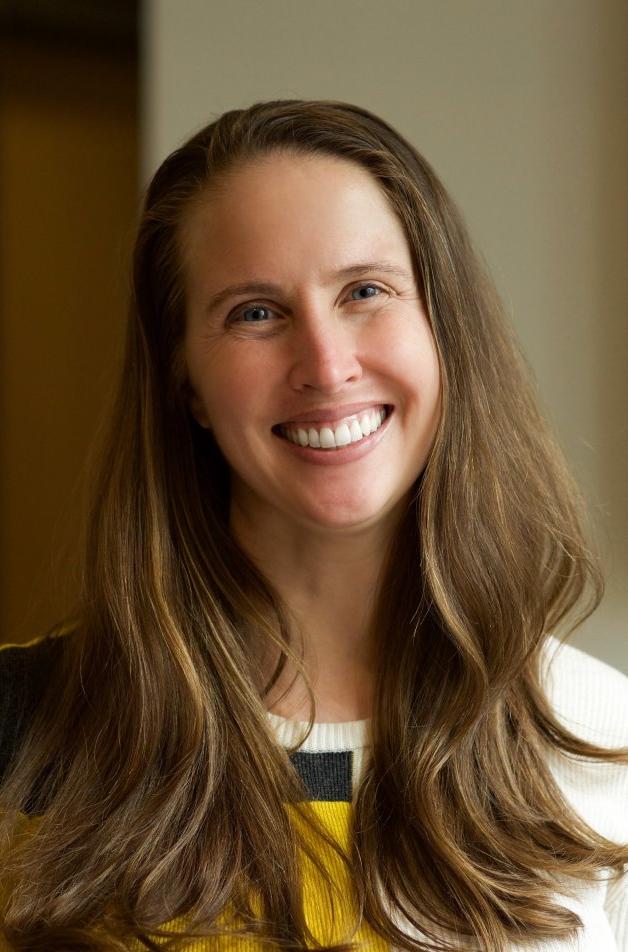
Sociologist Jennifer Jennings explains her book The Scarcity Loop, drawn from decades of research on New York City high school choice. Her main claim is that you cannot choose your way out of a shortage. School choice changes how scarce good seats get rationed. It does not end the rationing.
transcript
Speaker 1 Hey there. Nick here at Human Restoration Project. Today's episode starts out with a little visualization. Close your eyes and picture a good school. Maybe you teach at one or send your kids there. Now make a mental list of what makes that school good. What are their criteria? Is it close by, within walking distance? Is the building new and well resourced? Perhaps you went there or people in your neighborhood send their kids there. Maybe they offer programs, clubs, and extracurriculars you know your kid would fall in love with. Now using those criteria, think of the top 20% of schools that do those things best. Most of the time and for most kids, they're safe and accessible, well maintained, and help students reach the next stage of their lives. Now think of the bottom 20%. They struggle to provide the minimum of what the top 20% seems to produce by default. How does a public education system decide which kids go to the top 20% or to the bottom? Someone has to make a choice. Either the system decides through geographic placement, a lottery, or some other mechanism, or families make the choice for themselves. Regardless of why you would or wouldn't pick a school for your own child, somebody's kids have to go there. And we don't often think about education in terms of rationing scarce resources, but that's exactly what it is. And when there aren't enough seats at good schools, rationing itself becomes the focus of education policy. Reformers rightfully target inequitable and unjust rationing when it's done by state agencies or by neighborhood, and they offer school choice as a way out, where every family gets to pick the schools they want and that will be the best fit for their children. But as my guest argues in her book, school choice changes how rationing works, not whether it exists. School choice also focuses policy discussions away from the biggest question of all. Why are good schools so scarce that access must be rationed at all, my guest argues. Scarcity is treated as a fact of life in public education, not a crisis. Once scarcity is accepted as permanent, much else begins to feel inevitable. The strategizing, the self sorting, the exhaustion, and the reproduction of inequality even when reforms are sincere. That incredible book is The Scarcity Loop, How School Choice Reshapes the Rationing of Public Education, and the author and my guest today is doctor Jennifer Jennings. Jen Jennings is the class of 1988 professor in domestic policy and professor of sociology and public affairs at Princeton, where she directs the education research section and studies racial, socioeconomic, and gender disparities in educational and health outcomes. Her other recent work includes an experiment testing whether better school information helps New York City families choose high schools, studies of lead in school drinking water, and research on how families living in shelters navigate school choice. Oh my goodness. Thank you so much, Jen, for joining me today. Nick, it's so great to finally meet you and to be here to have this conversation. Thanks so much for having me. God, that's right. We haven't ever... We haven't. I feel like we've been going back and forth for online. Yes. We're terminally online. So being face to face is wonderful. At one point in the book, you describe choice as a process of navigating a city enshrouded in fog. What a visual. And at the macro level, that's kinda how I feel about trying to understand how school choice actually works. There's so many different moving parts and so many of them are obscured at different points, but reading the scarcity loop was really like shining a spotlight into all of those nooks and crannies, and it's one of the most insightful books I've read on the topic of school choice. It's been out for a month now. What's the reception been so far?
Speaker 2 Yeah. So so it's been it's it's been about, I guess, less than a month. Just just about over a month, I guess. And so, you know, so I've just started to have conversations with people about it, really. I think it's been helpful to be out on the road talking to both, you know, students in classrooms who are reading it. So college kids, as well as colleagues. And I think people have, had really, I think, good questions and and good questions about how to push it forward. I I think one of the, things I asked in the classic Cornell on Monday was, okay. If there's gonna be a sequel, like, what did I get wrong? Like, what could I do better next time? And it's a fun question to engage the students on. And no pressure. You're like, I just published this book, and you're already asking about the next one? Come on, guys. Sure. Well, it's a way of getting them to be willing to tell you a critique. Right? Because I think otherwise students are often... Like, they see us as somehow
Speaker 1 not just like them. Right? But the professors, in fact, are a lot just like them. Yeah. Well, what is their response to their reaction? This this is a book that I wish had been written and I had read ten years ago. I think it would have informed just so much. I think they're... For students...
Speaker 2 And I I taught a draft of it to my own students last year too, so I had a couple of goes swings at it. I think students are often really focused on the so what do we do kind of piece as opposed to, you know, fundamentally, the book is a diagnosis. It's not a a guide manual for how to fix school choice and 10 easy steps because the point is that you can't choose your way out of a shortage. Right? So I, you know, often talk to students about there are technocratic fixes. There are ways to make it better. There are ways to make it, less of an insane process for for families to be sure. Right? And, like, the experiments that you mentioned that, you know, Sean Corcoran, Carolyn Satan Bijaj, and and Sarah Kahourese and I did together are really an effort to try to do that. Right? To, you know, put something in front of kids that could make their lives easier. But the the fundamental issue of, you know, there not being enough seats that folks either see is, like, what I call kind of add... Like, adequacy, scarcity kind of above some basic bar. So, you know, there is some good news there. Like, ten years ago when I looked at those numbers, there are, I think, about 28% of seats that had 80% of graduation rates and 80% safety. I was just taking a look at those the other day, and now that's up to 66%. So, again, those are shamefully low targets, I should say, to begin with. No one wants their kids to go to a school where one in five kids don't graduate and one in five kids don't feel safe. But, you know, we have made some progress in pulling up the bottom, and I think in education reform, we often, you know, don't talk enough about that. That's, I should say, it's happened across the country. It's not a New York City specific phenomenon. Right? But, but, you know, we we certainly, with kind of the consistent, you know, pushing on political will can do a lot to to pull up that bottom, but the reality remains there's still two thirds of applications going to one in five, schools in New York City, which says something about the extent to which families feel like, there's enough out there for everyone.
Speaker 1 And before we get into the nitty gritty of what the scarcity loop is and how it works, I do just wanna follow-up. What was the audience that you had in mind when you were writing this book? Is it for policymakers? Is it for future reformers? Is it for your public policy students?
Speaker 2 I think I think I wasn't particularly, like, focused in on just one audience. Right? I think I wanted it to be a book that could work in an undergraduate classroom to teach some kind of key pillars of education policy. I wanted it to be a book that helped move the conversation forward in the scholarly academic realm, and I I wanted it to be a book that made parents and kids alike feel, like, less alone and less. So, like, I was really struck by what a number of my students at Princeton who... I knew well, so they've told me these things. You know, we've gone through the New York City process, said, like, I I wish I had understood this broader context in eighth grade. Right? That this is not just about whether or not I was able to climb this mountain, but rather, you know, about a historically grounded complex set of dynamics that are so much bigger than me. So I think that interestingly became, like, a core core audience. Of course, I hope policymakers read it too, but but those were the ones that I was I was thinking about.
Speaker 1 That really is so cool that you were helping students really get an insight as to how... To the processes that shaped their education journey that maybe they weren't privy to. What an what an interesting position to, I don't, find yourself in as as the person teaching it and in the students in your room learning about it, you know? Yeah. No. And they absolutely... I mean, I think we're...
Speaker 2 Whether they came from the New York City system or not, but made really incisive, thoughtful suggestions to, you know, improve the book along those lines. So it was very much a two way. A lot of a lot of pieces of the book changed after they read it, and they really, you know, pushed, them to be like, you're not helping me out if you tell me, like, jazzy hands. You know? Like, professor Jennings, like, need you to do her a solid here. So, you know, they really they really did come through. What parts of the book did they help influence? Like, what Oh gosh. As as as we read through it, what what... Where's their voice in that? Yeah. So it's everywhere. I mean, it's it's all over the place. So I think it's in kind of the, couldn't you just be a little bit more succinct about this fundamentally? You know, could you just try to help us? I think the the scarcity group kind of historical process in in general is confusing, and I, you know, can think... It definitely got less confusing, over many drafts, but I think that they really helped push to be like, write it down on the board, you know, with a set of diagrams, which ended up in the in the book itself. I think being sure that it was extraordinarily clear that the families who... Especially immigrant families were not... Like, they love their kids so much. They chased opportunity across the globe, right, to to give their kids a better life. And so helping make sure that that part is told alongside of wanting their kids close, I think it was always there, but I really tried to put a point on that just because I think it's often the case people kind of get get that wrong, you know, with respect to just looking at applications and saying these families just prefer to stay close when when the the broader ecosystem is a lot more complicated.
Speaker 1 I think that's a perfect entry into discussing those mechanisms because it's not as easy as just choosing a school as you've uncovered here. There's a lot of things that shape both the family's choice of fit and where they might want to send their kids if the parents are involved in that process, and schools have a lot of say in that choice too. So what is the scarcity loop as you begin to uncover it? Yeah. So this is certainly... I mean, this wasn't cert... This came at the end of the process of writing the book of, like, really hammering,
Speaker 2 banging my head against the wall of the history for a long time. You know? So I I I came to, like, really wanna understand how we got here at the end of, you know, like, a couple decade and a half of studying this. And, what was really just striking, I think, perhaps one of the most striking episodes came right on the heels of Brown v Board. So Kenneth Clark, is a key testifier of the Dell studies, people may be familiar with, and Brown was also a New Yorker. And he, you know, on the eve of Brown coming... Being handed down, came back to New York City and was like, look. We have segregated schools here in New York. This isn't a southern problem. And really set off kind of a firestorm because New Yorkers saw themselves and and still see themselves as somehow above and different. Right? And, like, that stuff they do down there in the South. And, you know, a number of things happened, but fast forward to 1960, like, the way that the board of education at the time, there was not a mayoral control, we now call it the Department of Education, decided to deal with this was to say, like, we're gonna give kids the opportunity to enroll somewhere else. If you're in a highly segregated school, we're gonna designate sending and receiving schools, and, you know, this is the way that we're gonna deal with the problem of segregation. So in in what echoes through history, what you end up seeing is they don't provide transportation. They don't provide lunch. And at that time, kids, by and large, went home for lunch. They give folks four days to get these forms back. And then when only 3% of folks stepped forward and said, I wanna move my kid, both the media and the board said, we've given you. You want the chance to go somewhere, you're not taking it. So this is, you know, this is on you, essentially. And, you know, historically, over time, like, black parents stepped into the fray. They tried to organize parents to be able to take out this opportunity. By the time this program gets discontinued in 1967. It's only 6% of the folks, I think, have taken it up, but, it provided the shield for the city, to be able to say, like, we're giving you the choice. If you're not taking a choice, we've done our bit, and you need to do yours. And I think that that continues to happen over time. So you have some kind of... The scarcity loop, just in in real brief, the idea is that you have some pressure to create more good seats, that those seats get created, but very quickly, kind of in the same way that the commons get enclosed, and privatized, get enclosed by some kind of new rule that doesn't always look like a barrier. So one of the best examples of that, I think, is for the new small schools that were started in the early two thousands, you had to go to an information session. And for so many people, they're like, what's the big deal? You go to an information session and you get priority to go to the school. They're not selecting on your academics. They're selecting on whether you show up. If you're... If you can't show up, that's on you. But the, open houses weren't listed anywhere. You, they often had one to two of them. So if you missed them, you weren't necessarily gonna get priority. And, again, like, what didn't look to everyone like a barrier at the beginning really did become a barrier for, you know, being able to get into those seats. So, essentially, this enclosure, you know, then kind of quiets public pressure for a little bit, but there's still not enough. And so you kind of go back and and do this all again. And this... We've done multiple cycles of that in New York City.
Speaker 1 One of the things that you do a great job of elaborating on in the book is uncovering how when that decision is made by the state actors or agencies or Department of Education, that at least puts the decision in a person's role or a policy that we have democratic leverage over. Right? There's a policy somewhere that we can enact to change it. Right? But the privatization of those school choice decisions then lays the fault for inequalities or the poor choices, quote, unquote, that parents may make, right, at the feet of families and kids. What were those roles? And I don't know. Call them, like, the rationing logics that students, parents, you look at counselors, principals, schools, they all have their little role in this intersection.
Speaker 2 How do they serve and deploy the issue of school choice? Yeah. So, I mean, I think what's really fascinating is, you know, we interviewed both kids whose parents had college degrees whom calling advantage, just for shorthand in the book, and kids whose parents don't have college degrees, which I'm calling disadvantage. I think there... There's a lot of evidence that, like, that access is the... A mean dividing and stratifying access in our society right now as opposed to simply income. But the advantaged families were the ones who were the most critical of the system despite, having what some might see as much better outcomes. But I think the story we've told about school choice always having advantaged families as the winners is not... It misses the boat. So before, you could buy a thing and you could get your school, and that was that. Now you've gotta go through a bunch of hoops. Right? So those are the folks whose lives have, in some respects, changed, and and not kind of allocating sympathy or disdain or anything here just descriptively changed the most. And so, you know, they essentially tried to use kind of navigational patterns to be able to, still be able to succeed within the system. Right? So these are folks who have flexible jobs, are able to take time off work. Even us, I mean, asking parents to take seventy hours off of work to manage a process is strikes me as a a real mom tax on average, you know, from the state. And then, you know, on the other side, and I'll I'll get to the rationing bit, her disadvantaged families, like, the spatial dimension is just central, that it just is a lot more costly when you don't have resources to be further to home for a number of different reasons. One is that your ability to move through space safely is quite different. The second is you can't just buy your way out of it. So whereas families in some parts of the city will, like, charter a private bus so their kids can get from Park Slope, which is an affluent part of Brooklyn to Bronx Science, that's not an option for, you know, for other families. These families are more likely to have, like, young siblings as well as opposed to, like, two very careful... Like, closely spaced... Not carefully spaced, but closely spaced kids. So there are there are a lot more, you know, younger kids to care for, and there are also, you know, the kinds of things that come with poverty, which are health issues, both in parents and in other members of the family. Uncertainty, you know, we have a remarkable population of kids who are in temporary housing in New York City. So just not knowing, are they gonna are they gonna move me next year? Am I gonna still be here? How, you know, how am I gonna make this choice without any certainty about next year's address? And so the spatial dimensions, in addition to these other parts, right, the navigational dimensions were a big part of it. I think for everyone, the kind of fog that you mentioned, like, what do you even see on the map as options? Even if everyone's getting... At that time, it was paper. It's now online, but this, you know, big fat directory, what part of that is even visible to you in in kind of not just ruling it out before you even had a look? And, you know, different folks did that in different ways depending on, like, their family's histories, their migration histories, their own understanding of the kind of social structure of the city. But it it wasn't that everyone opened that book and said, these are all actually auctions for me.
Speaker 1 As you elaborate, some people viewed some places as where they wanted to escape from. Like, they viewed their home neighborhood as, like, a liability. Like, I gotta get out of here to make something myself. While other people viewed that's their same place as, well, yeah, I wanna stay close to home because this is where my family, my neighborhood, my community, my... Right? Like those ties. And one gets viewed as good and one gets perceived as bad and we blame the families who make the choice to stay closer to home rather than send their kids across town. Yeah. I wouldn't think everyone,
Speaker 2 irrespective of social background or... Would prefer to have proximity, like, just because, like, we are physical beings. We can't just teleport ourselves places and, you know, to the extent that that's not possible because of the spatial distribution of quality, people who, you know, kind of make different choices than that. I don't think there's anyone who prefers to commute an hour each way, because that's a... You know, that... In the middle of the the winter when you go to school in the dark and you come home in the dark, that's a real uphill climb.
Speaker 1 Yeah. And parents who don't feel comfortable putting their kid for an hour on the subway either Yeah. Their kid on the subway at all. Right? Yeah.
Speaker 2 Boots here from a place that didn't have... I mean, like, a lot of the the largest immigrant group in New York City are Dominicans. And from the middle of the Dominican Republic where, like, there is no subway, you know, per se, this just seems like a risk that I moved here for opportunity. I didn't move here to put my kid at risk. And so, you know, families really... About one in five recent immigrants didn't feel comfortable putting their kids on the subway and also, you know, just had questions about the bus system in general.
Speaker 1 It was really eye opening and humanizing, frankly, to just hear in their own words and to sort of lay out and contrast those things on the page side by side. And I think, you know, we've been talking about the navigational, the perceptual, the spatial resources that families may or may not have in this mix. Let's flip the script and look then at the schools themselves and the role that the actors within the schools play as sort of sorting and rationing. Another huge fascinating bit of that, how principals, some of them put the reputation of the school first in the way that they present them. Counselors sometimes, you know, sort kids really actively, and others take a more lozzy fair approach. But all of these little micro decisions end up adding up to ways that schools,
Speaker 2 frankly, end up picking their kids too. So let's let's talk about some of those for a little Yeah. Absolutely. I I think the thing that fascinated me about this... The school side of it was that I first saw it in an ethnographic context. So in 2004, 2006, when there are new schools that were founded, I was... Started a study of the founding of new small schools. This wasn't initially something that was on my radar because I saw it naively as kind of rule bound, that these were the rules, people were gonna follow the rules, and that wasn't an area of interest, quite frankly, in the beginning. But then I was very surprised to see, among, like, three truly excellent educators in multiple ways. Right? Like, I think it's hard to follow these folks around for for a year and a half and not... And see the amount of sacrifice that they're going through to serve their kids. And then, you know, I think on the page, some of the actions people take people's breath away. Right? A native Spanish speaker who screens out Spanish speaking families because she's afraid that that's going to put her behind the eight ball. Right? But it's from the community that she's serving and has spent her career sweating for these kids. Right? It's it's it's not just kind of a villains, you know, and heroes kind of story. It's it's really complicated, on the ground. But what's fascinating is I saw that. But when I went back in history, what was really interesting to me is in the mid sixties, the high school principals were very much like, we do not wanna have more selective schools. This is gonna lead to a brain drain from our own neighborhoods. This... You know, like, let's just make an agreement about this. But as the city starts emptying out in the nineteen seventies, both the specialized school principals, are really a big part of this, effort to put into state law that there has to be a particular test used for these three schools. And then as new career magnets are started, those principals are some of the most vocal in saying, we have the right and the need to select our students however we see fed. And principals in other parts of the city responded in kind by saying, okay. They're gonna do it, and there's not any oversight framework. I'm gonna start my little program in my school. And this kind of by the mid eighties becomes a crisis where essentially people are, saying, like, this system makes no sense as a whole. The kinds of complaints that are made now are very much of the same, type that were made then. But, at each point, principals really were playing a central role in shaping the nature of this admission system. I think that there's a perception now that that that has been dialed back to some extent. There's a little bit more oversight. But even so, I'd say, insofar as you present your school in particular ways, as, are your desks in rows? Do you have strict uniform policy? Do you have, do people call teachers by their first names or by their last names? You know, things that seem very, nonrelated to student admissions end up being ways that sort. And and I think there's a lot of class sorting that happens that way. Like, particular types of, more authoritarian discipline is seen by more advantaged parents is not for their kids and and vice versa. Right? Like, where the kinda Lucy, you see, what looks Lucy, you see to some folks is not what they want for their kids. And so there's there's a lot of dynamics on the ground that I think are are very, very subtle, but that we don't do enough thinking about.
Speaker 1 Yeah. The school choice is really trying to reframe that selection process as merit while kind of neglecting the role that the schools and the process itself has in constructing merit and constructing the meritocracy and who gets to go where, you know? Yeah. Absolutely. Even through things that aren't formally characteristics of selection. Right? I think there's a a really high profile, recent instance of this that we can bring up. And for listeners who may not have followed this, Nicole Hannah Jones, shout out native Iowan, wrote a New York Times essay about her daughter that came out, I think, around the same time that your book was released. Yeah. Yeah. It's titled, in fighting for every black child, did I betray my own? And she writes, a decade ago, I made a decision about my daughter's education that I hoped would challenge New York City's separate and unequal school system. Now 16, she thinks I made the wrong choice. And, obviously, it's been in the discourse for a lot of reasons, and it feels like the scarcity loop in microcosm. Right? This could be a case study of one of the parents and families in your book. How how did you approach that story, and how does that scarcity loop help us understand it?
Speaker 2 Yeah. I was... It was it was kind of amazing timing in terms of just a a few days after the the book is first out, is coming out. And I had... I teach the... I I will now teach the second article, but I teach the first article in my class, the twenty sixteen article. And and so what... I found these dynamics to be so interesting, I guess, in two ways. Like, if you read the comments, they're all about did this parent make the right choice as opposed to why is this the set of choices that she has. Right? And, I mean, few people understand structure as well as Nicole Hannah Jones. And I think that's what runs throughout her her piece is both a deep understanding of that, and then there's this amazing part at the end where she says something along the lines of, like, I hadn't chosen her, meaning her daughter. And so even for someone who so so deeply understands the structural nature of her choices, this process is... It does make it very intimate because you feel like... And you, in fact, are choosing. Right? Thing a versus thing b. So I think it it kind of laid bare the extent to which people relocate the conversation into what should this person do versus why... How did we get a system that looks like this in the first place, and why do we, tolerate it?
Speaker 1 How did that newest piece land with your students?
Speaker 2 Yeah. So I've talked... I mean, I'm on sabbatical this year, so I haven't... I'm not teaching. But I I have taught... I had multiple students, like, text or reach out, like, you know, folks who've now graduated being like, oh my gosh. Did you see this? Like, this is blowing my mind. And so, you know, I think when I teach the original article, there's... It's always very polarizing, where some folks... It's kind of like a, woah. I never... Like, the whole world has been turned, in a way. And for others, the world has been turned in a way that... That's asking kind of a fundamental question that philosophers say, which is it is it ethical to give priority to your own child child? And I think, essentially, that's... I think philosophers kind of land on, yes, it is. Right? Like, that's that's your role in in the system, although, of course, everything's debated. But I think folks really... It's a great piece to teach because folks really grapple with both the structural and individual dimensions of of moving through a system like this.
Speaker 1 You had mentioned, you know, there's so many class dynamics at play when parents go to make fits and schools navigate those choices too. But I think the... Those... That pairing in Nicole Hannah Jones' own experience really raises the valence of race too and how Oh, absolutely. How schools manage reputation and perception and how families perceive this notion of fit, which you write about a lot too. Like, how that word just hides a lot of information. What did you find out about fit?
Speaker 2 I'm really glad that you brought that up because I think that people treat that as a neutral world like word and it is nothing of the type. The the racial sorting dominates this New York City system and many others. I think what's unique about New York is it actually does have a multiracial, multiethnic population. But, essentially, in my student, now assistant professor at UT Austin, Chantal Haley's work where she did experiments that carefully controlled the characteristics of schools and simply just changed the composition of schools, she found that, you know, every single group of folks essentially avoided black schools. So there's often this assumption that Latino and and black families are a coalition of sorts. They often do face similar conditions, but that absolutely isn't the case, at least in New York City. So I think the... Yeah. The... I mean, the the huge issue in terms of kind of readdressing, like, over undoing segregation in any way is that until you have a more uniform distribution of kids across schools, all these other features of schools are not what folks are choosing on their choosing peers. And, you know, and and have been doing so, right, for for the last, you know, fifty or sixty years. Our our schools at the high school level are actually more black white segregated than they were in 1970. The segregation by what New York City calls Hispanic white or Asian white is reduced somewhat because folks initially, when they came after 1965, lived in ethnic enclaves, and people have spread out a bit. But but certainly, the black white numbers have only increased as we've moved from having, you know, 86 schools in 1970 to... We just looked the other day, there's, like, 600 and something ninth grade serving schools. That includes charters as well. But that hasn't... That's created more opportunities to sort as opposed to,
Speaker 1 you know, kind of distributing folks equally across the system. And I love how you kind of tackle to the sort of homo economicus type thinking of the reformers who would enact school choice. Right? Thinking that, well, families are gonna act in their own rational self interest to select from the top and do all of this while school choice certainly doesn't prevent families from just saying, I don't want to go where there are a lot of black kids. Right? And some families make a choice or sort some of their top choices based on racial criteria. So the system reflects that. Right?
Speaker 2 Absolute... I mean, absolutely. I I think it's the dominant, you know, factor at the end of the day. And and that's that's something that, you know, essentially, you had a a uniform... Think, like, for example, in some parts of LA that that do have a more racially or ethnically uniform population, like the... This is some of an economist Chris Campos' work. This has worked a bit better because people aren't necessarily dominantly choosing on features of peers to the same extent. But but nonetheless, you know, I think it's something that that people really... I think researchers by and large don't... A lot of researchers don't love to talk about this. It's it's part of this country's history, and it's... Continues to be in large measure.
Speaker 1 So I guess, like, the question in all of this then, and maybe it's a loaded question. Right? Like, in in your estimation, in your work, does school choice work?
Speaker 2 Yeah. I mean, I think you have to define one of the the big things that I try to emphasize in my class is, like, we need to put a referent when we say work. And so I I think that it works for holding a school system with a heterogeneous population together without... From, like, a political economy perspective, I think that it, I don't mean works in a positive normative sense. I mean, it functions. Right? I think that for the set of lower income or disadvantaged, high achieving kids, it offers a partial crack. It kind of cracks the door open, but so much is needed to turn that into a change in where kids go to school, that it's it's a very conditional promise. But I wanna be sure to acknowledge, right, that there are kids who, you know, experience themselves as as benefiting from this and, in fact, go to a different school environment than they would if they were sorted by neighborhood. For the modal kid, like, we do a little simulation where we... Again, it's flawed because people would live in a different place if they were not going to be, having school choice. Right? There's... They actually live in slightly more integrated neighborhoods. National, a study by Peter Rich has found, when there's school choice systems, which is interesting. It's a tiny, tiny difference. It's like a point zero three difference in the diss... Dissimilarity index. But... So so be that as it may, when we do this this exercise, there's no effect of... Despite the fact that kids are traveling thirty two minutes at the median, no effect on racial or socioeconomic integration from this choice system at the high school level. What it does do is sort, quite dramatically at the, achievement levels. So you have kids who are at the top and bottom of the achievement distribution being much less likely to be in the same school than... Neighborhoods are much more ability integrated than our schools. So so I think, you know, once you once you see that, it raises questions about what goals are being met at the system level besides the kind of political economy. We're not... It's not desegregating. It's not having these other kinds of impacts. For the modal family, I think people do want some form of choice. Right? But that can happen, you know, in a lot of different ways. I never thought about it this way, but when I taught at Trenton High School, we had, like, what were at that point called small learning communities, and we had six or seven of them. And it gave some kind of choice within maintaining, you know, geography. Right? So it served the function of people wanted, a little bit of specialization or were subject focus, you know, which really... I mean, they did the same things in all parts of the building. It's just electives were slightly different. But so much of high school is homogenized by what's on the other end of it, which is college. Right? That the ability to really make high schools look radically different in terms of, the content of what's happening is is relatively limited. So I'm not sure it's serving... Working from that perspective. But I think what holds the system in place is that, you know, parents who are facing a system like this, they keep asking for better instructions. They're not, like, raging against the system. Like, it kind of keeps everyone on this treadmill of, can I just make it through this and, you know, move on, you know, with my life? So it's, it's not the case that it's quite clearly, like... I don't think neighborhood schools are some justice panacea. You know? Like, I think that, they're they're an incredibly, like, brutally legible form of exclusion. So I'm not arguing that that's what we should do, but rather just saying this is actually just another way of doing the same thing by kind of hiding the the process.
Speaker 1 Shifting gears a little bit. Obviously, we've been talking in the New York City public schools context, you know, looking at their schools, families, and their particular school choice system. And vouchers, I think, get one mention, like, in the context of history in the book. But I wonder how well the mechanisms and the conclusions of this book in particular are actually transferable to other states like my own, like Iowa, that now we have school choice programs that involve tuition vouchers for private schools. Have you looked at that at all, or how well do you think those same mechanisms apply?
Speaker 2 Yeah. I mean, I I see them as as kind of transfer... Transferring quite directly, but pulling more so on the role of the school. Right? So this is... The role of the school is strengthened in a way that is even in systems that have a lot of school discretion is nothing. Like, you can say that you need a... You need to have a... Sign the biblical lifestyle compact saying that you will neither live by nor condone anyone else's not living with a biblical lifestyle. You will agree that you will only interact with school staff in, you know, the spirit of resolving... You know, essentially, they're kind of clauses that are, like, resolving things peacefully. I'm not gonna kind of fight about school policy. And then, you know, all the other kind of disability, gender, sexuality, family structure, religious belief, you know, kinds of restrictions. So I think what I saw through our history is these different rationing mechanisms kind of have this ability to, like, you push one in here, something pops out over there. And I think with vouchers, you're kind of, to some extent, you know, dealing with the... Actually, the school kind of comes to a a larger role in terms of, like, the... Not just symbolic, but also formal. Like, the ability to just fundamentally sort on whatever you want is is fully in the school's discretion and legal. So I think those come to the fore, but I'll... But other bets, like navigating the system, you know, and I've done a lot of work on Iowa. And so, you know, schools increasingly don't post their prices. And so even being able... There's there's no ability to have a functioning market if you can't even compare schools on what their prices are. And they've also increased prices by, you know, by year three, something on the order of 40%. So, you know, I think that there's... The additional thing that's brought in by vouchers is the financial bit. Right? That's something that's we're bringing the... What used to be housing price back in with, like, kind of tuition costs. Countries that do have vouchers, but that... And do kind of have religious schools that are involved don't let you charge more for the school. Like, you have to accept the voucher as the full amount, period, full stop. And so I think that that kind of reinscribing of the financial mechanism, which operates in in residential, you know, zoning as well is something that's different than what I wrote about.
Speaker 1 That's so interesting. So we can kind of take the the lessons and the mechanisms here and apply them to these different contexts as well. And you're saying, yeah. In these other kinds of systems, a lot of the same mechanics are at work from school perspectives and from families. They may even be amplified. I wonder, have you seen... Is anybody, I guess, trying to take that lens and apply it to
Speaker 2 these these voucher arrangements? Yeah. I mean, you certainly could. I... It's worth, like, worth my opinion for some of the... For the other work that I'm doing on vouchers. But, yeah, I think that it still provides a useful, like, frame because also on... You know, I think the racial composition of, private schools is, you know, further diverging from the racial composition of of traditional public schools as well. So this kind of perceptual piece of who belongs where, but it happening in a two sided way, I think, is going to be increasingly important.
Speaker 1 Zooming out to the question that we had sort of started the conversation with and that you repeatedly mention is at the center of this issue of rationing, of course, is scarcity. You know, you said that this book is not necessarily making prescriptions or solutions focused, but what do you think it would take to eliminate the scarcity of good schools in The US? Is it a money question, capacity, will, or how we define what good schools are? What do you think are the biggest hurdles in that direction? Yeah. I think when you when you bring it out to The US
Speaker 2 space, it becomes a different set of issues. Right? I mean, I think for a large part of the country, money is a really central, you know, and and fundamental piece. Right? New York City, certainly, what it costs to educate kids who are living in, like, poverty outside of school is much higher, but we are very blessed to have a school finance successful lawsuit that that means that the funds are there. I think that... So I'll speak specifically about about the New York context, but I... I'm I'm happy to extrapolate out. I think to the extent that we manufacture scarcity in the form of selective schools. Like, I think without pulling some of that back, and I'm not suggesting... I'm not of the mind that, I'm I'm very comfortable with having tracking ability grouping, whatever, within a school, but what we've done is move this to the school level. And, in so doing, you've just kind of stratified the system from the get go. There's there's no ability to kind of access the same academic program across all schools, and there's, you know, good work showing that some of these smaller schools, you know, are not able to offer even, like, the basic requirements for graduation. There's kids who are taking night school at some of these schools because the courses aren't able to be offered. That's rare, but what's more common is you've got one AP course and some other schools, 20 AP courses. So I think that there would have to be, like, a consolidation to make schools larger than they are right now. I think that they'd have to be academically heterogeneous and more, you know, kind of... There would have to be some degree of desegregation, right, so that people aren't just choosing on those facts, the facts of who's in the building. And then I think there'd probably, as I said, have to be some compromise, to keep families in the system that we're going to have some degree of, sorting within schools in terms of offering a range of courses. And I... I'm not, like, a tracking advocate, but I I I am, aware that absent offering some differentiation that people exit this system. And, I guess I'd be willing to make the trade off for for having a more integrated school that can still, like, allow for court... Some courses to be academically and racially and economically integrated and, you know, to continue to try to break down some of the most pernicious, you know, things that... I don't wanna... Not... This is not a commercial we're tracking, but but rather just a kind of reality that we are currently tracking at the level of the school.
Speaker 1 Yeah. No. No. I mean, it's it's pragmatic, right, to think like there are trade offs to every sort of change there. And to achieve the goal of y, we need to do x and, you know... Yeah. I'm I'm totally with y'all on that. I think we just need to be thinking a lot more expansively both about the options on the table and, like, the side effects of those choices too. Right? Like, there's trade offs for everything. Like, some are good, bad, and different. We just need to embrace that reality. You know? So, Jen, what, I guess, is your hope for the book going forward?
Speaker 2 Gosh. I I hope that folks read it. I hope that it helps folks make sense of the experiences that they've had in various context. I have been around the block enough times to understand that no piece of academic work is going to fundamentally bend the arc of public policy. Right? So if if I were twenty five years younger, I might have a different answer on that, but I think... You know, I I do hope it helps reframe what I think is a broken conversation around school choice, which is to assume that school choice means that actually you're the one doing the choosing. And so I think kind of... I'd be really thrilled if, like, what comes out of this is that we have a different frame for thinking about, like, this is another form of rationing. It's not the family empowered, but rather, you know, a family that has the chance to apply as opposed to the chance to enroll. Yeah. That's a great question.
Speaker 1 I'll stand on my soapbox here real briefly at the end, but I think when so much discourse about education and education policy and instructional practices, all the things, once to flatten complexity and try to wave it away towards easy solutions. I appreciate you embracing it and giving us a peek behind the curtain at sort of, again, the trade offs, how the sausage gets made, behind the scenes, what their true cost of rationing and the scarcity loop actually is. So thank you so much for writing the book. Thank you so much. That means a lot. Thanks again for listening. If you wanna learn more about how schools are using Polaris to put student voice front and center, visit polariseducation.ai and sign up for the newsletter to stay up to date.
resources
- The Scarcity Loop: How School Choice Reshapes the Rationing of Public Education · Jennifer Jennings (book) The book behind this episode, tracing decades of New York City school rationing. Published by Russell Sage Foundation. link →
- In Fighting for Every Black Child, Did I Betray My Own? · Nikole Hannah-Jones (article) A parent's honest look at one school choice, years later. Search The New York Times by title.
- Choosing a School for My Daughter in a Segregated City · Nikole Hannah-Jones (article) The 2016 essay Jennings teaches in class. Search The New York Times Magazine by title.
- Research on race and school choice in New York City · Chantal Hailey (article) Experiments showing families avoided schools based on student racial makeup. Search her name and UT Austin.
- New York City high school choice information experiment · Sean Corcoran, Carolyn Sattin-Bajaj, Sarah Cohodes, and Jennifer Jennings (article) Tested whether simpler school information helps students choose. Search the authors' names and high school choice.