

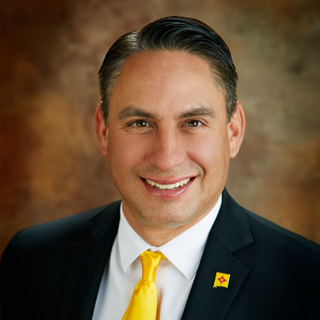
New Mexico Lt. Gov. Howie Morales, a former special education teacher and baseball coach from Silver City, discusses how classroom experience shapes his policy work. He covers teacher pay, universal pre-K, and public school funding. The episode explores whether New Mexico is building a replicable model for equitable, community-centered education.
transcript
Speaker 1 When you see that what we've done for universal access to higher education, students have tuition fully paid for if you're a graduate of the state of New Mexico. These are the monumental things that we're doing in the state that understand that it may not show up overnight. It may not show up in a standardized test, but what it's gonna do is it's gonna show up in our economy. It's gonna show up in other areas of public safety. It's gonna show up in our health outcomes. That is a focus that we have is to invest the resources that we have today for the results that we know are gonna be there in the future.
Speaker 2 Hello, and welcome to a very special edition of the Human Restoration Project podcast. My name is Nick Covington. Before we get started, I want to let you know that this episode is brought to you by our supporters, three of whom are Corinne Greenblatt, Leah Kelly, and Simeon Frang. Thank you so much for your ongoing support. Before Howie Morales became lieutenant governor of New Mexico, before he was ever a state senator, he was a teacher and a state championship winning baseball coach in rural New Mexico. He also holds a master's in bilingual education and a doctorate in curriculum and instruction, so it'd be difficult, it seems, to understand what he's accomplished in those elected positions except through the lens of his experience in the classroom. And he joins me to talk about that experience, how it informs his work and achievements in office, and the challenges New Mexico public school students, families, and teachers still face. Thank you so much for joining me today, lieutenant governor Howie Morales.
Speaker 1 Nick, it's such an honor to be here with you. So glad. And the work that you do with Human Restoration Project. Just amazing because it really is at the heart of what we should be doing in all sectors, whether it's health care, whether it's government, whether it's education, working from that standpoint. So it's an honor to be here with you.
Speaker 2 Oh, that's great. Thank you. Well, Howie, people enter the profession for all kinds of reasons. I know some who grew up in families of educators and knew since elementary school that they wanted to be a teacher, while others vowed early on in life that they would never become a teacher. But I've seen both, go on to lead transformative lives and experiences for young people and the students they serve. Which type were you, Howie? Why did you become a teacher?
Speaker 1 That's an interesting question because I didn't expect to be a teacher coming out of high school. You know, I had a my dad had a large family. He had 14 brothers and five sisters. And so with that large family, I often joke that it was easy for me to get elected as a state senator because everyone was related to me in my district. But of that large family, I was the first one that was able to go on to college. So college was a whole new experience for me, and I thought that maybe I'd go the business route. But as I really got into more of the studies and and early on in my college career, you know, I my love for out of school time programs, extracurricular activities, primarily in sports, saw that there was a possible connection for me to utilize my experiences, utilize my love for after school programming with education, and using that as a vehicle to really get an opportunity to reach students where they're at. So so I chose to make a move into the education piece. The other side of it too, though, is is I think it's important to point out many of the programs that are there that help for teacher preparation programs are extremely beneficial. Coming into college, you know, I I also had the responsibility of caring for my parents, financially supporting them, my little brothers and sisters. I had to buy them school clothes, pay the the mortgage, you know, at the time I'm going to college. And there was so many scholarships that were available to go into the education field. And because of that, that also prompted me to go along those lines. And what a wonderful experience that it's been because I was able to connect with students, but at the same time pursue the love of learning through activity.
Speaker 2 And it sounds like, of course, you brought so much experience with you into the classroom to relate to your students directly. And I'm wondering then as you later on, many years later, made the transition from the classroom to the state house, what's a lesson that you learned in your time as a teacher working with students or coaching players on the field that you find yourself using more often now in politics?
Speaker 1 Great preparation. I can always remember my first year in in teaching. I taught at an alternative school. And that that alternative school, it was there for students who had lost credit, who were behind and weren't gonna graduate with their class, or weren't gonna graduate at all. And whether they lost credit because they dropped out of school, because they got in trouble with the law, maybe they had a child at a young age, I never forgot the lesson that my lead teacher taught me that first year. And that lesson was that society will say that you messed up your bed, so lay in it. But a loving, caring, compassionate environment will say, you messed up your bed here. Let me help you make it up. And that's exactly what we did at that alternative school to get students back on track, to get their high school diploma, and then to go on to a career, higher education, or the military. I never forgot that lesson, and I try to carry that forward in all that I do to work to make sure that we're providing support in a loving, caring, compassionate environment. And and I think that that's been extremely beneficial. I also had the experience to have the opportunity to work in health care for a decade. I was a hospital administrator as well. And it was amazing when I saw the connection between learning and healing. When you address the student or address the patient as a whole person, not just a data point, but as a whole person where you just don't give the medication to hope their ailments will will improve, you do it mentally, physically, spiritually, emotionally, and socially, and you get the optimal results for learning as well as for healing. So great experience that I had. And when you bring in my experiences as a coach, what a wonderful preparation that that's been for me, not only as a state senator, but also being the president of the senate where I have to be the one who in many times is calming the situations where I'm ensuring that decorum is taking place and that the work in hand is happening. The coaching piece of it was so instrumental because it allowed me the opportunity to know what it is about communication, how important relationships are, and making sure that you have a thick skin whenever you need that. But at the same time, as recognizing at the end of the day, we want a successful senate. We wanna make sure that the state is moving forward and do it in a way that's productive similar to the way that as a team will work towards a championship. That was our championship, and that was the mentality I have as a president of the senate.
Speaker 2 Yeah. I've had former colleagues of mine go on to run for the state house and those other things. I've always felt that, you know, state politics in particular would be better off if we had more teachers in office. So perhaps for folks listening to this, if they are educators, right, maybe this could also give them the encouragement to throw their hat in the ring. Now, Howie, you had mentioned, of course, the those nontangible, outcomes of school that often get lost in this. And and so often we hear about the value of public schools or, like, what makes a good school or not communicated through standardized test scores or AP scores or average SAT or ACT scores. But all of the examples that you had mentioned, plus when I go to pick up my own kids from school and I see the the teachers walking the kindergarteners out to the bus to make sure they get there on the first day of school, or when we work with middle school teachers and we observe them navigating the social, emotional, and the physical, like, madness of adolescence, I know that there's things that families and communities value that schools do and that aren't captured on those tests. And you've spoken to those connections both from your work as a classroom teacher and then as a in health care as well. And New Mexico has been a national leader with initiatives like universal free school meals. As a state senator, you had sponsored a proposal for universal health care. And my understanding is that the New Mexico house this year passed the Welcome Child and Family Wellness Leave Act to expand parental leave. I wonder if you could elaborate on what you see as the relationship between thriving schools on the one hand and policies like those intended to support healthy families and communities?
Speaker 1 Yeah. When you look at it from a lens of people first and being people centered, person centered approach, I think that it really gives us an opportunity to look at it and to have the opportunities how we can improve that. You know, early on when I was in education, I was in there for about maybe eight years, and I started seeing that there was a shift. And this is where I started thinking, okay, then I need to be in a position where I can help shape and create policy Because what we saw that was taking place in the nineteen ninety nine year two thousand was the the transition to No Child Left Behind. And when No Child Left Behind is it really started quantifying the educational experience. And it started basically having the the bottom line that you use in business as becoming a model for the bottom line test scores to be used to dictate how an education system is working, what's thriving, what's not. And as in every educator would tell you that there's very little that you can get from a standardized test. I think that there's some value in knowing where we're at, what the reading levels might be. I I think there's some value in that, but we cannot continue to focus as that being the old tale of what's happening in the classroom. So that's that's been something to me that has been very instrumental to helping me move into public office and to continue to advocate in the way that I do. There's many opportunities that we have in the state because when we when I was a state senator, our previous administration, our governor then really adopted the Florida model. And the Florida model was along the no child left behind model, and it was gonna quantify using test scores, holding back third graders, really cutting a lot of services that are so important for everyday student and families. What we wanted to make sure as an administration that we were gonna have a different approach, that we weren't gonna be in our systems there to shut schools down. Instead, we were gonna be there to build schools up, to provide the support and recognizing that in order to have the best possible results, that we shouldn't just focus on student achievement or student proficiency, but more so focus on student engagement. And recognizing with the student engagement piece, wrapping in the family engagement, the community engagement, that's where you're gonna get your best results. And that's what we try to do with this administration. I'm really proud of of my governor, Michelle Leung Grisham, who has been extremely bold and pushing forward initiatives that are gonna be from cradle to career. And we've seen that we have universal, you know, access to pre k. I think that's important for all four year olds. We're working on three year old aspect now and and almost to the point where we're gonna have universal childcare. That is huge from an economic standpoint, but also from the family engagement piece. When you see that what we've done for universal access to higher education, students have tuition fully paid for. They're a graduate of the state of New Mexico. These are the monumental things that we're doing in the state that understand that it may not show up overnight. It may not show up in a standardized test, but what it's gonna do is it's gonna show up in our economy. It's gonna show up in other areas of public safety. It's gonna show up in our health outcomes. That is a focus that we have is to invest the resources that we have today for the results that we know are gonna be there in the future.
Speaker 2 And let's go ahead and just zoom out then to see, you know, what you're doing in New Mexico sounds incredible for students, families, and schools. Earlier this year at the federal level, there was an unprecedented freeze on federal spending related to grant payments through the the Department of Education that put our own work on hold real briefly. Federal funding accounts for about 10% of education dollars overall, more or less depending on, districts in need. Over the summer, the administration withheld over $6,000,000,000 in education funds well past the July release date to states and to schools. And I knew that that left the school leaders that we knew scrambling, right, to cover potential budget shortfalls that could last even longer. How have the changes at the federal level and at the Department of Education impacted your work or the work of New Mexico public schools?
Speaker 1 Well, it definitely was was an unexpected surprise, but I think that that's what, unfortunately, the administration of of Trump is doing, creating a lot of uncertainty. And with that uncertainty comes, with a day or two before the new fiscal year was gonna begin. Schools all across the country found out that there was $6,000,000,000 that were withheld. I've put a lot of effort into after school programs and out of school time, and our state has has heavily invested in $20,000,000 for programs such as this. So that way, are safe in their learning from the hours of three to 6PM while the parents are at work. These are instrumental. And and I look at back because everything is personal. Everything is relationship wise. And I look back at my fifth grade year. I had a teacher, mister Fred Baca, who on a Saturday in his own time would bring in a lot of us kids who from the poor side of town and would teach us about basketball. There was an organized league at the time. He would just teach us where we were at with our interest and then would interweave the academics. And I never forgot that. And today, you know, we have one of those students who were there on that Saturday mornings. And those Saturday mornings is a doctor of physical therapy. Another one was elected into a county office. Another one retired in his footsteps as a fifth grade teacher. And and, of course, the work that I've done is in the state of New Mexico. All that was made possible because you had a teacher who was willing to give up his time to give up his time for opportunities within within after school programming. So $6,000,000,000 that were frozen. The uncertainty that is created you know, I stood up and our attorney general and our governor stood up as well and was gonna fight on that to make sure that we had those programs available, but not only for after school programs. When you see what those funds were withholding, mental health, emotional health, well-being programs that are so important to the overall health and well-being of a of a education system, those are put on freeze as well. So I'm glad that we were able to advocate to get those unfrozen, but we're not done yet because we know that in any time, there could be more cuts that are coming in that impact SNAP benefits, that impact Medicaid, impact other programs that are so vital to the family, which in turn put stressors on the student and his academic or her academic journey. So there's a whole lot more that needs to be done. And, again, I I would hope that we can move past the uncertainty piece, but that doesn't seem to be happening. Now on the flip side, know there's been discussion about the federal Department of Education to be dismantled or be done away with. You know, if that happens, I think in the state of New Mexico, we're on the right track. We understand the relationship aspect to academic achievement and the results that we need. We're doing that. We're investing from cradle to career. And if that is the opportunity that we have to have the flexibility to do what we need to do for the people across our state, whether it's in our tribal communities or in our colonies communities near the Mexican border, we want that ability to do that. But it's important that we recognize that those funds should not be cut from the state or any state because those are taxpayer funds. Those aren't funds that should be used as leverage or shouldn't be used as ransom to do what the federal government's wanting. We want the flexibility to do what we're already doing, and we're already showing the results, evidence of a 15% of a fifteen year improvement of the highest graduation that we've had in the last fifteen years.
Speaker 2 I wonder, one of the solutions, you know, we've been talking about programs that help create thriving families, raise graduation rates, Mexico's on the right track, but there's one popular policy solution, I suppose, at least some states see it this way, that hasn't entered this conversation, and that's around these expensive and expansive school voucher programs. Your neighbor, Arizona, they're on track to spend nearly a billion dollars on their universal voucher program this year. Similarly, Texas is set to spend a billion dollars in the first two years of its recently signed voucher bill when it goes into effect next year. New Mexico, however, seems to have taken a different path with robust public open enrollment. You have nearly a 100 public charter schools, but no voucher program that uses public dollars to pay for private education. And I wonder, is that difference a reflection of different political realities between the states, or is there a deeper philosophical belief about the role of public education that's protected New Mexico from these expansive and expensive programs?
Speaker 1 Thank you for mentioning that, Nick, because those are continual discussions that we have. And what we've seen in the surrounding states that have done that, the voucher programs sound very good on paper. But the reality of it, even those states that we've implemented have started to see that there's some some drawbacks from that and and really aren't seeing the benefits of what it was said to have done. I'm a product of public schools, and our public schools is open for all. Whether you have disabilities, whatever the the situation is, the public schools are available for all. And I know that there's the argument that the money will fall to the child. Well, the reality of it is a public school still have the responsibility of your overhead cost, your salaries, your your heating and cooling, the utility pieces that come in. So there's still costs that come in. The further that you cut away from that and you use public dollars, public dollars for private interest, that's where you're gonna start seeing more of the issues that occur that are taking place right now in other states. And, you know, and I'll go and say that under, you know, my work here and my watch at the New Mexico State government, and I know the governor feels the same, We will not support voucher programs, not now, not ever, simply because we wanna make sure that our school systems are open and available to all to make sure that they have, as best possible opportunity for their educational, achievement and whatever they choose to do. That is the issue that you're starting to see with more of the voucher programs. And anytime you get a private interest that wants to go after a huge part of the budget, which is in education, there's always concern that comes with that. So I think having the improving, using our resources to do all we can to better build up and support our public school systems, that's the way to go.
Speaker 2 Over the course of this conversation, Howie, we've been talking about various holistic supports that support students, families, communities, and schools both inside and outside of school. You've mentioned from the cradle to the career, the universal pre k, the health care options, you know, thinking of everything you've accomplished and still the challenges that remain, if you had a magic wand and you could wave it to implement just one transformative change in New Mexico's public education system tomorrow, what would that be and why?
Speaker 1 I think it's important before I get into that piece of the the question. It's important to point out that, you know, everything there is a cost to it and and how you can view it. So when we have universal access to childcare, when you have universal pre k that's available, when you have universal opportunity for our higher education institutions. All this does come with a cost, but I wanna reverse that because oftentimes you'll hear that nothing's for free. Someone's paying for that. While the reality of it, we recognize that with the oil and gas reserves that we've been able to have huge surpluses, the state of New Mexico is doing extremely well when it comes to our finances. We see our diversification of our economy using outdoor recreation, using other type of diversification of our economy. We now sit at 36% reserves with many dollars tucked away in other funds. So when we talk about nothing is for free, it's not that we're putting things out for free. It's a choice that we're making to invest in our families in New Mexico and to invest where we can go and get corporate tax cuts, where we can go and give away water or land. We're choosing to make sure that we invest in the families of the state of New Mexico. And so if I had a magic wand and would continue and will continue to advocate, going back to the engagement piece, I think there's a lot to be said for utilizing our students and what they bring to the table. Let's face it. Our students are more technologically savvy. They can get access to information, but it took us forever to go through the micro fish or to go through an encyclopedia to get research. They can get that instantly. And there's a lot that they can teach us. By utilizing what they bring to the table, I think it's important that we also put our faith in them and knowing that they can help solve some of the largest world problems. In order to do that, it's not gonna be done from a classroom desk within the four walls of a classroom. Getting out in career opportunities, getting out to the communities, working engagement with business, working and engaging with our construction industries, doing the things that will interact and get students on the right path to a career. Whatever it is that they choose to do, I think is important that we do. So I think when we have a stipend program, when we have some incentive programs that are there that'll give them access to high school credit to graduate, I think that's the magic wand is to invest more, invest heavily in career exploration opportunities. We hear all the time the need for plumbers, carpenters, electricians. Here's an opportunity to get our students out there. We raise our graduation rate. We reduce the amount of absences that are done, and we see that that we truly have an education system that works for all. So that's my magic wand opportunity that we have in the state, and I'll continue to push for that.
Speaker 2 That certainly echoes so many themes that we hear, especially when we work with rural school districts, which is that, of course, they want their young people to go out and experience the world and, you know, learn new things. But they also want them to retain that sense of home and use those skills to make home a better place. And so if the things that you're talking about there, if you had the magic wand, could, you know, not just improve that experience for students, but allow them to turn around and then, right, contribute those gifts and skills, and talents to their own communities and to the state of New Mexico. That sounds like a win to me. Now I wonder if we suddenly yoinked away your magic wand, absent that, what's the biggest priority for this upcoming year, Howie? And, what's next for the future of New Mexico public schools? What are you tackling?
Speaker 1 You know, we're continually, looking at ways to improve and to meet the student where they're at, to recognize that across the country, we have educator vacancies. And we've done a great job where once we were the lowest paid educators across the region. Now because of the leadership of our governor, we're the highest paid educators across our whole region. So one of the things is to make sure that we can continue to to chip away at that teacher vacancy level, but also for the students to be able to see themselves in that classroom, in that teacher, to see a person that maybe looks like them, that speaks the same language, that understands their cultures, their customs, their traditions, and respects that. That's a huge component for us to to continue to address. In the state of New Mexico, we're under court mandates that the state wasn't provided under the last administration. The state wasn't providing a sufficient education for our low income, for our English language learners, for our special education, and our tribal students. And because of that, we have to make sure that we're doing better And not just meeting the bare minimum, but really succeeding and thriving of how we can have an education system for all. That's gonna be the focus is how we can continue to collaborate to have an educational experience that's gonna work, and that's gonna be well rounded, and that's gonna be safe. And I think that those are the opportunities that we'll continue to work on. And that's why as lieutenant governor, I've taken on the role of of leading the charge when it comes to school safety, is to recognize that school safety not only in threats to gun violence, but also in threats and bullying and threats of online harassment and threats of other areas that affect the mental well-being of that student's academic, journey. This is an opportunity that we have in the state to do so.
Speaker 2 And to bring things around here full circle, as teachers around the country, and I'm sure in New Mexico or a couple weeks into the school year now, thinking back to that experience, maybe your own first year, Howie, what advice do you have for first year teachers who are just getting started on what could perhaps be a very lengthy career in the profession?
Speaker 1 Oftentimes, when we talk about education, I would see it that, you know, everybody loves their their, student's teacher. But oftentimes, it was good enough to just give them a pat on the back and say, you know, they're doing a good job. Our educators are professionals, and I encourage and I applaud those that go into the education field because to me, it's the most important profession that makes every other, occupation possible. And so one of my messages that I give, whether it's to graduation, students graduating, or to beginning of school year teachers, is to always be proud of where you come from. Never forget your roots. Never forget where home is. And we're proud of the state in New Mexico. We wanna keep you here to make sure that you know that you can still have that globe, why you went into education to begin with. You know that education may not pay at the level that other professions might pay, but the other ways that they pay is just far more tremendous. And I can think of the memories that I've had with students when they've lost a parent to be there to support, with students when they won a state championship to be there to celebrate, with students whenever they had the highest or lowest times of their lives. That is what made us as educators wanna get in the field and never forget that because the impact that you make, the shade that you're planting on trees that you'll never see will go on and on and will be continued to pass forward to other generations. That is what I believe that the Human Restoration Project has continually focused on was to try to build from the inside out and to recognize that the most powerful component that we have in this life is to love one another. And doing so in a way that you can do as an educator, as a coach, as a mentor, there's no better way to go in this world. Lieutenant governor of New Mexico, Halbi Morales, thank you so much for joining us today. Thank you so much, Nick. It's an honor to be here, and thank you for the continued work that you do.
Speaker 3 Thank you again for listening to our podcast at Human Restoration Project. I hope this conversation leaves you inspired and ready to start making change. If you enjoyed listening, please consider leaving us a review on your favorite podcast player. Plus, find a whole host of free resources, writings, and other podcasts all for free on our website, humanrestorationproject.org. Thank you.
resources
- New Mexico becomes first state to offer universal, free childcare · ABC News (article) Reports on New Mexico's landmark universal free childcare program and its scope. link →
- Howie Morales (person) New Mexico Lt. Governor, former special education teacher, coach, and bilingual education scholar.
- Master's in Bilingual Education (article) Morales holds this degree, reflecting a research-grounded approach to multilingual learner policy.
- Doctorate in Curriculum and Instruction (person) Morales's doctoral background directly informs his public school funding and equity priorities.