

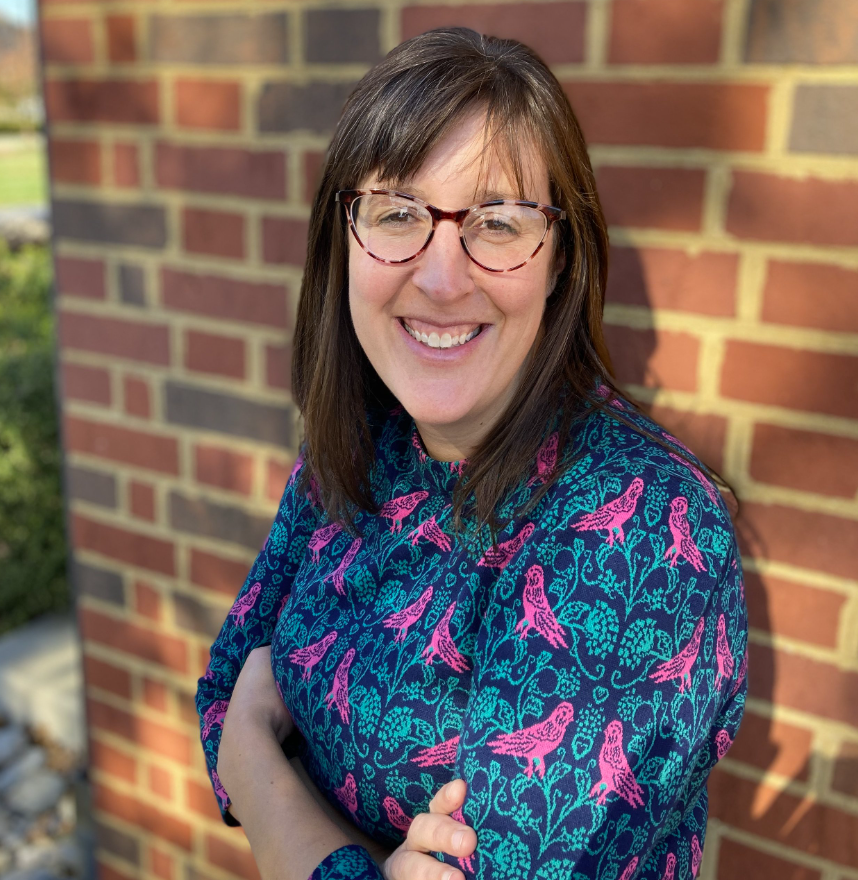
Dr. Pepper Stetler, Art History professor at Miami University, discusses her book A Measure of Intelligence: One Mother's Reckoning with the IQ Test. Drawing on her experience raising a daughter with Down syndrome, she examines the history of IQ testing and how schools reinforce misused intelligence labels.
transcript
Speaker 1 Hello, and welcome to the latest episode of our podcast. My name is Chris McNutt, and I'm part of the progressive education nonprofit Human Restoration Project. Before we get started, I want to let you know that this is brought to you by our supporters, three of whom are Kyle Prince, Jen Olson, and Stacy Cadence Hilgenberg. Thank you for your ongoing support. You can learn more about the Human Restoration Project on our website, humanrestorationproject.org, or find us on social media and YouTube. We're so proud to have hosted hundreds of hours of incredible ad free conversations over the years. So if you haven't yet, consider rating our podcast in your app to help us reach more listeners. Today, we are joined by doctor Pepper Stettler. Pepper's recently released book, a measure of intelligence, one mother's reckoning with the IQ test, documents her journey alongside her daughter, Lisa, who is diagnosed with syndrome. It dives into the history and ongoing problematic issues with measuring intelligence, specifically how school and society uphold and reinforce misused and misappropriated labels. Pepper's work on disability advocacy has been featured in the New York Times, the Atlantic Slate, and the Washington Washington Post. And she's also an art history professor at Miami University. So thank you for joining us today, Hepburn. Hi, Chris. I'm so glad to be here. Thanks so much for inviting me on. Yeah. Of course. So, I mean, starting off, I was really struck by you and your daughter's story and their journey through early life and now starting school. And I know that this is kind of sort of the point of the entire book. Right. So I'm wondering if you could offer a brief introduction about you and your your daughter's story. Yes. Of course. So
Speaker 2 I I start the book off with this experience that I think a lot of parents have when their child is about to start kindergarten, and they they need to be on an IEP or an individualized education program. And it's this document that really kind of outlines certain goals for a child and also what kind of supports a kid who might have a particular diagnosis might might need to to keep up in a mainstream classroom. So it's a it's a document that's really supposed to kind of give kids with disabilities and different learning challenges access to a mainstream classroom. And so my daughter, Louisa, has has Down syndrome, and, we kind of knew this was coming up. And I went to to the first IEP meeting before kindergarten, and, I was presented with a lot of information. And one of one of those, things was results of her IQ test. And I'm sure the school had, like, asked for permission for this, and I had signed some sort of form, that I was, like, eventually just forgot that I had signed to to give permission to these. But then we're discussing the the results with the school psychologist, and there was just a lot about it that I was really confused about. I was confused by the redundancy of it. In in Louise's particular case, I think the the challenges and the strengths for a kid with Down syndrome are are pretty well known, and Louise is pretty typical in that way for a kid with Down syndrome. So it wasn't as if the IQ test was telling us any new or particularly helpful information in that way. And it it all just seemed very kind of bureaucratic, right, like something that had to happen just to to get this IEP rolling. Except, you know, I knew about a little bit at that time about the kind of history of IQ tests, and there was a part of me that was just kind of like, oh, we still we still do this. Okay. I did it. I didn't know we still do this. And then, you know, there was another weird part of me, that I I slowly started to kind of realize and come to terms with is that, like, one of the things the school psychologist said to me was like, well, Louisa's IQ is is low, but it's actually pretty high for a kid with Down syndrome. And there was a kind of part of me that was like, yes. I had I had done something. Like, that was a good thing, and it somehow I think I realized over time that I felt as if that reflected on me as a as a parent. Right? So I was already, like, feeling this tension about how I clearly valued this test in some way from my my response, but also knew that it was problematic at the same time. And so from there, like, I'm I'm an art history professor, and this book has nothing to do with with art history. But I, you know, I know how to research, and I started I started researching. I started reading, psychology journals and articles about intelligence and IQ tests. I started looking into the history of the IQ test, and then I kind of realized that, I had a lot here that I wanted to kind of turn into
Speaker 1 to to a book. Yeah. What's fascinating to me, and I I would love to hone in on this this idea of being formally diagnosed with Down syndrome, but then having that extra bureaucratic layer and the way that the label and the score impacts your daughter's journey. There's a quote in the book where you say, it's it's clear to me that the IQ test was set up knowing exactly how someone with Down syndrome would perform. Right. It was designed to put her behind the curve. But there seems to be an irony in there because she performs so well, like air quotes there, so well on the intelligence test that it seems like it actually disqualifies her for the level of services that she would require despite a formal medical diagnosis.
Speaker 2 Right. I mean, it's this this bind in between, like, reality and and bureaucratic need. Her her IQ when it was measured was too too a little too high to officially qualify her for a diagnosis of intellectual disability, like the official diagnostic and statistical manual of of psychiatry diagnosis of an intellectual disability, except, like, you know, humans can step in and say, like, well, wait a second here. This is this is a child with, with Down syndrome, and that's a kind of unique position to be in in the sense that Louisa's challenges are due to, like, to chromosomes. Right? And I we can look and, like, objectively find a diagnosis, and there are there are other other things like autism and and other disabilities that aren't so aren't able to be kind of identified in such a objective way, which I think changes the value of of the IQ test in a lot of a lot of ways. So, like, she had a official diagnosis of, I think, a a speech disorder for for a while because that's one that she could be kind of classified as without this her IQ being lower. And that, you know, that's that's probably going going to change, I guess, somewhere around the road. But it's this weird bind where we depend on her IEP and therefore the IQ test to give her access to a classroom, right, to give her what she needs, the certain accommodations and, things that she needs to to learn in in a classroom with her peers. She she will probably need the diagnosis of intellectual disability later in her life to get Medicaid or Social Security. So it's it's necessary, but at the same time, it it also segregates her in in a lot of ways. It it identifies her as as different. And even even the very, like, label and association with a number is something that most of us don't have to have in our lives. Right? Like, I don't I don't know my IQ. That's not a way in which people identify me quantitatively in my life, but that's part of her her record now in ways that seems seems unfair. So that's what I wanted to really address in the book. And then I really started to realize after I got into researching the way in which IQ tests really shapes how our entire world thinks about intelligence. Right? So whether or not I allow my daughter to continue to have her IQ test tested, that decision won't directly impact all of the other ways in which our society is set up to discriminate and limit the opportunities of people with intellectual disabilities.
Speaker 1 Right. I was I was super struck by how odd the test was set up because, like you, I mean, I know what the IQ test is, and I was familiar with a lot of its history, specifically regarding, like, eugenics and really problematic, racist, sexist stuff. Yeah. But I wasn't as familiar with literally what was on the IQ test. And there's a question in the book. I'm doing this from memory, but it's something like, how are horses and cows related? And it's an a, c, d, and it's like they're on a farm. You can ride them. They're brown. But there were multiple plausible answers. And I was looking through the book, I was like, well, man, first off, I wonder what the right answer is because I feel like I I don't know. But also, it just seems like such an odd system to base whatever it means to define intelligence on. Yeah. And there's just so much cognitive dissonance there around the label and the power of the IQ test, but also how absurd it seems like the IQ test is.
Speaker 2 Yeah. You said something before about how, like, my my daughter is not going to do well on an IQ test. Right? And it's it's it's set up so that she doesn't do well on on an IQ test. And, I think that's part of it is that it defines one particular kind of intelligence, and it's very accurate in in measuring that that kind of intelligence. Right? But my, I guess, my overall argument is that we we could change the way that we think about intelligence. We could devalue the things that are on IQ tests, and that might provide more access and opportunity to to everybody. So there's there's a chapter in the book in which I I actually went and, like, had an IQ test because I thought that was the best way of, like, getting into what what is on this this test. And it it really drove home to me how the IQ test defines intelligence with things like efficiency, productivity, short term memory, pattern recognition, decision making based on experiences in the past, these sorts of skills that are not coincidentally the things that make good modern workers. Right? Like, these are the things that are successful make make someone successful in the modern world and modern professions. It doesn't have anything to do with, like, older agrarian society professions like farming or blacksmithing or or things like that, which, you know, I point out just to suggest the the historical definition and how what the way that we think of intelligence isn't something that is inherent and measurable, say, like a heartbeat or a breath. It is a decided upon set of of characteristics in in our world.
Speaker 1 Right. And it justifies the use of power against folks. You you bring up an example where you were I think you were touring a school or you were inside of a school, and there was a kid who was being dragged down the hallway. Yeah. You had some form of intellectual disability. And you mentioned about how the institutionalized power as a result of them being diagnosed in this way lends itself to basically rationalize their dehumanization. Like, we are capable of harming someone because they are of a certain type or certain label, etcetera. Yeah. Exactly.
Speaker 2 It was it was a really horrifying experience. And equally horrifying, I think, was the fact that when I saw it, I didn't do anything about it. Like, just how how you said there's a kind of naturalization of the the acceptability of harm to people that are are different. That is is completely unacceptable to me. But at the moment, I just didn't didn't understand it yet, I I guess. But, you know, the it's there's ways in which that allows us to associate difference and say not complying with a school classroom environment well with being being a bad kid. Right? Like, a behavioral behavioral difference. And I think the the challenges of school, paying attention, working quickly, all of those things often manifest themselves in kids as as deviation from from good behavior. Right? I think that's one way in which we we see these conditions playing out. And the I guess the the other way is in which the person who, drug this child down down the hallway was not a a skilled person who was paid very much for her job. Right? Like, we don't value the care work of caring and teaching children with with intellectual disabilities as much as we should either. So that was a situation where this this person was completely over her head, right, and wasn't didn't have the skills and the training to deal with this situation that she was in.
Speaker 1 Yeah. I mean, it's it's one of those situations where it's kind of a modern horror of society that it reminds me a lot, and often they're the same spaces as nursing homes and, like, senior care Yeah. Where you're hyper underpaid. It's one of the highest stress professions, but yet it's the place where many folks are going to be. And it's it's difficult to rationalize, getting those services. I had mentioned before we started recording, my, my brother-in-law is autistic Mhmm. And requires constant supervision. He's a lot of, home care. And something that we're looking at right now, that he's getting older, he's in his twenties, is, like, group homes or nursing homes or, like, spaces where he could go and live and be independent from his family while simultaneously receiving the care that he needs. And it's way more difficult than you would expect. It's it's kinda shady, actually, in terms of, being able to see what level of care they're getting. Are people trained? And are they being, I suppose, abused, as a as a result of these systems that have been set up, through, I guess, norming people,
Speaker 2 in this fashion. Yeah. Exactly. And there's, you know, there's a pretty clear line, historical line that you can draw from the eugenics movement in the early twentieth century, and, the institutionalization of of people who were, I guess, at that time called feeble minded, quote, unquote, what right? And those sorts of conditions today. Right? So IQ tests in the early twentieth century were used by someone like the American psychologist Henry Goddard basically, to identify kids who he felt shouldn't be in public schools, right, and to kind of take feeble minded kids out of public schools and at least put them in a separate classroom. You know? And this is basically what we have been struggling to overcome since since that moment. Right? The idea that kids, who who think differently, have intellectual disabilities, don't don't bring anything to the classroom. Right? That they they have nothing to contribute to that environment, and it is it is so difficult to overcome that historically ingrained I idea that the best thing to do is just to segregate that that kid. It's even in the way that, teachers are trained today. Right? Like, I've learned more and more about this how the structure of teacher education, you know, rarely trains teachers to teach all kinds of learners. Right? General education teachers don't get a lot of training in teaching kids that learn different different ways. Right? And that's something we're still trying to kind of overcome in our education system today.
Speaker 1 Yeah. I mean, speaking from a classroom lens, one of the concerns that that we often focus a lot of our work at HRP on is that it it tends to be that IEPs or any kind of difference from the norm is treated as an add on to a very, I suppose, neoliberal education system where you're just kind of rank and file and put through the what is becoming more common than not script scripted curriculum or purchase curriculum that a teacher just kind of goes through. Yeah. And as a result, students on IEPs or students who are just struggling generally with the content are offered almost like a doubling down of boring curriculum content to get them through it. So if a student is struggling with reading, well, let's just put them in the reading room for an extra two hours, and maybe they'll catch up. As opposed to examining, well, why is the student maybe not wanting to read that material? Or are there different ways that they could they read through an audiobook? Like, there's all these different capacities at which, we could design curriculum for those at the margins that would benefit everyone, but yet has not been structurally examined because that's just the way the system has been set up for a very long time. Yeah. I mean and I have one thing I really observed and tried to write into the book was,
Speaker 2 like, the the way that I saw teachers trying to battle the system. Right? Like, trying to set up certain, ways in which Luisa can access the curriculum, but in a in a different kind of way. Right? Like, through audiobooks or through, the same subject matter of the text, but, say, a kind of condensed condensed text to read or, you know, things like this in which they are on their own, I feel like, to to figure it out. And it's not something that's systematized, but it's it's something that teachers are kind of weaving and stitching together to to try to be the most make the most humane classroom possible, and they're exhausted. Right? Like, it's it's exhausting to try to work in the in the margins of this and try to really kind of DIY, an inclusive classroom together. That's, again, something that I really realized by writing this book is that it's, like, it's not as if teachers hate Luisa being in their classroom or something like, honestly, quite the contrary. It's, it's the exhaustion, and then it's just the system. Right? Like, they they have to give her these standardized tests of all of the because all kids take standardized tests way more than they need to in in school, and it's not like their the teachers are particularly enthusiastic about the the information that they provide either.
Speaker 1 Of course. Yeah. There's this this cognitive dissonance where you you wanna push for folks to adapt to the most radically inclusive environment that you could possibly create while simultaneously recognizing that that the folks that are the ones providing the curriculum are also in many ways equally dehumanized Yeah. And professionalized. But at the end of the day, there's also the argument to be made that, like, it's still someone's kid. So there's there's, like, a level of, I guess, rebellion that that almost needs to be offered by teachers. And speaking as a former teacher, it often feels this way where you have to break some of the rules recognizing that there's a human being in the room who's just not being treated fairly, as a result of the system. Right. But there are ways to work around those things. And and you've already mentioned through, you know, through audiobooks or adaptations or or condensing down text, etcetera. But I'm I'm wondering what, in an ideal world, that would look like for you and your daughter to have a classroom that embraces something perhaps beyond a traditional IEP.
Speaker 2 Yeah. That's a that's a really good question because, like, the kind of change that we just talked about, the structural change is is really hard, and I can't, you know, I can't imagine IQ tests going going away. And, you know, also, IEPs, like I mentioned, are are generally good things. Right? Like, they're they are a a document that is trying to help people. Yes. Again, like, IQ tests aren't going going away, but I also think that we can change what we think we're learning from IQ tests. And I've I've seen and talked to psychologists that are that are actually doing this. You know, there's there's ways of looking at the more granular information that an IQ test can give you, so not really the overall IQ score, but information gleaned from the, like, 15 subtests that make up most, IQ tests. And, you know, think about rather than that information telling us something about a person's deficiency, right, or a kind of how far away they are from normal, what they can't do, all of the ways in which I am presented with information about my daughter on IQ tests and and IEPs, thinking and emphasizing what could we change about the environment. Right? Like, what clearly, person is having trouble with this particular skill. What could change so that this becomes more accessible? The environment becomes more accessible for somebody, say, that has a hard time reading and then answering deeply interpretive and analytical questions about a text. Like, how could how could that skill be expressed in a in a different way rather than thinking about, like, a deficiency that needs to be made up with with a kid. And, honestly, I'm not really interested in in making up a deficiency for my kid. I don't I don't think Louisa should be thought about in terms of of deficiency. She is who she is, and it's the the structure and the system that I would like to see changed and then emphasize in changing environment rather than thinking about changing changing her.
Speaker 1 I'm sure part of that is just moving away from that hyper focused lens on productivity and workplace preparation. And it's not to say that those things don't matter at all, but the way that schooling is set up is certainly sort of only in that lane. And something that really struck me in the book is you mentioned about how perhaps what's not captured by something like an IQ test or by grading or whatever that might be is, for example, your daughter is the first one that wants to go up and sing karaoke in the lunch room, which is a valuable human skill. It's something that people wanna see. It's creative. It's fun. Yeah. And if we lived in a world where we weren't so job focused, that would be something that would be encouraged and perhaps even, like, tested. Like, we would get into I'm not advocating for testing for more things, but it would be something that would be an a valid indicator of the success of a school or the success of a culture, would be how do we include everyone, but also how do we celebrate together and socialize together and all these other, I guess, more like hippie things that that shouldn't matter to us as a society. Sure. Right. Like, call them hippie things. I don't care. I still wanna see them around.
Speaker 2 Valuing things like community, valuing learning about each other, valuing care and helping each other. All of those things can be valued too. And, again, like, I don't mean we should all move to a a kibbitz and, you know, live in peace and harmony with the world even though that would be nice. I would just like to see things other things valued a little bit more instead of constantly being bombarded with information about my daughter's deficiencies in these in these kinds of documents. But, you know, like, there there are other ways too that even if we're not talking specifically about the case of somebody with an IEP and an intellectual disability, like, these tests and the the constant measuring of, mastery and, intelligence has changed the way that we think of what learning is. Right? Like, learning learning is done to do well on a test. And that is that is, I think, what we see college students understand about learning when when they come to my classrooms in in college. And, honestly, I didn't quite understand where that idea came from, where they're they're just so interested in the the grade as the the final indicator of one's learning. I didn't really understand where that idea came from until I saw it emerging in the way that my daughter is being educated. And it's like, oh, I see. It's from the online grade books. That's why they're so paranoid about their grades. And this quantitative understanding of of learning has just, I think, really depleted the idea of of learning for for everybody.
Speaker 1 I mean, it's it's one of those things that it wouldn't be hyperbolic for me to say that. I think I've spoken now to hundreds of professors. And something that pretty much every professor has told me is exactly what you just said. Kids that are coming into my class, especially, like, people that teach freshmen, are like, hey. All they do is care about getting a good grade. No one actually wants to learn anything anymore. But yet, there's a grand irony. Because whenever we work with k 12 educators, which is primarily what we do, we hear, well, this all sounds great about moving away from grades, but colleges really wanna see, this stuff on paper. They wanna see kids focusing on getting all x. This is breakdown of communication where both folks are kind of, pointing the finger the other way. Yeah. But ultimately, we know via research, but also anecdotally from talking to young people, that kids who focus more on learning not only understand more than kids that focus on grades, they actually end up ironically getting higher grades. So if we focus less on the the grading element, kids end up learning more, which is paradoxical in in many regards. But Totally. The way that you get there is in part by focusing on ensuring that every single kid has a way to represent their learning in a way that makes sense to them. So like a universal design for learning. Yep. But, also, that would involve including everyone with a seat at the table. So not always pulling the student out whenever things get more difficult. Instead, it's, well, why is there a situation in the classroom that's designed that only one set of students can learn there? Yeah. And that isn't to say that it's all on a teacher to figure that out. But, certainly, like, researching and understanding things like UDL, or even, like, project based learning. Yeah. That would be a good first step of including everyone with a with a seat at the at the table. Yeah. Yeah. Absolutely.
Speaker 2 And, this was something I really had to overcome in the book is that, like, I I'm a college professor, and I've stayed in college because I am I am good at at school in a way that I find annoying now from what what I know. And it's just really hard, I think, to to undo the the kind of validation and the the meaning in that validation that one gets when they they they do do well in school the way that it's set up. Right? That that person doesn't mean that they're more valuable or more worthy or even smarter. It just means that you learn in a way that's school like. But there's there's other ways to learn. And if we just thought of school as, like, one offering perhaps a too narrow definition of what it means to to learn and and be be a lifelong learner, which is I think what we want for all of our kids, then I think that would that would really help us to make educational opportunities more equitable.
Speaker 1 Yeah. And perhaps if it were to influence folks more, something to be considered is that the the way that that educational kind of racetrack is currently working is not going to keep working. Kids that are really good at school arguably are not being set up for success in the future in many regards. If I chase all a's, I get all a's, I go to college. You go on that, what William Dreschwitz calls the zombification process, where you're just lurching from step to step, and then you graduate. And then you have a midlife crisis because you don't really see what the purpose of any of that was, but you also never took time to reflect and consider why am I doing these things? Or what happens when I don't get that validation, and now I'm just out in the quote unquote real world doing real things. Yeah. And I would like to imagine, I suppose it's semi utopian, but what would a world look like where people didn't have to go through that sorting mechanism or feel like they have to be validated by their narrow stream of intelligence? Yeah. But instead, we're put toward more purposeful tasks, k 12, into college, and how much that would change the world,
Speaker 2 to be living in a society like that. Yeah. Yeah. I I I wonder. I mean and I'm just thinking now about that, that, like, hoop between k 12 and college, which is, like, SAT and standardized tests. Right? Like, that's that's I imagine when you said, like, k through 12, teachers think that college wants good grades and to for like, is very grade focused. There's that model of the SAT that stands in between those two worlds and is, you know, something that developed out of IQ tests in the in the nineteen nineteen twenties. And, yeah, like, it would I think our our society is just set up in such ingrained ways to to value competition, to to value independence, to value comparing yourself to others and understanding where you belong in relation to in relation to how you, how you compare to other people, that it would be a u a utopian idea for sure, but and also incredibly hard to to let go of of those things. And, you know, I don't think I don't think society has to, change that dramatically to give more more access to to people that don't do well in in school. You know? I I mentioned in the book as well how there are about more than 300 now programs for, higher education for people with intellectual disabilities these days. So these kinds of programs that have been set up to give give people access to to higher education. And, you know, one thing I kind of realized in my my book is, like, that's that's really where the learning's at. Right? Like, because those programs aren't worried about grades so much. They're they're not worried about, admissions, test scores to to get into these programs. And there's a real, like, concentrated sense of purpose and meaning about those kinds of learning opportunities that I think I I don't see as much in, mainstream higher education.
Speaker 1 Yeah. I mean, all all of that's absolutely fascinating, and it's it's just really, I suppose, inspiring, to have an entire book slash research, almost like a research methodology, on IQ testing, all as a result of, you know, personal experience that you've had. And I'm wondering, as we run short on time here, I suppose, like, what are the next steps? Like, what are you hoping folks take away from this personally? Are there any things that you're now working on as a result of this book? Where do we go from here? I would hope I hope people take from the book. I hope people and teachers,
Speaker 2 that have, you know, various kinds of interactions in their life with people with intellectual disabilities, whether that is no interaction to lots of interaction, just to to think about how the way that we think about intelligence is made through human choices in history. Right? The and it I think that alone is a very powerful idea because it it suggests that, like, we could make other choices that are that are different and and and change that change that history. And I don't I don't think that happens overnight, but I do think that we've we've seen that happen in in other cases. Like, I can think of the the civil rights movement and even the disability rights movement as being good examples of that. And to I think as long as we sort of devalue intelligence test scores and devalue the kinds of characteristics that we associate with intelligence test scores, we could we could make the world better for for everyone. And, you know, I guess I would say now, like, writing that book has and my daughter in general has radically changed the way that I think about the world and what I care about in the world. And I I'm working with some of my colleagues here at Miami to start a program at Miami University for people with intellectual disabilities. So, hopefully, my daughter could maybe go to college here one day if she if she wanted to, and also working on advocating, at the governmental level for, changing things, changing laws that, segregate people with intellectual disabilities and make it more difficult for them to find employment once they're out of out of school, and working working on things like that now.
Speaker 1 That's beautiful, Pepper. I I really appreciate the work. I appreciate you joining us on the podcast and talking with us today. Thanks so much, Chris. I loved being here. Thanks for the conversation. Thank you again for listening to our podcast at Human Restoration Project. I hope this conversation leaves you inspired and ready to start making change. If you enjoyed listening, please consider leaving us a review on your favorite podcast player. Plus, find a whole host of free resources, writings, and other podcasts all for free on our website, humanrestorationproject.org. Thank you.
resources
- A Measure of Intelligence: One Mother's Reckoning with the IQ Test · Dr. Pepper Stetler (book) Examines IQ test history and how schools misuse intelligence labels, told through personal experience. link →
- Dr. Pepper Stetler · Dr. Pepper Stetler (person) Art History professor at Miami University and disability advocate writing for major national outlets. link →
- The New York Times (website) Has published Stetler's disability advocacy writing; searchable for related coverage on IQ and education.
- The Atlantic (website) Has published Stetler's work on disability and intelligence measurement.
- Slate (website) Has published Stetler's disability advocacy writing relevant to educators examining assessment practices.
- The Washington Post (website) Has published Stetler's perspectives on disability, intelligence, and schooling.