

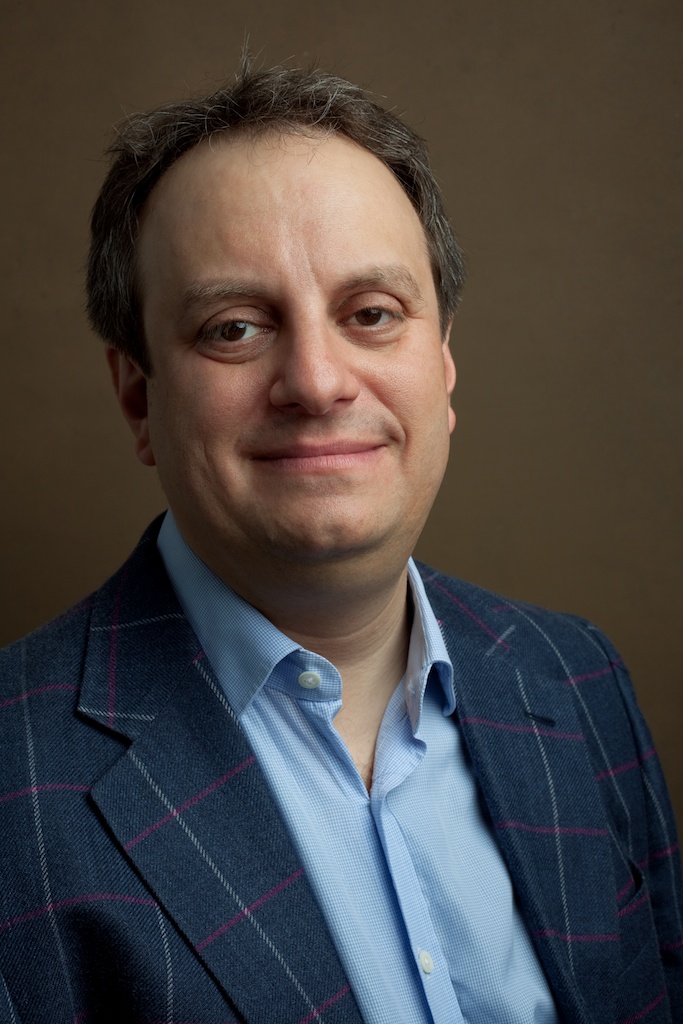
Gary Stager draws on 40 years of experience to explore teaching as an art form. The conversation covers formative experiences, the contrast between pedagogical authoritarianism and the Reggio Emilia approach, and the real role of technology in creative classrooms.
transcript
Speaker 1 I had a sense early on of a lot of the sort of absurdity of schooling. And the work that I do today is focused on creating a a world in which kids wake up in the middle of the night with a burning desire to get back to school to continue working on something that matters to them. And their teachers wake up every morning and ask, how do make this the best seven hours of a kid's life?
Speaker 2 Hello, and welcome to the Human Restoration Project Podcast. My name is Nick Covington. Before we get started, I wanted to let you know that this episode is brought to you by our supporters. Three of whom are Brandon Peters, Kevin Gannon, and Corinne Greenblatt. Thank you so much for your ongoing support. There's a quote from the great conservationist John Muir that goes, when we try to pick out anything by itself, we find it hitched to everything else in the universe. Well, my guest today, Gary Stager, has been working in education since before I was born, and I turned 40 this summer. So the sense that you get talking to Gary about teaching and learning is that when you try to pick out anything by itself, you find it hitched to everything else in the universe. Gary's been prolific as an author and educator.
Speaker 1 If you pick an issue today that's controversial, I probably wrote something about it twenty or twenty five years ago.
Speaker 2 And as the line in his official bio reads, quote, when John Piaget wanted to better understand how children learn mathematics, he hired Seymour Papert. When doctor Papert wanted to create a high-tech alternative learning environment for incarcerated at risk teens, he hired Gary Stager, end quote. This work was the basis for Gary's doctoral dissertation in science and mathematics education. Since then, he's worked across several continents, collaborated on a project that won a Grammy award, and led seminars and taught students in Reggio Emilio, Italy. In this conversation, Gary shares the defining experiences of his education as a student and how those shaped his values as an educator. We talk about today's pedagogical authoritarianism and its contrast to Reggio Emilio, his optimism about reclaiming the role of technology in education, and ultimately reclaiming the art of teaching. If you've ever heard Gary speak, you know he's a compelling storyteller. And I found myself in this conversation like a kid at story time, awed at the wealth of energy, wisdom, and experience that he brings to our collective endeavor. This could have easily been a three hour episode, and part of keeping the run time down was editing out a lot of my active listening interjections to keep up the flow of Gary's stories. We're proud to have hosted hundreds of hours of incredible ad free conversations over the years. So if you haven't yet, consider liking and leaving a review in your podcast app to help us reach more listeners. And, of course, you can learn more about Human Restoration Project on our website, humanrestorationproject.org, and connect with us everywhere on social media.
Speaker 1 Yeah. It was kind of the most it was among the most extraordinary weeks of my life. It was quite quite remarkable. 50 or 60 of the world's best jazz musicians Wow. In in a in close quarters hanging out and making music and and sharing expertise and legends with one another. And it's there's I've learned as much from jazz musicians as from about learning as anyone else. And just seeing half dozen of the best pianists, for example, show up to see each other perform and and to get, you know, acknowledged by the person who's performing and, occasionally to share a stage with them. And, you know, when when, you know, the the sort of vulgar external realities of it are that, you know, it's it's six or eight people competing for one or two jobs. But there's no sense that that's that's, you know, top of mind or even bottom of mind. It's it's about a higher calling. Watching, you know, 80 year old veterans get up at 09:00 in the morning to check out young people playing. And it's it's just, there's yeah. I mean, we could talk about some of this, but there's there's I I I feel sad for people who don't understand the level of complexity and sophistication and skill and beauty that that they're engaged in, and despair for educators who have no idea what greatness looks like, sounds like, tastes like. And, you know, the metrics for metrics for success are all wrong.
Speaker 2 Do you approach this, Gary? Not to interrupt that train of thought, but do you approach this, just a personal question, from the as a musician or as an admirer? As like, what's what from what perspective are you approaching jazz as a as a passion of yours?
Speaker 1 I aspired to be a jazz musician until my conspicuous lack of talent caught up with me. And Do you need that to be a jazz musician? Hell yeah. You know, one of the one of the great old masters used to refer to, you know, jazz musicians as being the most intelligent, you know, people on earth. And it's it's probably true. What they know and what they can do, what they what they can know and do simultaneously is is extraordinary. And I I'm humbled by the audacity and arrogance of a of a teenager or young 20 year old me who thought I was capable of doing it. The enormity of it is just overwhelming. But I but I a lot of my you know, I've I worked on a project that won a Grammy award, and a lot of my friends are among the the best jazz musicians in the world. And I spend all my disposable income and time spending as much of it as possible in the company of great great artists.
Speaker 2 I mean, it certainly seems like, you know, coming full circle back to that then, you know, but going back to the the beginning of that, what sort of bent that trajectory for you from seeing yourself as aspiring musician till to what? Was it a deviation to jump off into education technology and specifically the work that you're doing? Or did you just see that as a shift in applying the same interests and, and talents that you had?
Speaker 1 Well, I was a public school kid. I I grew up in Northern New Jersey, about 23 miles north west of New York City. And my schooling experience was pretty terrible with a few exceptions. One exception was despite how horrible it was at any given point, there were always teachers I could hang out with. And early on, a couple of them were music teachers. I was very close to my junior high school music teacher who was fairly ridiculed and often despised by others and who I think now with what I know was extraordinary in what he did. He was that didn't doesn't mean he wasn't crazy, but he was an extraordinary teacher, who took took an interest in me. And then, I went to high school and had two music classes a day for my first three years of high school and three music classes a day my senior year. Both of my instrumental music teachers in high school were working jazz musicians. The first concert I ever attended, the first musician I ever met was was the great Thad Jones who played at my high school when I was 13, NEA jazz master and guy who lived to almost be 100 and was performing the entire time, Roy Haynes, who had about a third of American musical history in his body, played in my high school. And around the age of 12, I got interested in composing music and jazz and and programming computers, and I did all of those through high school. And we all wanted to be a member of Art Blakey's jazz messengers. And if anyone managed to find photos of me wearing a dashiki with my friends, it might cause some problems today. But that was the trajectory. My my peer group and I wanted wanted to be jazz messengers. We wanted to play with Woody Shaw. We wanted to, you know, be be post bop musicians. We or be an art ensemble of Chicago. And, I I played in a local college Latin jazz band my my senior year of high school. It was a funny story. There was also talks at a sort of kindness and empathy and creativity of great teachers as well as great artists. And I had a scholarship at the Berkeley College of Music where I went for a year, and then I transferred, back to a state school in New Jersey, which had an incredibly fine jazz program where I went to concerts every Sunday while I was in high school and then, ended up at Rutgers University pursuing it for a while. And I don't remember a a moment where I decided that the world didn't need any more bad trumpet players, but I did make that conscious decision, and I stopped playing and and became an elementary education major, and I eventually got a degree in elementary education.
Speaker 2 Wow. Being inundated, I I in the music scene, your education background in it, and the experience of it. In those first years as a elementary educator, how did that translate or transfer? What values did you bring to the classroom when you first stepped into it? Well,
Speaker 1 I always had a teacher I could hang out with as far back as I can remember, like about third grade. And despite the fact that I hated school, I would often stay after school to hang out with an interest know, with an adult who was interesting. And I often say that the best thing teachers can do is is be interesting adults. And when I was in junior high, I I I learned to play tennis from my band director who ran an intramural tennis, you know, class, and I and I took private lessons from him over the summer. So I had a relationship with a teacher outside of school. You know, he came to my bar mitzvah. And these are little things I don't talk about very often, but but there were teachers who were human, even the ones who were actually torturing me. We helped get a class approved in my high school called jazz improvisation, where Wednesday through Friday, we played small combo bebop post bop, hard bop jazz. And Monday and Tuesday, we did, listening history and theory. And I remember distinctly spending a lot of time on Sunday nights on the phone with my friends discussing what record we were gonna bring in to talk about in our class. So in essence, we were setting the curriculum for the course while we were students in it. So I I always had that kind of interest. And at the same time, I had fallen in love with programming computers because at seventh grade at Skyward Colfax Junior High School in Wayne, New Jersey, mister Jones taught a computer programming class that was required of every seventh grader in 1975. And the expectation was you learn to program in nine weeks. And this was not gifted any talent or special education or at risk or college ready preparedness. This was in the rotation between baking a souffle and making a tie rack. A smart adult got ahold of some hard hardware and said, here kids, see what you can figure out. Lock up when you're done. And I spent a great deal of time programming through high school, and then because I was told I wasn't good at math, I was told I shouldn't or couldn't study computer science. And I graduated high school in 1981 and thought, well, that computer thing was kinda interesting, but it was, you know, kind of a boyish pursuit because no one will ever actually have a computer. And a year later, I was running one of the first computer programming camps for kids in the world and had a staff and a budget and was considered senior administration at a 50 year old family run day camp, and and then soon after that began teaching teachers professionally. So I I did a lot more teaching of teachers than I did of being in a classroom, but I've I've worked in hundreds of schools around the world. So it's a circuitous way of saying, was always kind of an introspection. It was always a thinking about thinking. It was always you know, I I I didn't I wasn't very fond of school, and it wasn't very fond of me. But I there were there were instances where I was thinking about what was going on, and I think in a kind of deep way that's fairly consistent with what I now know and do. And I was I was never a grade grubber. I was you know, even someone you know, if I'm if I'm in that club, I'll play by its rules. So I always sort of had the attitude of, well, you've given me a dopey assignment, and I've chosen not to do it. Now the ball's in your court. And if you fail me or whatever, then cool. I've got a job to do, you've got a job to do. My job is to not memorize the Arbor Day poem. Your job is you know, whatever. You know? Yeah. So I mean, I had a second grade teacher who tied me in my chair with a jump rope. Oh, my goodness. Yeah. I don't think that was traumatic as much as I was amused by it. I'm not sure if it was directly related. I I kinda remember the the sequence, but I I do real remember, the satisfaction that came from organizing a boycott of reciting the Arbor Day poems, which caused the teacher to cry, which is probably mean of me at second grade, but and was an unintended consequence. But I I I had a sense early on of a lot of the sort of absurdity of schooling. And and the work that I do today is focused on creating a a world in which kids wake up in the middle of the night with a burning desire to get back to school to continue working on something that matters to them, and their teachers wake up every morning and ask how do I make this the best seven hours of a kid's life?
Speaker 2 And I'm glad you brought things to the present day because I was hearing a lot of tension in what you were describing of your experience of school back in the seventies as seemingly a lot more freedom, you know, less the stakes seemed a lot lower. And at the same time, you had the experience being tied to a chair or, you know, the how you've described teachers torturing you, you know, maybe in other ways or the arbitrariness of sort of adult authority in that context. I don't know if if that's so much today. But I wonder if we could ping those two things off each other just like where you see the state of education today compared to your own experiences and, you know, how how you see your work in there today or what's what's missing from something today that was that was present back then that's gone today. Or vice versa, what's here today that that you're grateful for that kids don't have to experience that you did when you were a kid?
Speaker 1 You know, a lot of my work today is is focused on reanimating the art of teaching.
Speaker 2 Yeah.
Speaker 1 I I think what a lot of schools are are facing today is, a rise of pedagogical authoritarianism. This remarkable certainty that we know how every child learns. They learn x things at y pace in z sequence, and any deviation from that is malfeasance. And teacher agency has been been removed. There was no teacher agency. There's no student agency. And there's this agency spiral of we remove discretion from teachers so their teaching becomes more automatic and systematized and rote and standardized. And then the results suffer, and we respond to that by removing more agency from them from them. And it keeps getting worse and worse. And we're left with this fraud called the science of learning, which is neither science nor learning. And when I became an elementary school teacher, we had to learn how to teach art and music and phys ed and science and math and history and make connections between them and and organize classroom centers and use manipulatives and inspire project based work. And state of New Jersey until the mid nineteen eighties, it was required to play the piano a little bit to get a teaching credential. And then around 1985 or '86, around the time of nation at risk, and this happened everywhere across the globe, and no one no one else talks about it but me. I'm not saying that arrogantly, but it's extraordinary the conversations that aren't being had. The art of teaching was removed entirely from teacher education programs, and all that was left was curriculum delivery and animal control. And and so a lot of the work that I'm doing today is rooted in, you know, the the best intentions of people who become teachers, who wanna make school the best seven hours of a kid's life, who wanna be surprised and delight in the company of nutty kids and what they're capable of doing, and not teach the same thing over and over again for year after year, who just haven't had the experience. You can't do what you haven't experienced that. You know? The biggest idea in all of my work is from Piaget that knowledge is a consequence of experience. There's no substitute for experience. And almost every problem that one encounters in education can be explained by an absence of experience or an impoverished one being provided when a real one is is readily available. So there were there were kind of three main experiences as a student that I think shape a lot of my thinking. One was I had a social studies teacher named Bob Prail in seventh grade. I don't think I was alone in knowing intuitively that Prail was on our side and that because of that, the system didn't like him very much, and and we might have to do something. You know, we might have to march to save mister Prayle's job. The social studies textbooks never appeared, but we spent our own money to buy copies of uncle Tom's cabin. We made a film about it, and one of the other classes read Upton Sinclair's The Jungle, and they made that film. And kids were reading real texts and investigating real history and engage in real you know, being historians rather than being taught history and making film and, you know, all the sort of stuff that people are gobsmacked about today. And, you know, there were signs that the system didn't like mister Prail very much. Like, every time the bell rang, he had to pick up all his belongings and go to another classroom. Other teachers had their own classroom, just not Prail. And that was their subtle way of, I think, sticking it to him. And he was there for about forty years. And right before he retired, I I flew cross country to to surprise him and to thank him. And I walked into his classroom, and he introduced me to the kids. And they were engaged in some really complex making of of marionettes, of superheroes who were in historical fiction that they were writing, and and they were going to be presenting them at the local elementary school. And the kids were all heads down working collaboratively on these projects. And Prail interrupted the kids and said, I'm really sorry to interrupt you, but I've got a problem. And the kids sort of sat up really quickly with their spine steady because mister Prayle had a problem. And and he said, the problem is I love the project you're working on, and I I appreciate that you all bought a copy of Yili Vizel's novel Night about the Holocaust. Now we've been reading that. I've been really mature I've been really impressed by the maturity of the discussion we've had about the book. But my problem is the district says I have to finish chapter seven by the end of the week. And the kids were listening attentively, and he said, so what I've decided to do is, I'm going to give you an enhanced study guide for the chapter. And one of the little girls earnestly raised her hand and asked, what's an enhanced study guide, mister Prail? And he said, well, if you remember in chapter six, I gave you a study guide which had all the questions that were going to be on the test. The enhanced study guide has all the questions and all the answers. And then the kids went back to working on their projects. There wasn't even a snicker. And I I get choked up thinking about this. I can't help but think that sometime twenty, thirty, forty years down the road when one of these kids is confronting some challenge that they were otherwise unprepared to handle, that they'll remember there was some adult who was willing to put their needs and talents and expectations and interests ahead of some arbitrary list of nonsense. You know, the second experience was in fourth grade, I the child study team evaluated me and called my parents in and said, get him out of here. That was the the official recommendation.
Speaker 2 Yeah. I mean, that was kind of what They didn't do that? I guess I just I'm flabbergasted. Like, I don't know what to say about that. Well, that that was that was the IEP.
Speaker 1 Oh, okay. Get him out of here. Yeah. I well, among other things, had realized at that age that if you painted everything black, you could get you could get the child study team to come in and evaluate you on a regular basis. Okay. And so I I stayed in the school anyway. And oh, I should I should say as an aside, and I can't find any evidence to prove any of this, but I know it I know it in my bones. The school district I grew up in had an open education project going on in the mid seventies, allegedly studied by the Rand Corporation. And I can't get any of that data. I've tried. I there's no record of any of it ever happening. And about half the element let's say there were 10 elementary schools in the town. Half of them were open plan, and the other half were traditional. I, unfortunately, was in a school that was an open classroom. And the teachers who you know, and the notion that open education failed is as preposterous as whole language failed because teachers never even got the memos that had begun. And it apparently keeps failing because California banned it by law in 1997, but it continues to be blamed for any real or perceived failure of of literacy instruction. Be it as it may, if it failed at all, which I don't think it did, because I knew one of the administrators in the district well into my adulthood who was still mad about what a success it was and how nobody took it seriously. But it it failed because a rational system would have said, we would like teachers in the school district who are inclined to teach in an open project based fashion to put their hand up, and we'll assign you to those five schools. And the rest of you who don't want to teach that way can be in the other five schools. So the project the kids were there because that's where their their house was, and the teachers were there because that's where their parking space was. And it blows my mind to this day that it never occurred to a single adult that I could have gone a quarter of a mile in the other direction, to a school in the same school district where I might have thrived. Right? So and and you see examples of that, know, when we when we, you know, we we things. It's often that stupid in its execution. My guess is you like I said, if you had let people decide where they wanted to teach, and how they wanted to teach, it probably would work out better for everybody. But fast forward a little bit. Sixth grade, I apparently take some standardized tests. I do well in math. They invite me to be part of something called unified math, which came out of the new math of the sixties. And the the general idea was there wouldn't be algebra, geometry, algebra two, trig. Everything would be mixed together, and it'd have some more modern mathematics mixed in. It'd be integrated, and you'd go really fast. And you would you would be in this cohort of kids, this classic kids through twelfth grade. So by the end of eighth grade, I hated math. Math hated me. The teacher really hated me. And by ninth grade, I dropped out of unified math, and I was in the next to lowest algebra section. And in tenth grade, I typed my alge I typed my math notebook because the the the legibility of your notebook was more important than actually having a mathematical ability. But of course, I submitted it with a preamble about this was an asinine exercise and if it if it amused the teacher, God bless her, God bless her. Eighth Thomas Jefferson over here writing the Yeah. It was tenth grade by that point, but yeah. Tenth grade. Yeah. And and then twelfth grade, I took a class called math for liberal arts, which was essentially, you're not good at this, but you're gonna have to go to you're gonna go to college, so you probably should get some more math. And, I walked into the classroom, and the teacher Ed O'Connor opened with, it's great to have you in this class. Let me see if I can teach you the stuff my colleagues were supposed to have covered. And I remember thinking, interesting. This guy's onto something. And and then I looked around the room, Nick, and I realized that a good 75% of the kids who were in the math for dummies class with me had started at unified math. They were the gifted mathematicians. And and to this day, I wonder if any adults ever noticed that the fastest way to the bottom was from the top. I should also say that about eighteen months after I graduated high school, I started substitute teaching in the district where I was was a student. And I and I don't and I think that being a being a substitute teacher is good preparation for teacher for people becoming teachers as well. Unfortunately, in some states now you have to have a PhD or something to be a substitute teacher. Even as they run into sub shortages and everything? Oh, right. Of course. Know, I was making $34 a day pre tax and I was doing it. And being a being a bloke, you know, I got wood shop. I never got a nice substitute assignment ever. But I you know, and I often when I hire teachers, when I've been in a position of hiring teachers, if I see worked at a summer camp that moves the pile that moves the the the CV to the top of the pile as well. Because those are the folks who are in it for the right reason, who when, they're told to stand with 27 year olds for four days next to their ping pong table because it's raining out and can find some way of entertaining and, you know, keeping kids productive and spending time together. I think that those skills are important too and probably more important than than a lot of what goes into the formal teacher education these days. So so there was sort of advocacy. There was recognizing that there were teachers who were speaking truth to power. There were, you know, the sort of obliviousness of the system to what was actually happening that that made me sort of think harder about about alternatives. And the the work that I did at 19 years old running a running programming classes for kids is remarkably similar to the work that I do today. Oh, that doesn't mean along the way I didn't get to work with all my heroes who have shaped and influenced shaped and influenced my thinking and sharpened my skill, But but I think my intuitions about teaching and learning were pretty good from the beginning. And and if you pick an issue today that's controversial, I probably wrote something about it twenty or twenty five years ago.
Speaker 2 That is the honest truth.
Speaker 1 That that is not And and by the way, that's not that's not that's neither arrogant nor beneficial to my career. Yeah. Because it comes off as kinda you're you know, you're a you're a smart ass or something, know it all or Kind of the same reaction that
Speaker 2 a lot of teachers gave you in in elementary school. One one thing, Gary, that's really resonating, you had mentioned Piaget and learning from experience is just, I mean, what was the last twenty minutes of this conversation if not, right, a huge explanatory power for shaping, you know, your world view about teaching and learning, the role of education, pedagogy, etcetera. And I'm wondering, just to bring a couple of of threads in here, you had mentioned also that pedagogical authoritarianism. Well, you're also huge in Reggio Emilia, and, you know, you you have real close connections to the community there and to the late Carlina Rinaldi as well. I'm wondering if you can speak to how how does your life intersect with Reggio Emilia and maybe how does that intersect with that issue of pedagogical authoritarianism because those are diametrically opposed, I think. Well, you know, the pedagogical authoritarianism
Speaker 1 is this this notion of everyone everyone learns the same way. We know what it is. We know what it should be. We know what the content should be. We know the sequence it should be at a pace, which is just preposterous. It's it's delusional at best, and it's and it's cruel. And, you know, anyone who believes that needs to be able to explain to me my seven year old granddaughter's post doc and Disney princesses. You know, kids know all sorts of things and can learn all sorts of things. And we we say simultaneously that, oh, these kids know so much more about x than we do, and then then build an entire system based on deficits, real or imagined. Now saying that I'm big in regioamilia will get me in trouble in regioamilia. I I will say that I'm a great admirer of of of the educators of regioamilia, and I'm a I'm a great admirer and student of of what they've accomplished over the past six or eight decades. I knew about the Reggio Emilia approach, oh, at least twenty five years ago. My daughter attended a a Reggio inspired school for a year or two in middle school. But I I knew a little bit about the work before that. And about fifteen, sixteen years ago, I went on a study tour to Reggio myself. Like everything else, I do at my own expense. I've been an educational entrepreneur for forty four years, which is fairly extraordinary and exhausting. You know? So I've spent hundreds of thousands of dollars speaking at conferences. And I went to Reggio Emilia for the first time, and it was everything that I thought it would be. Oh, and I'll tell you how I met Carlo Rinaldi. They run these study tours, which is their way of managing the world's interest in what they do. And a lot of people see it as a money grab, and they ascribe sinister motives to how carefully the folks in Reggio package their openness to the world. But it's really because they would love for the world to leave them alone. Nothing would make make them happier than if they could just focus on the children in their community. But they feel an obligation or responsibility to share what they know with the world. So they they run these study tours, and I went to one that was about applying a rego approach to older kids because the schools of rego amelia that you hear about are are infant toddler centers and municipal preschools serving kids from zero to six years old. And that's just an an accident of bureaucracy that at six years old, kids either go to public school or schools run by the Catholic church, neither of which are particularly good. And the municipality coming out of World War two wanted to rebuild its community and and thought that the best way to do that was to focus on the education of young children, which was the only piece of the system that they could have complete control over. So they spent something like 18 or 20% of the municipal budget on the education of 50 or 60% of the eligible children. And they believe that children are born with full rights of citizenship and that they're competent and that they learn through research in their world. That teacher that the highest calling for teachers is to research the thinking of the children, to make their thinking visible, to understand the thinking of each kid, to make private thinking public. And so it's it's a lot of reflective practice. And and and there's remarkable beauty and subtlety and complexity to the work that they do, and they don't suffer fools gladly. And they they take, you know, the the brushstroke of a of a one year old as seriously as cancer research. You see the work that the kids produce. It takes a while for you to believe that kids of that age are capable of doing such extraordinary things. So anyway, I was in Reggio for this this study tour. It was the first time they had done it around this theme, and it obviously was kind of raggedy. And but I was really committed to to knowing as much as possible what what they did, and I had a great respect for it. I could sit through bad presentations if if there's gonna be something that I can get out of it. And I knew that my friend and mentor and colleague, Seymour Papert, was fond of their work, and I was taking notes on my phone. So imagine, this is I don't even remember the year anymore. I I wanna I'll say sixteen years ago. Maybe it's twenty. Somewhere between fifteen or twenty years ago. And I'm taking notes on my phone, and some other people had bailed out. They were going sightseeing because the the lectures weren't very interesting. And so I think they had a sense something was going wrong. And and and and I often joke. I love Italy, I spend as much time as humanly possible there. But a four hour lecture in Italy is literally just warming up. You've never met a population who can sit longer. So I was taking notes on my phone, and I got a tap on my shoulder. And someone said, Carlo Bernaldi would like to speak to you in her office. You know, I hadn't been sent to the office in a while. And I shook hands with her and she said, Have a seat. And I sat down and she started with, Who are you and why are you here? Right to the point. And I think I should tell you, I think they thought I was playing games on my phone.
Speaker 2 Because at the time, it wasn't an accepted practice that people would be doing this. And so I told her who I was,
Speaker 1 and she in an exasperated fashion said, why didn't you tell us you were coming? And I said, well, I I sent the bio that was required and, you know, the sack full of money. And and she said, the greatest backhanded compliment I've ever received in my entire life. When, well, when people like you and Howard Gardner and Jerome Brunner come, you warn us. And she said, but they do the exact same classes you're doing. We just would have arranged some other stuff too. And then we spent this hour long discussion that careened wildly between her pounding the desk and yelling things at me and and snapping her fingers and demanding that her staff come in to hear what I had to say.
Speaker 2 Hell of an introduction.
Speaker 1 Yeah. And I'm I'm up for it. I like I like a good argument. I love it. You know, she said, Seymour Papert sat in in the chair you're sitting in. I said, I'm aware of that. And she said and I said, well, you know, you showed this example of kids using computer, and they were creating an animation where they were they drew a butterfly, and they were dragging it across the screen in PowerPoint. If if they had programmed that in logo, they would have developed all sorts of computational skills and sequencing and and formal you know, concretizing abstractions and measurement and directionality. And and she said, you know, logo, that's for that's for for children. We don't use things that are just for children. I said, you have smaller desks. And and she said or smaller lower tables. And she said, yes, but adults have bigger tables. And I thought, oh, that's a good point. I said, well, I still use Logo. And it was sort of ended, and I maintained the relationship through and then I got Layla Gandini, was the official ambassador for Reggio Emilia approach to North America, to come to two of the constructing modern knowledge summer institutes that I organized. And the first time, Leila walked in and saw the the purposeful bedlam of people working on all sorts of insane projects with cutting edge technology and craft materials and everything in between, and looked at me and said, Okay. I get it. And then Carla came and spoke at CMK twice, and I've made, I don't know, a dozen trips to Reggio Emilia, get at my own expense. Never once in fifteen years being allowed in a school when children were present until one day they walked me in and handed me a class for the day, which was quite an honor and great fun. And then I convinced them to collaborate with us on leading an institute that I called the language of computation constructing modern knowledge in Reggio Emilia. We ran it in April last year, and we're hosting another one this June. So that was a great honor and privilege of trying to bring my expertise and the things that I learned from Seymour Papua and my colleagues in the logo community and progressive education from sort of this side of the pond with older children up through doctoral students and share the program with their brilliant atelioristas and pedagogistas and create an event where we can bring these worlds together in order to create a more expansive vision of what learning could be in the future.
Speaker 2 What I love about Reggio Emilia is across pollination, you had mentioned, you know, from this side of the globe perhaps to the other. You know, I think of the last great pedagogical movement out of The United States, maybe like John Dewey, you know, in his travels around the world. And I think Reggio coming to The United States is a kind of a different cultural diffusion. Where do you see The United States? I guess, do you see any mainstream influence other than these these small pockets of, you know, call them progressive schools or regio inspired academies who borrow some of that visible learning or they borrow some of these things? Do you see, I don't know, a dent at all in mainstream American pedagogy and schooling coming out of Reggio. They've got sixty years of
Speaker 1 experience to base this off of. Well, I don't want to be unfair to The United States. I don't think you have to go back I don't think you have to go as far as do we? We had Deborah Meyer and Herb Kohl and Jonathan That's very Kosel and Lillian Weber and Lillian Katz and David Perkins. And a lot of those folks either were in connect were connected to Reggio in some way, formally or informally, but they all they certainly they're mutually influential. In fact, I had to bring to Reggio a book that's been recently translated into English and published in The United States where Loris Malaguzzi, who is the father of the the Reggio Emilia approach. It's a collection of transcriptions of conversations with teachers about students' work and students' thinking. And one of the and there's an entire chapter where he's talking about children's work programming in the Logo programming language. And I had to bring that to Reggio to show it to them because they had forgotten. And it was just an accident that someone published it in The US in English. There's not even an Italian version of it. But that there were teachers in the eighties with with Malaguzzi, basically working working with the materials that that Seymour Papert had created. And I worked with Papert for for twenty years and documented it, his last major institutional research project as the subject of my doc my PhD. So, you know, the opening education movement came out of The United States. I mean, there there was, what I regret is that when I got interested in educational computing, one of the major sources of attraction for me was that it was where the wisest, most radical, most socially conscious educators were. These are folks who came out of the civil rights movement and the anti war movement and the women's movement, and that's no longer the case. But that spirit sort of lives on, I hope, in the work that I do. I mean, it's you know? And people often conflate or confuse regia with nuttier early childhood approaches and cults that are anti modernity or technology where everything must be made of wood. The curriculum for three year olds is German existentialism. The Reggio folks explicitly say that it's irresponsible to build pens around children, that it's the responsibility of adults to find productive ways to engage children with their world. And so that's wholly consistent with my vision of using computers as intellectual laboratories and vehicles for self expression that amplify the the potential and the creativity of of each child, that allows them to go further than we could have gone on our own. And and so Malaguzzi has a famous poem called the 100 languages of children, which to to trivialize it, you know, is basically that kids learn lots of things in lots of different ways and know stuff and can do things, and that we should celebrate that. And one of the weaknesses in every progressive movement has been math. And it was you know, one time I got into I was kind of teasing Seymour Papert. He was, lamenting the state of mathematics education. I said, come on, Seymour. You're just fetishizing math because you have a couple of PhDs in it and you love it. And he stomped his feet, said, no. No. No. No. No. And he rattled off a 100 reasons why I was wrong and why the state of math education was so important. And I only remember one of them. And the one that stays with me is that regardless of how groovy progressive learner centered project based interdisciplinary humane the school's approach is or their attempted approach is, there's some part of the school day or week when coercion reenters the system, and it's math class, and that that coercion is ultimately corrosive to everything else you're trying to do. So, you know, the Reggio folks, if you get them at the right moment, will tell you, yeah, you know, math is a problem. And Deborah Meyer would tell you, yeah, math is a problem. And Ted Seizer would tell you math is a problem. And Dennis Litke would tell you math is a problem. And Papert used to argue that, you know what? We had the materials and the technology to teach macrame or social studies or language arts, you know, through experience and stuff. And it wasn't until computers that you could be a mathematician in the spirit of what real mathematicians do, where you could democratize access to mathematical experiences. And not only democratize access to those experiences, but also be on the frontier of those fields. Because with with a computer, with good software, and now with AI, you know, eight year olds can be engaged in serious mathematical pursuits. So it's not just democratizing, you know, access to this lockbox of knowledge, but it's actually allowing kids to be mathematicians rather than being taught math. When what the progressives gave us up until then was ways to be historians without being taught history, by being being writers without being taught grammar or with right? There was there were experiential ways to to ignite the other disciplines. And now mathematics narrowly and more broadly, I'm I'm using the term computation, which Stephen Wolfram defines as the ability to communicate an idea to a reasonably intelligent computer and to produce some sort of result. It is is really possible, and that's hugely exciting to me. And, of course, everyone else talking about computers in schools and technology in schools is going the exact opposite direction.
Speaker 2 I'm so glad you mentioned that because I I was gonna toss that in there and say your technological optimism about, say, bringing experiential math through computing and through technology is really counter to a a lot of anti technology, anti anti AI for better or worse. But how how do you, you know, navigate that? How do you see yourself navigating those tensions, Gary?
Speaker 1 Well, you know, we used to have discussions about what computers and education were for, and those discussions don't even exist anymore. So now anything with a battery or a plug is is roughly equivalent. And there are these zombie ideas like teaching machines and systems and, you know, assessment and, you know, giving the kid the next flashcard, you know, precisely after they you know, based on the their performance on the last flashcard. The sort of drill and practice. And and and these ideas have persisted for fifty years now or more, and that's where the big money has been. And and by big money, should say, and I always point out when I'm at an EdTech conference that people say, well, you know, that exhibit hall is the problem. You know, look at all the money that's you know? Like, you know, the Exhibit hall all the companies in EdTech don't do the business of just ShamWow, you know, or the scrub daddy. You know, it's a lot of people thinking they're they're like, you know, they're Elon Musk, but it's it's really kind of peanuts. It's a rounding error. But but it's where all the attention is because it's this magic handful of beans that that that's perfect because it it plays into the cynicism towards the ability of teachers. Right? They're stupid anyway, so we replace it with machines. And and it's cheaper because we could replace it with machines. And that's it's fundamentally fundamentally different from the way in which I use computers to, like I said, to amplify the potential of each kid, to have them not just learn the things we've always wanted to teach with greater efficiency or efficacy or comprehension, but to do it and know things that were impossible previously.
Speaker 2 Now If I interrupt real quick, Gary. That again, that optimism, and that's something that I read and and hear going back to Papert as well. Right? And the promise of these machines. So there's been one version that we're talking about that seems to be like a corporatized this is the marketing pitch. Right? That's the panacea. It's gonna solve all these problems and save you money in the process, but you're not approaching it from that perspective with technology. Right? The pedagogical ambitions of technology. How do we, I guess, reclaim, like, the pedagogical promise of computing and and I don't know, God, call it ed tech or whatever, in 2026 or whatever. Right? It seems hopeless almost.
Speaker 1 Well, we would solve all the problems in education if we could find a cure for amnesia. Yep. When school leaders say to me, if only we knew what to do, said, if you'll swing by my house, have a few thousand books I could lend you. Any one of them would tell you what to do. We've just chosen not to. You know, whether it was Bob Taylor's book in the late seventies, computers in schools, tool tutor two t, where he made the distinction between the way a computer could be used, or Seymour Papert's distinction that I wrote about in our 20 things to do with the computer forward 50 book, where he said the sis the computer can be can be used to benefit one of three constituent groups, the system teachers or learners. And the greatest return on investment obviously is benefiting the learners. That you could say, well, sure. And it you know, an interactive whiteboard is is is really to is based on its metaphor as classroom as theater, as actor, computer as prop. You could say, sure. An enhancer or creative teacher that might be able to be dragged slightly in the student centered direction. But more often than not, the best example someone could come up with is we let the little kids at the board, which be at the board, which just means that you're replacing one teacher with another, that it's still teacher centric. So we don't even have those discussions anymore. And and when it comes to AI, it's really interesting because, again, this is a discussion that I haven't seen in the the science or tech press, but I think it's worth investigation. Like in jazz, like in hip hop, I think there's an East Coast West Coast rivalry in AI that a lot of AI was was developed by people like Marvin Minsky and Seymour Papert, Roger Shank. Folks on the East Coast primarily centered at MIT or adjacent who talked about you know, Papert said everyone needs a prosthetic. Both of us are wearing eyeglasses. No one accuses us of cheating. We use technology every day to go about our lives, to level up, to to overcome, you know, challenges or obstacles that previous generations would have had to contend contend with. And Hal Abelson did a podcast recently where he was talking about computational making, and I've done a lot of work around learning by making. And and my frustration has been that the maker movement gave us the ability to make things with bits and atoms, meaning you could make actual things or you can make things in code, or you can make things with code that would add intelligence and interact interactivity to physical objects. But fifteen, twenty years into the maker movement, we've done a lot of cutting up of cardboard and pool noodles, and we've left the bits behind again. And Hal Abelson reminded me in his podcast that in the early seventies at MIT in the artificial intelligence laboratory, they were talking about computational making. And and their unofficial motto was computers are for children. And they were interested in Piaget because they they thought if they could understand the thinking of children, they could teach computers how to think and then realize that if if children could teach computers how to think, they would reinforce their own thinking and become better thinkers. That's a very different model of AI than what's coming out of Silicon Valley.
Speaker 2 This is the this is the West Coast.
Speaker 1 Yeah. Yeah. So it's it's it's Art Blakey versus Chet Baker. It's it's Biggie and Tupac. I mean, it's I I think I think there's something there. I think there there's a different you know, none of them nobody at MIT thought they were going get rich on it. They just thought it was good for humanity. I think we know I think we know which one's winning the fight right now. Right. Right. And I wish but but you know, for the educators who are concerned that that this is going to murder us all, they've got an they've got a choice, and they can go back to the original stuff. And they can read the learner's apprentice by Ken Kahn that we published. Ken has been working at this stuff since the early nineteen seventies. And when and when the chatbots became prevalent a few years ago, he did what any rational competent adult or educator would do. He said, I wonder if there's anything here for me. And he started mucking about with it, and and discovered all these cool things he could do and then started sharing projects. And I said, hey, Ken, you want to write a book? And and we we published his book. And the subtitle it's, know, the learner's apprentice, AI and amplification of human creativity because it takes that approach. I wish I'd had more time and had been clever enough to to talk to Marvin Minsky more about this, but he was arguably the father of artificial intelligence. And before he passed about ten years ago, he was quite melancholy about the the state and nature of AI research. That he was saying things explicitly like, what if the last thirty years of research has been has been wrongheaded and, you know, directionally wrong? And and saying, all the the best minds and research labs seem to be more concerned with a machine that could play Jeopardy or win at chess than to do anything useful. And, I mean, one of the real practical examples, banal examples he used to use is when 3 Mile Island melted down in the seventies, he wrote an article for Omni about how outrageous it was that there wasn't a robot smart enough to go into a nuclear power plant and turn a knob to and and then Fukushima happened 30 later, and there still wasn't a robot that could go in and turn a valve off. But, you know, we can, you know, we could take the clothes off dead ICE victims. Right?
Speaker 2 Mine for crypto or something. Right? Yeah. All the computing power of the world to Yeah. Run a lottery system, a random number generator. Right. And so, you know, I
Speaker 1 I've had some experiences with kids where you know, I was I was working with a school, Westbourne Grammar in Melbourne, Australia. And this was two years ago. They had a seventh grade AI club. Right? Again, AI is hot. Let's see if there's anything to this. Let's let's have kids come in under lunch hour and they'll they'll they'll they'll play with it. And and I was showing the kids this number theory problem that I was playing with. And very quickly, they started using the chatbots to develop software to to solve the problem or to produce data. And they're being mathematicians, and it got really far down down the path in in about forty five minutes or an hour, and it was quite impressive. And then, the next night, I was running a family, microbit workshop, the little programmable microcontroller you can use to build robots and smart machines and things. And, I was running this workshop for, like, kindergartners through twelfth graders and their parents and all strangers. I had no idea about there were no prerequisites. I had no idea about prior knowledge. And I love doing that stuff because when parents can see through the eyes and the hands of the screens of their kids what's possible, they want a different educational diet for their children. And and it creates creates a model for the schools that I'm partnering with about what good teaching and learning can look like, and they see the level of excitement and and and the importance of good prompt setting and and and my ability to to prepare the learning environment and, you know, something consistent with the Reggio Emilia approach as well. And and his kid showed up and while I was setting up, and he was one of the kids from the the AI club. And I said, yeah. We're gonna be using make code, and he interrupted me and said, can I can I program this in Python? I said, come on, Luca. It's like, I've got, like, all these crazy people here, and it's you know, Python's a bag of hurt, and I can't help you if you get into trouble. And and he's he's like, no. No. No. I I prefer Python. And I I finally said, fine. What? I I don't argue with kids. It's it's literally, don't argue with kids. Or doctoral students, you know, I don't want to do that assignment. Okay. Cool. And or, you know, when when I worked in a prison for teenagers, if you read a book, we'll have a luncheon where you can invite a friend and we'll bring in pizza or Chinese food and discuss the book over lunch. And if a kid said, I don't like speaking in front of others, cool. Don't come. And in every single case, every single kid participate. Anyway, you know, nothing beautiful is forced, and love is a better master than duty. And so I said, is go go, okay. Use Python. And then as I was walking away from the kid, you know, trying to run this setup for this workshop, I said, where'd you learn Python? And he said, in your class yesterday. And and I I'll say it again, I don't know how to program in Python, so that's just how good I am as a teacher.
Speaker 2 Not to pat yourself on the back.
Speaker 1 Yeah. I had a little assist from AI. Yeah. So he fully you know, just like a a four year old sees himself as a as a fireman or an astronaut, he sees himself as a Python programmer. You know, half half the battle. And that's because the a the AI would would give him code in Python. And if it didn't work, you know, he knew enough about computing to be able to make sense of what was going wrong and be he could communicate that to the system, and he'd get some new Python code. So therefore, was a Python programmer. So so I think that's I'm I'm terribly excited by the things that I've been able to get accomplished with AI. You know, at at the most mundane level, I wouldn't accept a piece of student writing that wasn't touched by AI. Every single interview, book, treatise, essay written by an accomplished writer on writing says, hey, smartass. You're not as clever as you think you are. Get a good copy editor. And at its simplest level, Claw or Chad GPT or Gemini are really good copy editors. And thirty years ago, I announced, don't you ever ask me how to spell a word or what it means because you have the ability to answer that question for yourself. Now it's just exponentially greater level of that. You know, I have professional, very accomplished friends who if they have to they have to write something, they run it by me. And they run it by me because I'm a pretty good writer. You know? So now everyone has that access. I've been friends for almost forty years with the great illustrator, children's book author, animator, Peter Reynolds. And Peter was worried about what AI was going to do to art, and there's plenty of reasons to worry about the commerce side of it. But I reminded him that one of the most joyful experiences of my life was sitting next to him when he worked at Tom Snyder Productions, and he was generating their monthly print newsletter that they used to photocopy and send to all their customers. And I would sit next to him and give him funny ideas for things to draw in the margins of the newsletter. And I said, and I've been lucky enough knowing you so long that when I desperately need a logo for something, you know, I could prevail upon you, one of the great commercial artists of our time, to do something for me without compensation. But not everyone can do that. And so I don't bother him nearly as much anymore because I can get the AI to do something fairly reasonable for me when I need a logo for something. Do you think then, Gary? Sorry. Do you think then
Speaker 2 about because I've heard a lot of concerns from from teachers on the ground. I've I've had them on other episodes of this podcast. Do you think that their concerns, I don't know, are are unfounded? Or where where do you think that those come from? Or how could I don't I I'm stuck in the middle of this, right, of this tug of war. I I don't know how to resolve
Speaker 1 everything that I'm feeling about this. You know? Well, I think both the hype and the hysteria Okay. Associated with AI is problematic. And I and I find the level of gullibility to be really corrosive. I've I've seen plenty of fads come and go in my time. I've never seen anything where everyone's LinkedIn bio changed overnight to expert in AI and education. And and it's extraordinary to me because AI is clearly a science, and it would be like people announcing that they were neurosurgeons or geneticists or biologists or geologists. It's it's preposterous to me. So the level of grift is is really shocking. And and the the number of people falling prey to it, taking leave of their senses is quite extraordinary. So there's that. And then there's people who are concerned with loss of control, and they want to catch kids cheating and all that stuff. And like, you know, I'm really sorry that that job at ICE or working at the county prison wasn't available to you. You know, maybe you've maybe you should rethink your vocational objectives. But that's a very tiny minority. I go deeper, and and and I don't see this stuff as being I just see see AI is amplifying this or making it a little bit more acute in some ways. But we should be we should be asking the question of why are these students doing that for everything you ask them to do? I had an encounter with Seymour Papert where he said, what are you thinking about doing with the the kids next? And I said, we're thinking about doing some geography. And he shot back in, what can they do with that? And and I was kinda taken aback. And he said, I didn't mean to startle you, but, anything you ask the children to do should have the reasonable likelihood of leading towards the construction of a larger question or a deeper theory. And so if if school is is treating smaller people like answer dispensing ATMs, or the coursework is based on making them read something that's written at their readability level and then give you a five paragraph version of it in their own words, then that bullshit should have been questioned long ago. And if you make easy things simple to do, you make complexity possible. So I'm really sorry, but a lot of the stuff you've been asking kids to do was stupid to begin with. And and if you have too many papers to grade, assign fewer papers. So there's this, you know, everyone's sort of on this treadmill, and and it and then something comes along that goes, oh, well, wait. Wait. There's this free software that that's really good at cranking out the nonsense that schools value? And and then I think there's a more there's a darker problem at work, which is there's a lot of uncertainty and anxiety in the world, and children are bearing the brunt of it. That and I don't think that's fair. I I think that it's it's the results will be catastrophic. I think it should always be our role as adults to lower the level of antagonism between generations. But, you know, first they came for the cell phones. You know, in New York City, this is the third cell phone ban. I mean, I talked about amnesia before. I'm not I'm not I'm not joking. I've written about it three times now. I don't mean like three weeks in a row. I mean like ten years apart. Yeah. Yeah. And you know, the first time they banned cell phones overnight, there were vans that pulled up in front of the poorest schools in New York City and charged charged poor children $5 a day to hold their phone. And, I mean, overnight, that emerged as a cottage industry. And and again, it's like blaming an inanimate object for, you know, for lack of engagement or for the fact we don't have any books or the curriculum's boring or you know? I'll give you an example. The school Westbourne I was working at in Melbourne. I I I like to do things like teach two hundred and forty seventh graders for an entire day, me and 240 kids, and then the next day do another two hundred eighth graders, and and around physical computing, or number theory, or computing and and design, and and again, to create models for teachers that things need not be as they seem. And at the end of a day of working with 200 plus eighth graders, a kid came up to me and said, sir, can I get a selfie with you? And I said, sure. And they took a selfie with me, and then another kid asked, and a few of them got selfies. And then it occurred to me, they all had cell phones. They all had cell phones all day. It was never an issue. Just like you know, my my doctoral research was based on creating a multi age constructionist alternative project based creative learner centered, technology rich learning environment inside a prison for teenagers. The state prison in Maine where they were being accused of torturing children. And it was Seymour Papert's project. He was tricked into it by Angus King who wanted to said he wanted to create models while learning for the future. Papert said to me when we started, let's see if we can make something in this horrible place that the best private schools will be jealous of. And the kids were able to work five hours a day uninterrupted on personally meaningful projects, anything they were interested in, and we supported them. We had a good classroom library. We built a we built a dark room. We had plenty of Lego, and every kid had their own computer. This is all leading to the one piece of data for my dissertation, which which is in three and a half years, we didn't have a single kid who had to leave the classroom for discipline reasons. We also had kids who hadn't been in school since fifth or sixth grade who spent three months with us and went to university directly afterwards. The but the discipline one is is interesting because there are people now flying around the world running workshops on ruling the room where they talk about using medieval practices to control your classroom. And the premier of of the education minister of of Ontario just went to England to visit some school where the headmistress beats children with a stick or something. And so we're in this tumultuous age where we think cruelty and deprivation and forced compliance of children is going to solve all of our problems. And I I think it's a little bit of kind of Stockholm syndrome.
Speaker 2 Yeah. There's always been that irony that I've felt too with these cell phone bans to think, again, name all the things that you just named about, you know, the state of the world, the uncertainty, the stakes, the anxieties, and we think that that is emanating from this device in the student's pocket as opposed to living in the world and in this society as such as it is today. So we think taking that phone away without fixing all the other problems is gonna alleviate that anxiety, without changing any other structure or practice of school, without providing any other structures or supports or changes of the society at large. No. No. And we don't even we don't even, like
Speaker 1 we've taken a leave of of our senses. You know, Jonathan Hite is a no show business school professor. Who gives a shit what he thinks? Amen to that. It's it's remarkable to me. The the latest hysteria about AI is an NPR story. You know, these aren't even employees of NPR. They're freelancers. You know, the woman who wrote who wrote who did the podcast attacking whole language has done unbelievable damage, and no one's questioned her credentials. The the journ I like NPR, but the journalism, there was there was no alternative perspective provided. And when when I when Seymour Papert was helping the governor of Maine sell the idea of a laptop for every kid in Maine, and they didn't do all the things that I wanted them to do with them, and I wasn't you know, they abandoned all of the hard stuff that would have been better. But be that as it may, it was a it was directionally correct. He said, you know, I have a transcript of his speech. He basically said, you know, so the question today in Maine is why should every seventh grader have a laptop computer? And he said, because I have a laptop computer. And because I couldn't get half of the creative and intellectual work that I need to do done without it. And if you don't think the seventh graders are capable of being engaged in creative and intellectual work, then we have a different problem to solve. And, you know, one of the laptop schools I worked at, I I should say, by way of biography, is I was involved in leading professional development, the first schools in the world where every kid had a laptop. That was in 1990, so it's now thirty six years ago. And the fact that we're still questioning whether kids should have access to something as ubiquitous as computers is preposterous to me. And and it was never a computing project. It was always rooted in Dewey and Piaget and and and the progressives of blurring the artificial boundaries between subject areas, programming across the curriculum. We got, you know, hundreds of teachers in dozens of schools to to to teach in a profoundly different way because when they saw what kids were capable of, they realized that their curriculum needed to change and the structure and the furniture and the timetable and everything needed to become more learner centered. You know? So we've got doctoral dissertations that go back to the early nineties about the efficacy of this. We've got you know, I've I've archived all the original documents online. There's been books written about it, and yet we keep pretending that no one's done the work before. And I, you know, I I I was at a conference recently where I I found myself taking a picture of a slide during the presentation with my phone. And and and in a moment of self awareness, I said, why are you doing that? You're never gonna look at that picture. And and what occurred to me was that was an act of curation. That it was me saying, hey, dummy. Pay attention to this. It's worth thinking about. There's a million and one times a day where I I use the phone, and I really think, you know, there are people who want to yank this stuff out of kids' hands. You want to say to them, well, you first. And and and you're not protecting them, and it's our role to find constructive ways to engage them with this stuff. And and it's okay to say, hey, jerk. Put your phone away. And I have colleagues who you know, when you get on an airplane or you walk into Carnegie Hall, there's an announcement, and then there's sanctions for disobeying it. I'm cool with all that. And we also ought ought to be able to differentiate between a computer and social media. And if we think that social media is really the problem, then we should legislate social media. But there's a fundamental and profound difference between the way a parent uses an iPad to pacify a kid in a IHOP and and the ways that I use them with kids to create software that solves a problem that perhaps you're the only person in the world needs or or allows you to collaborate with with one of the world's great composers or or astrophysicists or, you know, computer scientists?
Speaker 2 I think I will have to I have a lot to think about as a result of this conversation, Gary, from start to finish. I appreciate you as Do have mean, you have kids? I mean, what's your concern? I I do. I do. I just How old are they? I have they're 11 and seven. Okay. So I've I've got grandchildren who are seven and nine. Yeah.
Speaker 1 And I'm horrified by the way my seven year old granddaughter uses her iPad. Okay. Because she she just watches a lot of dopey stuff on it. Yes. Yeah. And, however, when you leave her alone and you see her playing with dolls, her narrative sense is ridiculous. I I I don't understand why she likes to watch other people. She uses, like, this sort of, like, dollhouse software. Right? Which well, so it's like a world where you're moving things around and, you know, and and and then she watches videos of people doing it, which seems meta to me and stupid, but maybe it's not so stupid. And and I'll tell you when they they live in Shanghai and when we didn't see them for three years because of the pandemic, if you had suggested taking their iPad away, I would have killed you. Yeah. Yeah. In fact in fact, my greater concern is that if I message my grandson or granddaughter, they don't respond. And, you know, Australia just passed a social media ban that's so ham fisted and broad that it might in fact be a felony for my granddaughter to send me a text message. And and so, like, do we really need that? I mean, I I just think it's more complicated. I you know, so it's up, you know, put the iPad down. And I still think it's play, and I watched a billion hours of TV as a kid and still played outside and was in scouts. And, you know, I was really I was heartbroken when I found out that Leonor Schenazy, who is, you know, behind the free range children movement and had signed on to all of Jonathan Haidt's hysteria. Because her whole medieval was kids are competent. It's never been a safer time to be a child. Let your seven year old ride the subway by themself. Stop calling the police on a kid playing outside. And then all of a sudden, oh my god. You know, we're we're doomed. And, you know, again, if you and if you ask the kids, most of it runs its course. I mean, I think, you know, there's a lot of concern about TikTok being handed over to oligarchs for pennies on the dollar, but but I think kids have already kind of moved on beyond from it.
Speaker 2 I mean, it's not going to be an issue, I guess a debate that we are going to settle right here. In my to come full circle,
Speaker 1 I've been blessed in my life through my own sort of chutzpah to be able to work with and know all the important progressive educators of my time and blessed to spend time in the company of the great jazz musicians of my age. And, you know, I did a I did a TED Talk for a school in Germany. I've done four TED Talks. I've hated every one of them. And the school in Germany was organizing a kid the kids were organizing a TED Talk, they asked me if I would do it. And I I said, only if you know how much I despise TED Talks. And, and that was an invitation for them to ask me why. And, you know, they're glib and superficial and shallow, and they're a television show without all the benefits of a television studio. They're harder to do than a than anything else because they have to be short, they have to be concise, rehearsed. I don't like to do any of those things. And I so the talk I I said, so as long as you understand that, I'm happy to do it if you want me to. So the talk I gave was was called careless. And the thesis was there are a lot of things to care about in life, and school isn't one of them. This was, you know, a highly competitive international school. And I talked about how I I literally have had adult educators say to me, I see on social media that you go to a lot of concerts. How do you do that? I said, oh, you got a pencil and paper? I'll I'll break it down for you. I buy tickets and I go. How do you know all the people that you've wanted to learn from? Because I went to where they are and I introduced myself, or I sent them a letter. And those are the things kids those are the habits of mind that kids should have been developing all along. And, you know, there's a there's a slide that I use when I talk about computation and and learning with technology that you know, one of the one of the gifts of the pandemic was the generosity of so many experts who are willing to share their expertise online with anyone who was interested. That he he died during COVID, but before he passed, the great pianist Chikoriya practiced online nearly every day. And if you knew to leave your Facebook page open and and browser open at, you know, around midday, you'd hear, hey, everyone. It's Chick. And then there'd be like an hour long master class of watching one of the greatest penists of all time practice. And Stephen Wolfram started doing ask me anything sessions with kids about science and mathematics and technology, and he's now done hundreds of them. He's done probably thousands of hours. This is like having Sir Isaac Newton at your disposal. You know, we talk about forever. Oh, imagine if kids could, you know, talk to NASA scientists. Well, they always could. They could have always put a letter in an envelope or they could have called them on the phone, but they didn't do that. But now they have the immediacy of the Internet. And and you have you have the greatest living mathematician and scientist freely every week talking to kids. And when I wanted to use this as an example of what was possible, I took a screenshot of one of the live coding sessions he ran, and it was, exploring the spread of coronavirus. And and then I noticed the date on it. And it was using computational models to to look at the spread of this this nascent virus and map it onto a globe. And and it was February 2020. And and I'm not going to suggest that if there had been lots of schoolchildren engaged in this activity, we would have found a cure for COVID quicker. Would suggest that we may have had less vaccine hesitancy or, you know, science skepticism or, you know, maybe Robert F. Kennedy would be, you know, doing something else for for, know, with his time. And and so it was, like, sort of stunning to me that a month before the world was you know, before the president of The United States sort of talked about COVID, there was an opportunity for kids to be exploring the spread of this virus with with an expert using computational tools, and we're just not availing ourselves of that. But this is but we're not we don't have books in, like, classrooms, and we don't have instrumental music programs. You know, this the the cure for every societal ill is more band. You know? And and so there's, you know, there's a lot of things we're not doing, and it just seems cheap and tawdry and wrongheaded to be blaming some inanimate object, or children for the state of the world. Just as I think it's inappropriate to build a curriculum around the sustain the UN sustainability goals. Why are we asking seven year olds to clean up your mess? It's it's it's not developmentally appropriate. You know, the the Reggio Emilia educators say if if in a morning discussion on Monday, the kids said they went, you know, they went to an amusement they went to the park and teacher asks, you know, could we make a park? And the kids say, yeah. We'll make a park for the birds who come to visit the school. And then some kid three months down the line says, hey. Why don't we make the park an amusement park? And they discuss what's in an amusement park. Water features, rides, places to eat, places to rest, and the kids immediately know what to do and they start engineering all kinds of things to make an amusement park for the birds. The Rancho educators would suggest that they made their little corner of the world a better place, and by extension, the world becomes a better place. Now when I I had an edge someone asked me at a conference once, what do you think of preschoolers and community service? And I asked, what felony did they commit? You know, maybe they should be nice to one another and clean up after themselves. That's the kind of developmentally appropriate one. So I think we you know, if you're seven, you should be making dinosaurs out of Pop Tart boxes. That's a real project. You don't have to you don't have to end climate change or eradicate hunger. You know? And and now if you have the ability to make a dinosaur out of out of Pop Tart boxes that can sing or dance or send a text message to your grandmother or answer a question about birds from, you know, from a chatbot, why wouldn't you or dinosaurs. Why or why would would you even hesitate to deny kids that opportunity? You know, it's it's the it's the punch of a hippie syndrome. I don't know if you remember that term that came out of the around the time of the Clinton campaign, the Sister Souljah moment, where he got he got street cred by beating up on a on a black activist. And and the punch a hippie theory is no politician ever pays a a price for punching a hippie. And and I think, sadly, no one pays a price for for, childhood deprivation. And it's I I think the costs of this are gonna gonna be really high. And I think to come back to something I said earlier that we should find ways of lowering the level of antagonism between kids and teachers. And, you know, like I said, even in elementary school, there was always someone I could trust. There's always some teacher I could hang out with, some teacher who who was interested in me, who I could have a relationship with as a fellow human. And if we're concerned about children having human relationships, we should do everything we can to to make sure that they don't resent adults and that, they can collaborate and view them as peers as as opposed to, you know, what do what do we could take next from them? You know, schools are banning watches. And, you know, and then and then you send there's an article about how, kids can't even tell time with an analog clock today. Who cares? And and when I said who cares, you should have seen the fights about that. So how about how about witch burning or butter churning? You know, what you know? You know, one of the one of the things that one of the keys to the art of teaching is that determining the acceptable level of opacity and transparency. Like, we could go to the beach right now. I'm two miles from the beach. We go to the beach, collect sand, and eventually make a computer out of it. That's probably not a good use of our time. We'll just use the thing we're speaking on right now. And and so we decided we'll stop at laptop. Laptop is a good level of you know, a good level of opacity. We don't need to know how all of it works inside. Although having an understanding of it will allow you to do more stuff with the AI. The idea that no one needs to program anymore is is the are the words of people who mean it for other people's children, not their own, or who have never done it themselves. Because having those experiences actually allows you to get a lot more experience. A lot more, I'm sorry, benefit from the from the AIs. But if we you know, so we should find ways to be more convivial, more congenial, more collegial. And I think collegial is a really important thing for teachers to think about. It's a term that doesn't get used very often.
Speaker 2 Gary, I realize we could talk for We've been talking for nineteen hours. And and I think we could keep getting into every issue of Agitable. The there the unfortunate reality is I have to go pick up my children from school very shortly. But I I wanted to say, I think, one thing I appreciate about your perspective that that poses such, you know, such a legitimate, I think, challenge to the the presentism of now. Right? We're so trapped in living right now, but what I respect about you so much is your experience and your huge depth of knowledge and that history that you bring with you too. You know, the ways that we're thinking about these present issues, whether it be about any of the dozen things that we talked about, AI, pedagogy, modernity, the art of teaching or anything else. I just find it really refreshing to like take a step up in the 30,000 foot view and say, well, maybe the fight that we're having about AI isn't the fight about AI. It's just this slice of it right now. It's part of a fifty year conversation that we've been having about the shape of it. Or it's not about x, it's about this much broader view. And I think for listeners who I mean, I'm I've been a, you know, a participant in this conversation. I'm I'm feeling challenged and I really appreciate that. I hope that listeners leave feeling appropriately challenged knowing that it comes from a huge depth of understanding, knowledge, and experience about everything that we're that we're talking about here. So I just wanna thank you for that time. No. Well, thank you for that. I think, you know,
Speaker 1 the dialogue's important. You know, I went to a I went to a conference in 1985 and heard David Thornburg and a great friend Brian Silverman having an argument about Ada Lovelace. And I thought, man, I want to be like that. I want to talk to smart people. I want to be part of that. And I I think, you know, the reason I don't like TED Talks is that they're monologues. Mhmm. And and our our we should be having a lot more serious conversations. And our our obligation is as parents and educators, first and foremost, is to introduce children to things they don't yet know they love.
Speaker 2 That's a great place to end it. Thanks, Gary, for talking with me today.
Speaker 1 I hope you could turn this into something useful. Thank you again for listening to our podcast at Human Restoration Project. I hope this conversation leaves you inspired and ready to start making change. If you enjoyed listening, please consider leaving us a review on your favorite podcast player. Plus, find a whole host of free resources, writings, and other podcasts all for free on our website, humanrestorationproject.org. Thank you.
resources
- Gary Stager (person) Educator with 40-plus years of experience; collaborator with Seymour Papert on alternative learning environments.
- Seymour Papert (person) Hired Stager to create a high-tech alternative learning environment for incarcerated at-risk teens.
- Reggio Emilia Approach (organization) Italian educational philosophy contrasted with pedagogical authoritarianism throughout this episode.
- John Muir (person) His quote opens the episode: everything in learning connects to everything else.