

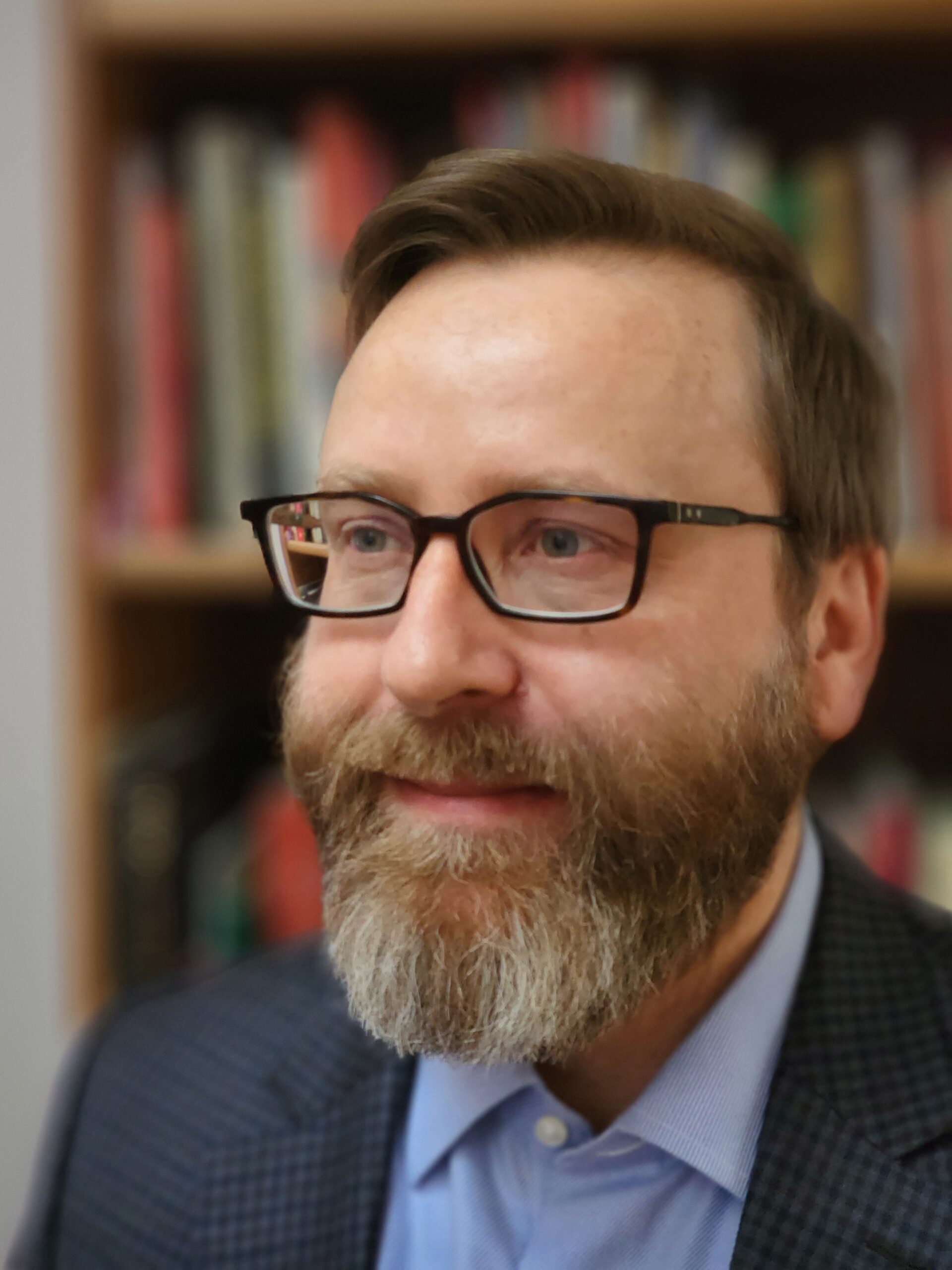
Anthropologist Zachary Howlett examines China's gaokao, a national college entrance exam that functions as a cultural, economic, political, and even religious phenomenon. His book reveals the exam as far more than a test, touching ritual, luck, social inequity, and the possibility of changing one's fate.
transcript
Speaker 1 If we abolish exams, we need to have other, faithful rights of passage for them. And I think, there's always this tension between the function of an education system that cult cultivate humanity and human creativity and goodness, and the function of education systems to filter people by ability and sort them into different jobs and life paths. And I think that's a social problem to a large degree. I think there's a lot of change that can be done in a place like The US from the from the from the bottom up. In a place like China, it's so huge, and it's so centrally controlled, the education system. And and so people in China just really feel that it's sort of like democracy where people say democracy is the worst form of government except all the others that have been tried. They feel like the exam with all its flaws, is is the only way to fairly distribute resources in in in such a large country, with so much competition.
Speaker 2 Hello, and welcome to episode one fifty six of the Human Restoration Project podcast. My name is Nick Covington. Before we get started, I wanted to let you know that this episode is brought to you by our supporters, three of whom are Peter Kratz, Alexander Gruber, and Lisa Wennerth. Thank you so much for your ongoing support, and we're proud to have hosted hundreds of hours of incredible ad free conversations over the years. If you haven't yet, consider rating our podcast in your app to help us reach more listeners. And, of course, you can learn more about Human Restoration Project on our website, humanrestorationproject.org, and connect with us everywhere on social media. I was not familiar at all with China's national college exam, the Gaokao, until reading about it in Susan Bloom's book, Schoolishness, and talking with her about it on a podcast episode we released in August. It's episode one fifty two. You should definitely check it out. And I'm incredibly grateful to Susan for making the connection with my guest today. Zachary Howlett is associate professor of anthropology at the National University of Singapore, joining me from Singapore, and the author of the book Meritocracy and its Discontents, Anxiety and the National College Exam in China. I thought at first, sure. Every country has its school gatekeepers and methods of rationing secondary and post secondary education. The ACT and the SAT in The US, or the GCSEs in The UK, for example. So how is this any different? But what I was not prepared for in Zachary's work was the sheer magnitude of the gaocao as a deeply Chinese cultural, economic, political, and even a magical and religious phenomenon that touches every aspect of life, and for which there really is no American equivalent. The blurb on the back of the book from Carrie Cosell captures it so well. Zachary m Howlett opens the black box of the Gaokao to reveal that it is not only a fateful rite of passage, but also a complex social phenomenon laid in with ritual, magic, dark horses, examination champions, latent potential, luck, character building, social inequity, and the possibility of changing one's fate. Thanks so much, Zachary, for joining me today.
Speaker 1 Well, thank you. I'm I'm just feel so privileged and honored to have this opportunity.
Speaker 2 Before we dive into all of those fascinating elements that I just had talked about in the intro and that you, of course, tackle in turn in the book, What is the Gaokao? And how did it come to play such a central role in modern Chinese life? And maybe how did you come to study it in the first place?
Speaker 1 Well, the the Gaokao is a high stakes examination. I think one way to describe it would be, like the SAT on steroids. It takes place on the seventh and eighth of June every year. It's a really big deal in China. There's about 10,000,000 students now who take it every year, 10,000,010 high school seniors. You know, the police stop the traffic and, you know, it's it's said that airplanes are redirected to prevent noise and crowds of parents gather around the school gates and examination warriors get on their buses and head off to the test sites. Reporters from newspapers and TV stations are there, and it really feels a lot like the kind of attention the newspapers and the press that you would get to a democratic election in a democratic country or to a really big, international sports event. I argue that the Gaokao is what I call a fateful rite of passage in which people personify cultural virtues, including diligence, composure, persistence, and even luck. And and I can go into that more. It follows on from a long history of meritocracy in China. So China in the imperial age, in the centuries prior to the twentieth, was ruled by Mandarins who were elected through meritocratic examinations. And, there's this sort of long standing culture of meritocracy in China that influenced meritocracy and standardized examinations in the West. For me, I think I followed my my personal faithful journey. But people say in in China is that, especially for people from rural backgrounds, the Gaokao is the only fair way to change fate. And, you know, I I went from a small high school in rural Northern California to an Ivy League college. It was kind of a hippie high school, which we could talk about. It was a it was a, an early charter school. And it was just a really big, a public school, but a but a alternative school. And it was really a a big transition. And I encountered for the first time, you know, these large gaps in educational inequality. But I think later when I started working in China, I became fascinated with this exam and similar dynamics playing out, in very culturally specific ways. And I went to China as a result of sort of a series of random occurrences, but in other ways, you know, I was there initially in the early two thousands and there was a whole flow of western capital into China, and I I kinda followed that in there and then became really engaged with the place and these questions.
Speaker 2 I would love to hear more if you'd be willing to speak to your journey from rural California high school to are there parallels, with the experiences of rural China, its relationship to these large urban centers that that centrality really plays a large role, in the book that you unpack? I wonder in what ways, yeah, you saw parallels and distinct differences from your own experience to that you studied.
Speaker 1 Well, my research question, became, you know, why did people remain committed to what I call an ideology and social practice of meritocracy despite these really great disparities in test scores and educational resources between different socioeconomic classes and ethnicities and regions. And I think there's a lot of parallels, in in that to The US. I I wouldn't wanna overdo the comparison because there's huge differences as well. But, certainly, in in the sense that there these high stakes examinations, can make or break, the academic career of students from rural backgrounds or from, you know, marginalized backgrounds. Of course, that's changing as the pendulum swings back and forth in terms of reforms. But there's just a whole lot of high stakes educational competition that occurs, even in The US multi factor admission system that involves, you know, lots of different things beyond standardized exams. And we could talk about that comparison later on. But, in other ways, you know, it's it's very different. You you are finding some, Chinese parents searching for alternative and more humane forms of education, but that it's such a centralized system there. It really takes a a great force of effort to pull kids out of it. It takes resources. So these are middle class parents who who try something different. And there are also migrants who are sort of Gaokao refugees who are, you know, searching for education overseas and that kind of thing. But, you know, the the the kind of diversity, you know, even within limits that, we have in The States in terms of the educational models out there, I I don't think you'll find public public alternative high schools that, you know, employed a lot of the even at that time, you know, sort of on grading or or letting students grade themselves and project based learning and these kinds of things. That was that was very unusual. So another another kind of culture shock for me or a fascination was to see the, the SAT on steroids and that that sort of standardized norm based learning on steroids in China.
Speaker 2 What was your impression of it the first time I mean, I don't know what kind of access exactly you got to the examination room, at least I don't recall from the book. But what was the vibe like the first time after
Speaker 1 reading, learning about it, and then going and seeing this thing in action? Well, I worked for several years in China as a as an English teacher, first in a couple of universities, and then joint venture companies. And so I met a lot of, students who had taken the Gaokao and changed their fates. And so I I heard those stories, in my students. And and then when I turned to do a PhD in anthropology, starting in 2008, I I then, you know, went to do field work in 2011, 2013. And what I did is, you know, I'd done so much teaching to pay back student loans. So I've I've worked in Shanghai as an English teacher and to to earn a a certain wage. And and so when I was funded, I I wanted to do something that got me closer to rural kids and kids from different backgrounds. You know, another big difference between the states and and China is that kids from rural backgrounds have a piece of paper called a hukou, and this is their household registration. And and that limits their access to social services in cities. So it's really this is this system is being reformed and dismantled to a certain degree, but it still remains sort of a two tier caste system. And and these kids from rural backgrounds, when they say the Gaokao can change their fate, a lot of what they're thinking is they can get into a middle class urban existence that includes access to health care, welfare, employment opportunities, education opportunities for their children, and that all revolves around eventually getting a an urban household registration or urban citizenship. So so there I was teaching, and, I wanted to do something more close to the ground and and and close to these dynamics. So I volunteered to teach in three different high schools, one in in a small town in a sort of peripheral county, and one in a, what I'd call sort of a backwater city, and then, one in in the economic capital of the province I worked in, which is Fujian, Xiamen. And I worked in a low ranking school in Xiamen, and then high ranking schools in the peripheral backwater city and the county. And that gave me a sense of the range of dynamics, how people are trying to move from the world to the urban areas and those journeys that they take. But it was culture shock for sure to go into these highly regimented I'd I'd say it's sort of almost a military level regiment regimentation in the schools. I mean, they weren't that tense. There's a lot of friendship and and harmonious and good vibes and caring caring teachers. And and so on that level, it it didn't feel, at least in the schools I was in, harsh in that way. But there certainly was it was a very serious place, and the people were doing serious work. And those Gaokao seniors that before they take the exam, they're pretty much at it seven days a week, almost the whole year, and, with very few breaks. And and, I was never allowed into a, into an examination center. In fact, once I got close, the the school had been set up as an exam center, I sort of unknowingly almost walked into a test center the day before the exam, and and there was a whole bunch of people that descended in, wanting to know who I was, and, oh, okay. It's that foreign teacher. It's alright. And then they sort of kicked me out. So it really is a sacred space in this sort of anthropological sense that, you know, it's separate, from, normal reality. And even the Gaokao seniors, you know, I did all this conversational English. I did teach in some of the normal English curriculum a little bit, but mostly I taught conversational English to teach classes outside of the curriculum. And the third year students were mostly off off limits because they were doing the serious work of preparing for multiple choice questions, and they couldn't waste any time on anything else.
Speaker 2 You do mention how kind of guarded the whole experience is from outsiders, you know, and your methodology, your experience that became, you know, the the book is just building up so much rapport and relationships that allow you that access and that experience in in probably a way that, you might not have had otherwise. And I was really fascinated just by how how much connection there are to, like, the the metaphors. You had mentioned a couple of them, the examination champions, these fateful rites. You know, these are the ways that, the Chinese people view and speak and think about this event, the people surrounding it. Of course, we'll get into the magical and religious elements too. I wonder if you could speak to more of the ways that, like, the gaokao in America might be like the SAT on steroids. But what are some of those other ways that it's just like uniquely an expression of Chinese society and culture and ideologies?
Speaker 1 There are a lot of commonalities cross culturally and a lot of specificities as well. The the method of just, know, sometimes anthropologists call it deep hanging out of participant observation, where you participate and observe at the same time. Teacher is a classic participant observer role. And I certainly was open and continually reminding people of what I was doing and why I was there. But at the same time, because you're contributing and because you become an ordinary part of of the everyday, I think you eventually sort of get insights into things that are covered up. And there's there's an awful lot of I don't mean cover up necessarily in in the sense of conspiracy or that. There there is that. You know, we can get into that. But, there there is just a on a whole a whole lot of things that, occur in what sociologists call the the backstage or sort of behind the scenes as opposed to the front stage of how institutions present themselves. Part of the backstage, and we can talk about it more, is is the religion. These schools, especially in the South Of China where there's an awful lot of Chinese popular religion, which is, you know, a diffused set of religious practices that don't really have an institutional location, but they are going to temples and going to fortune tellers and praying for luck and and making deals with deities. And the schools schools do that. They they make organized pilgrimages for their for their students and pray for success on the Gaokao. This has the approval and and and has is done under the knowledge and approval of educational officials and the and the principles and so on. And this is all taking place in a very secular context under the agnostic communist Chinese party in in China. But in terms of, you know, I think, cross culturally, whenever there's a fateful event where you have a lot of uncertainty, you get people praying for luck and and, you know, trying to name all that uncertain and random stuff as fate and luck, and trying to bring it into some kind of, you know, human control or or or relate with it in some way. And, and also, you know, the what I term the ideology of meritocracy, you know, that merit and hard work will be repaid with economic and political power of success. This is also very cross cultural and shared between authoritarian and democratic societies. And I think in many ways, this has been erased from history to some extent, but the Chinese civil service exams in the imperial era really contributed a lot to the global conversation of meritocracy and inspired a lot of meritocratic thinking in Europe and the West and US. And, ironically, you know, China abandoned those exams, during modernization in the early twentieth century. And, they did so to modernize because they worried that it was gonna individualize people a lot and turn them into competitive, test takers who weren't gonna build for the national good. And at the same time, the western countries were were saying, hey, this is great. We can have a meritocratic, bureaucratic selection mechanism. But the tables have turned, the Gaokao was reintroduced after the communist revolution in 1949, where a national exam was reintroduced and under the under the Gaokao, and and that kind of coincided with the reconsolidation of national power under a single source of authority and has continued except for a ten year break during the Cultural Revolution when they experiment with really radical stuff from '66 to '76. And then, you know, the GaoCao came back in the era of reform and opening after 1979, and it's really still the, as they said, the conducting baton of the whole education system.
Speaker 2 You know, as I was reading through the introduction of the book and then reflecting on the cover itself, which if if people are going to look at the book, it actually shows parents praying at a temple to the god of examinations for their children's success on the gaocao. And so I'll be honest. After I read through the intro and saw that, I immediately went to the magical religious chapter, which happens to be the last chapter and, started my journey through your book there. And the way that you explained, though, how it's this tradition of cosmic reciprocity and how it's sort of at odds with this idea of individual merit as well, I found fascinating too. I mean, you experienced those rites and rituals firsthand. I I believe some of the photos in the book of these magical artifacts are even your own photos. I wonder if you could speak to those practices, those experiences, the glyphs that mark the classroom doors, the pencil cases waved over burning incense. These are things that I think are are not necessarily found in a an American or a European context or Western context. What is their relationship to the Gaokao, particularly in these rural areas perhaps?
Speaker 1 You know, I was there I was there for two years teaching, for two academic years. And in the first year, I I just I sat in in classes. I I did a lot of, observation of pedagogy. I I I taught my own courses and so on. And then I think it was it was a long time. I was there for almost a year before I noticed these very, you know, at first very inconspicuous, but once you see them, you can't unsee them, these magical glyphs above the classroom doors of the senior students who are about to take the gaokao. And these glyphs were obtained with a small donation to to, you know, very powerful local temples from visits that that teachers are making there. And and when I saw these, was, oh my goodness. I haven't seen those before. And and so I started asking questions and and and began to I think also, you know, teachers were were becoming more familiar. We were becoming friends, with each other, and these were this is a big part of their lives. In fact, you know, one teacher sort of amused, I don't know because there's a lot of Christians in China. So I don't know if a Christian could be a head teacher, which is, you know, a big problem because it's supposed to be secular and agnostic and so on. Because, you know, we do these important trips every year to pray for examination success as a team of of head teachers. Head teachers being in in that context, like sort of homeroom teachers, but they coordinate the work of all the subject teachers and and work under a vice principal and a principal. And and so, you know, then then I was never able to accompany the teachers on one of these, group trips, which were held under sort of the auspices or or sort of the appearance of touristic outings because none of it was, you know, totally official. So you sort of had to even though the parents were in on it and the and the kids knew what was happening, there couldn't be any too obvious sort of religious activity associated with school, I think, as in The States, in in many ways. So I I did though, with my teacher friends, go pray at temples a lot, and I went to the the temple well, you mentioned the temple to to Wenchong, where the god of examinations who, you know, similarly was a a widely worshipped god in imperial times because meritocracy was open the examination system was open to any, adult man. Women were excluded. But, you know, there was a really wide coalition of people who could go and pray, because, anyone who could participate in the exams and, of course, it took a certain level of wealth and and and cultural capital, but it was really a lot of people who took part in the system. And and similarly today, you know, there's a massive expansion of of higher education in China in the early two thousands. The number of college students went from five to 20,000,000 between 2,000 and 2010. And since then, they've they've gone up above 30,000,000. So you just have a lot of people competing, and you have a lot of popular religion in the background that's resurged, into the foreground and the post Mao era. And, yeah, people do all kinds of things. So, you know, the students think it's a bit uncool to a lot of them, at least, to kind of go and pray at temples. The parents like to do it. So but they they'll do other things. They they have a discourse of what they at least when I was, teaching, they had something they call character, which they got from Diablo, a a computer game. So when you when you did good deeds, like if you helped someone on their examinations or if you got on a website and uploaded some answers to, some, you know, foreign, English exams or something like that, then you you got merit. You got sort of this idea of, as you mentioned, the karmic reciprocity, which which suffuses all these activities that, you know, there's sort of an invisible, scale of merit that incorporates things from the past lives and from our ancestors and from this life. And all that stuff helps to account for all the random things that can happen to someone on test day, and and a lot of the random events in life that that aren't something that we can individually control. So whether or not you sit next to someone who's making a lot of noise or trying to cheat or, you know, what the weather is like because the exam venues aren't air conditioned or if you you fall ill or, you know, you have a mental health episode of some kind, All these things can be explained through the actions of ghost gods and ancestors, or just luck. And and even the secular version, you know, a com a young man who was entering the communist party, told me, oh, you know, there's nothing there's nothing sort of superstitious about any of this. It's just the the the general principle that good things happen to good people. But but, again, there is that that logic that undergirds it, is, of this sort of idea of, reciprocity.
Speaker 2 So much of, like, the central tensions that you have been discussed throughout the book are sort of elaborated in that. Right? There's, like, the rural urban divide where the rural schools can kinda get away with more of this stuff. They're further away from the central authorities and, again, the emphasis on popular religion, but then also the the tension between meritocracy and cosmic reciprocity. I love that you brought up the students sharing the answers thinking or believing, right, that they were, like, buying into the cosmic meritocracy while also helping the other students perhaps do better by cheating on their exams. I just it's a wonderful human tension to explore within within all of those things. I think maybe then just turning to the meritocracy or that aspect itself. Right? Like you had mentioned, the Gaokao is sort of, an ancestor, or a cousin of those imperial exams, the break during the, during the Cultural Revolution, and then their reinstatement for a lot of reasons that you elaborate here too. So how does meritocracy come into the picture? Based on the book then, who's discontent with it? You write about how there are hundreds of thousands of middle class Chinese parents sending their kids to schools in the West, primarily The United States and Europe, because, you know, they believe that they maybe don't maybe not a better education, but kind of a breakout of that system. And is it not the case then that this this high stakes examination is entirely objective? And shouldn't it be used to determine a test taker status and the trajectory of the rest of their life? Right? Like, what's the beef that people have with, with the system, and why do they want out?
Speaker 1 I mean, the the imperial exams, just to pick up on on on some of these points and and and bounce, from the religion discussion. I mean, there's a there's a a lot of the same tensions and problems and, opportunities and religious, activities in the imperial exams, which, you know, the Gaokao starting in in 1952 after the nineteen forty nine revolution is is an amalgam of western educational practices, a lot of influence from the Soviet Union. But it does it does continue this logic of a national meritocratic ritual. And people in in China certainly see it as a continuation of of that imperial meritocracy, which which makes it both very modern and very traditional at the same time. And and in other words, that this sort of modernity of of meritocratic exams is is arguably a very traditional thing in China. And, I think that's an important thing to emphasize with the religion discussion. I mean, these these are, I think, very modern practices of people engaging with, deities for good luck to achieve very meritocratic and bureaucratic ends. And the deities are powerful, you know, emblems of of mobility. And a couple of the I I should mention you mentioned the low ranking schools and and and kind of in the countryside and rural schools that do these activities. But but strangely, and amazing, I thought it was very interesting that it was it was there then, you know, there's a lot of schools in between, especially in urban areas that didn't do them. But at the very high ranking schools, it was very important to, that, you know, it was so high stakes, also for the administrators. Because at low ranking urban schools, the the story often was, well, a principal might say, you know, no one really expects our kids to do all that great. You know, if we can just exhibit and perform some, you know, success in what they call quality education, we're we're raising good citizens, these are good good kids, that's that's great, and that's what people wanna see. And they're they're not gonna expect all of our kids to get into top tier colleges or or any of them to get into Beijing or or Peking University or Tingpoint University, the two top ranking colleges, in China. So, but for those high ranking schools, it was so high stakes both for the administrators, also for the students, also for the for the, you know, government because a lot of the education ministers and so on and the their their career prospects have a lot to do with how well the education system is doing, and a big measure of that is promotion. So It's like a fateful event for them as well. It is. Yes. Yeah. Fateful in the sense that it's both it's both uncertain and and highly consequential. So that's that's what a fateful event is. And, you know, you can you can start seeing the picture of of meritocracy and who's discontent with it in in in this picture of, you know, rural to urban inequality. I think and and even within urban areas, the low ranking to high ranking schools. I think, you know, on any day, anyone can be discontent with the system. You know, I I one of the education researchers I talked about, the Gaukow said it's like it's like like a balloon. You know, she does a lot of policy consultations, and she has a lot of empathy as do I with the the policy makers. Because when you tweak the Gaokao policy, it's having this, like, this big balloon. You push on one side and something pops out the other side. So, you know, in any year, depending on how the pendulum of of reforms is swinging, you can have middle class parents out in the streets because more quotas are being given to rural and and and, you know, so called backward, areas or or regions. When the test is recalibrated to include more so called creativity and short answers and all these things, that really puts rural kids at a disadvantage because their big advantage comes from diligence. They they get up in the morning earlier than anyone else. They work harder, and they memorize those textbooks, and they can change their fate. So it's this sort of tension in the system. People are painfully aware of the contradictions between fairness and merit cultivation. But I think broadly, they remain committed to the making of meritocracy as this personal and social ideal.
Speaker 2 Broadening that conversation out, you know, there's a deep irony that you mentioned too that a lot of Chinese observers of the American postsecondary admissions system perceive it perhaps as more meritocratic while recognizing that it might not work within the Chinese system? You had mentioned that multifactor system of balancing GPAs with transcripts, narrative essays, test scores, the whole, you know, suite of data is kind of considered holistically for for a lot of kids. And also the the multiple pathways to success in American economic life, while I think at the same time, the most critical American perspectives see the Chinese educational and economic system as superior for its perceived rigor. And, you know, they hold up its performance on PISA and a lot of those other international assessments. So what what do each of these idealized grass is always greener perspectives get right? And what is what is each of those missing about the other?
Speaker 1 People in China say that The US multifactor system would be better at, holistically assessing the quality of of of students as as human beings, but that it would never work in China because of, what they call, you know, personal relations or guanxi. They say in China, this would be so easily corrupted that that it would just wanna be fair because students with connections, relationships with their teachers, with money can just pay for pay for that. They can pay to to present themselves well, to a college. They can, you know, buy their ways into good, sporting activities, and their parents may know be friends of their teacher and and so on and so on. So, you know, I think the irony is that it doesn't work in The US either. Right? We have the 2019 varsity blues scandal and, all kinds of funny business. And and on the other hand, people in The US see China's international assessment performance as this model, as you mentioned. But I think because of a lot of the front stage, back stage, or, you know, presentation versus reality dynamics that I mentioned earlier, they don't see the deep inequalities in the in the system. When you when you go to rural places in the countryside or to low ranking urban schools or to ethnic minority areas in China, you're you're gonna see a picture that just does not match up at all with that, international assessment picture. So it's a, you know, China's a a massive country. It's a it's amazing that it can be effectively governed, as a whole, but it it does mean that there are you know, it's a country of countries, And and there are there's just so much social variation within that country. It's amazing that this one exam, can, you know, reach its tentacles over the whole the whole nation. And, you know, I think, to come back to the question of, like, is the examination objective and and, you know, should it be used to determine a test taker's status and trajectory? You know, I think, your exams always contain social and cultural biases, but they're they're also this important important faithful rite of passage for kids. So I think that that's one thing to keep in mind. If if we abolish exams, we need to have other, faithful rites of passage for them. And I think, there's always this tension between the function of an education system that cultivate humanity and human creativity and goodness and the function of education systems to filter people by ability and sort them into different jobs and life paths. And and I think that's that's a social problem to a large degree. I think there's a lot of change that can be done in a place like The US from the from the from the bottom up. In a place like China, it's so huge, and it's so centrally controlled, the education system. And and so people in China just really feel that it's sort of like democracy where people say democracy is the worst form of government except all the others that have been tried. They feel like the exam with all its flaws, is is the only way to fairly distribute resources in in in such a large country, with so much competition. Whether or not that's the case, that's that's a larger question, but but that's certainly how people feel.
Speaker 2 And I'm just super curious. What are some of the popular reform movements to the Gaokao today? You had mentioned that there's some renorming or maybe moving it towards an emphasis on creativity or assessing some of these other values and has its champ its own champions and its protesters and conflicts that happen over, you know, what it assesses and how it sorts the kids who take it. What are some of the the moves today that are, that people are advocating for or pushing back against?
Speaker 1 Well, there was a there was a big curriculum reform in the, early two thousands implemented that, tried to push for more creativity, what they call quality education, more space for innovation, and testing that, which is maybe an oxymoron. But they introduced more short answers and and that kind of thing. I think what happens in China is that the central government sort of tasks provinces with rolling out different experiments. And so they can try out an experiment in one province as kind of a laboratory. And then depending on how it works, they can then roll it out nationwide. So there's just you know, although there's this national unification, there's a great deal of local experimentation at the provincial level. And then there's a pendulum where things are more centralized and then more dispersed to the provinces in terms of authority. And and the pendulum has now been swinging back after this sort of, time of experimentation to to centralized control. And, under Xi Jinping, the current, communist party chairperson, he he's really trying to get rid of, some of the things that people from more peripheral, rural, less privileged backgrounds felt really unfair, like bonus points for various extracurricular achievements. And he's trying to, introduce more transparency and and more quotas, for, kids from rural backgrounds and and from ethnic minority backgrounds, that kind of thing. There's also, you know, picking up on some of the provincial experiments, a push towards trying to give students more autonomy. And, and, you know, whereas before, there were three mandatory subjects, Chinese, math, and English, and then you had to choose either humanities or sciences, comprehensive exams. You would take four exams over two days, three the three mandatory ones, and you would take one humanities or sciences depending on on your stream. And, kids would, choose their humanities or sciences stream in their second year. And and also, I I would add that in many high school students are are streamed, especially in rural areas, streamed very heavily into, classes by so called ability level, and there's competition. They rise up and down that hierarchy. They take exams all the time. They're really exam athletes. They are taking exams, you know, every month. And now the new system is, you know, Chinese, math, and and usually English or another foreign language. They have to take, physics or history because they found that people, if they're left to their own devices, they don't wanna take physics because it's too hard and they don't wanna take history because, maybe they think it's useless or something. And, and and it's mostly memorization. So it's not the kind of fun history that we might, you know, encourage our kids to to to fall in love with. And then they choose between several other, electives, like ethics, history, physics, geography, chemistry, bio. So that's that's the new picture. But I think the the big the takeaway point really is when you talk to teachers, what they'll say is this is, the same medicine in in in different soup. They've changed a lot of things that they did, sort of, you know, because what people say is like, you know, one ring of the bell determines the tone for your whole whole life, you know. This is this is a big deal. It's hard to retake the exam, especially if you don't have a lot of money. You gotta pay for the the the you know, to retake the exam because you have to, send your kid back to high school for a year and and then you need to pay that tuition, which is, you know, gonna be extra tuition because high school is only three years and and it's often charged more for. And it's just a lot of resources for a poor family or for a family of modest means. So, you know, they've done some things to try to take the faithfulness out of the exam a little bit. Like, they have allowed people to and and, you know, and and when I say there's new reforms, it's still there's still a very various picture with different provinces having pursued these reforms at different speeds. But this is the tendency that, you know, you can take English. At least the English exam, can take multiple times over your three years of high school. But the thing is, you know, that that on the one hand turns the GaoCao into kind of a GaoCao marathon where you're always taking tests. And on the other hand, you know, the the basic shape of the system, as teachers say, hasn't hasn't changed. It's still a very high stakes exam. It still determines your faith. People are still trying to game the system in any way they can and get any advantage they can. It's still a faithful rite of passage that requires diligence, persistence, composure, and luck. And, you know, they come back to the question of objectivity. I mean, on the one hand, it's it's unfair because there are people who, because of their life circumstances, will not be able to display those characteristics like other people can. On the other hand, a lot of people in China will say, but but this this exam has trained people in these virtues. And, you know, you become a certain kind of person. And don't we want people like that? Let's say, even if it's unfair that that these are, people who are got it unfairly. They you know, everyone starts on the same starting line. But don't we want don't we want people of this kind of merit to rule society? So there's that debate.
Speaker 2 Yeah. And I was trying to find the phrase that they use, for the post examination emptiness. Right? Or the it's not necessarily an exhaustion. It's like a existential crisis that the examination champion students have when they get done with this. And really, then college is sort of a a conveyor belt. Right? It's not necessarily super important what your grades or your performance are. It's just like all of it. And I couldn't find the dang page in there. But I was wondering too in that responsiveness to the exam if there has been, like, any response socially, culturally, policy to, like, that post examination period. Because it really is like this as you mentioned, they're they're these marathon runners, but then they hit the marathon and, well, then they still have the college experience. But they've now they have nothing to do. You know, they're bored. They pick up hobbies for the first time. And it does remind you a bit of if you talk to someone who's been a
Speaker 1 a high, you know, elite athlete and then Oh, yeah. Then they then they they retire and they they look at their bodies are covered with muscle and, you know, they've been training all of all the time for this and and they're like, okay, what do I do now? Right? Yes. And so that I think that the term is, they call it NEMONG or lost and confused and Oh, that's it. Yeah. Well, there's also the post Gauchau syndrome, which is sort of like postpartum depression or something. It's sort of a a widespread not to make light of it, it's a widespread mental health problem. The the thing is that the GowCow was designed for an era when people went from secondary school into, you know, some kind of tertiary school and then they they they were assigned to jobs. And so now there's this disconnect because in the nineteen nineties, China shifted to this market, based job assignment where where kids compete for their jobs on the on the free capitalist market. And and so when you go into colleges, you know, that's still sort of the old system in many ways. There's quotas. There's people trying to tinker with the system. We want more of these majors, more of those majors. And and in many ways, the four years of college is not faithful for kids in China. They they the faithful moment is what kind of college they get into, what what kind of major they've been able to get into. They bid for these things based on their score. And and so for for kids in college, those four years are well, you know, if you don't want to go to graduate school in in a foreign country where grades are important, your college grades, then, you know, you can just sort of coast through that time. Things are changing now because China's experiencing economic stagnation or at least slowing growth after, decades of rapid growth. So, you know, now there's a whole lot of anxiety in what they call the evolution era, which is, this idea of increasing competition for decreasing gains. And there's really hyper competition for all kinds of opportunities. And a lot of kids from elite backgrounds will say, even if they go to a top top college, you know, maybe from their high school class, when that class graduates from college, maybe one of them will get a job. And everyone else has to go get master's degrees. The, official unemployment rate for youth is is not even being reported anymore, but it was, you know, in the low 20 percents. But unofficially, academics, you know, was an academic in in Beijing, an economist who thinks it's around 45%. So it is really a crisis. And and so what you're seeing is, I think this sort of questioning of the normative life course, that, you know, you should follow, this sort of conventional idea of success because it's getting harder and harder for people to achieve. That middle class job, house, marriage, kids, and and the economic security, take care of the parents, all that's getting really difficult to achieve. And, there's just a tremendous amount of of of competition. And, also, people there's a new movement of to sort of what they call lie flat, which is to, sort of quietly quit. And then there's another movement to, let it rot, which is just really give up on the rat race altogether.
Speaker 2 That's the that's the old Timothy Leary idea.
Speaker 1 Right? But among among the students I interview, I'm I'm doing interviews with students, Chinese student migrants in Singapore, who are using Singapore as a hub. And and I'm still talking with people from my previous research project. And I think, among the people who are competing, as people are around the world to kinda hold on to middle class status or or break into it, there's not a lot of quiet quitting. But but for them, what lying flat means when they when they use this term, they mean that, you know, you do your best and you gotta leave the rest up to heaven. You have to leave the rest up to God or to to fate or luck. And so, you know, that religious component, whether it's overtly religious or more implicitly so, maybe it's it's still very important, maybe increasingly so.
Speaker 2 Yeah. It it seems like the, you know, economic social challenges are very similar, you know, between the the two countries. If I we were to compare The United States and China in terms of the precarity of the middle class, more difficult to achieve, ways of life that were more common for your parents or grandparents. And I think that's a perfect place to sort of begin to to close the conversation, which is just like, you know, you've experienced this. You've studied it. You've stayed in touch with, the students and teachers that, you know, you worked with and you were friends with. Are there any transferable lessons or analogies? Should we understand the Gaokao as a cautionary tale, a unique cultural artifact, something else entirely?
Speaker 1 Well, maybe I'll I'll I'll start with, a story another popular legend story from the book, which is the lottery. You know, when I was teaching in the the mid sized city, I worked with a homeroom teacher who had a couple of naughty boys in her class who decided to what they did is they go out and buy a bunch of lottery tickets. And the idea was that, if you if you do badly on the lottery, lose money, which is normally the case, you're you're accruing some kind of karmic merit because bad luck will be followed by by good luck. And and so they would paste the lottery tickets on the on the classroom door, and it became sort of like a shrine to the lottery tickets, and other students started doing it. And and and, you know, everyone was losing so much money on the lottery that they decided it was, like, really good luck for the class. And then the vice principal came by one day and saw this and said, oh, no. You can't have this. This is really bad. You know, like, take take this all down and put something up about Xi Jinping or something. You know, I'm like, so so the students, the teacher told the students, you gotta gotta clean this up. And they knew that in the attic, there was, a bunch of unused classroom doors that have been swapped out for some reason. So they they they grabbed the door with all the lottery tickets and they moved it up to the attic and they replaced it with a clean door. And then they, they continued to go up on on breaks and surreptitiously smoked cigarettes and and worshiped the the lottery shrine. I I I like this anecdote because it shows those front stage, backstage, you know, dynamics, and and I think it gives a human touch. But it sort of reminds me also that, you know, what what would be a what would be a fairer system? I mean, I think, you know, whether it's in The States or or in China, one lesson from from the is that maybe maybe one lesson could be that standardized tests aren't always necessarily bad. You know, we we from that point of view, would say we need well funded education to help people have opportunities at all levels. You know, no test is perfect. They're all gonna contain biases, but we can work to, you know, reduce biases for for minoritized or or, you know, racialized groups. And, you know, well designed test could could potentially support social mobility rather than working against it. And certainly, in in China in the nineteen eighties, there was a lot more social mobility, scholars think than there was in in The United States at the same time, you know. So, that that's that's a complex question for quantitative scholars to work out. But but in general, you know, that would be one tact to take. But I think, you know, these norm reference exams like the GaoCao where what by by what you mean, they're all about ranking people. They're largely like ranking people by meaningless ability differences. And, you know, you you, like, guess wrongly on one question or your your hand slips a little bit, people saying you fall like a thousand places in the ranking, your whole fate changes. That seems really meaningless. So criteria reference exams are testing people by by a a ability level or, you know, group or project based, activities that that that do different contests, different kinds of of of ability without ranking people, you know, those seem more meaningful. But again, like, you you ask what would a fair alternative be in a big society with a lot of competition. In terms of radical reform, in in China, they tried it. For for the ten years in the Cultural Revolution, people were, promoted to, college for being, you know, good working class workers and for being, the right kind of, of national committed person who who really cares about the country and that kind of thing.
Speaker 2 Fervent,
Speaker 1 communists. Right? Advancement through the party. But, you know, the the culture revolution has given kind of a bad rap because Right. There there was it was a tremendous time of building schools. Rural communities were building schools in the countryside. Literacy rates went up. Teachers motivated their kids through, achieving common goals as a community and and for the community rather than through competing on American academic exam. And all these, elites who were sent down to the countryside, to learn, but also, you know, sort of brutally struggled against. So there's that very dark side. You know, when when the reform and opening period started, the first thing that happened was reinstate the Gaokao in 1977. Even before any economic reforms, this was the first thing that happened. Reinstate the ladder of success. And the literacy rates dropped in China until the two thousands. That's an sort of an untold story. I mean, not dramatically, but but there was this rapidly rising inequality. And the sort of era of students, you know, saying, oh, you know, taking exams as an individualist, capitalist ideology, ripping up their papers, we wanna do it in groups, you know, there was this sort of radical moment. It totally disappeared. So it really is like the story of the of of either or rather than trying to figure out some kind of in between. But then, you know, there's some philosophers like Michael Sandel and his recent book, Tyranny of Merit, coming back to the lottery. You know, if you ask because it it seems like often, unless you get to a cultural revolution sort of situation or you you get into, you know, relatively marginalized views, people may argue about how meritocracy should be implemented, you know, but the principle that hard work and merit should be rewarded with success, that goes mostly on questions, whether it's China or The US or or most other modern education system. So so there is sort of a larger philosophical question. I mean, is that really a fair and and just way, to to run a society to create, social, communities to to under, know, under undergird and support humanity? What can we do? We could maybe we could elect people by lottery. If you if you can stay in Harvard or or Yale because you're a legacy admit, no matter what kind of grades you get, no matter if you show up for classes or not, they can't kick you out. What would happen if we, you know, just got people into top universities by a random lottery and or at least a certain number of them, you know, instead of having to do an interview to get from the inner city to to to Harvard? What if you just got selected at random and we just graduated you and see what you do with that degree? And I think you would see people do amazing things, you know, because I I I think, the the meritocracy leaves out and and and sort of censors out a lot of, human potential, that's out there. I do think that at the end of the day, probably there's there's just really big systemic changes that need to take place. And and maybe, from the grassroots, we can work for systemic change in a place like The US. It's really difficult in China. It takes a revolution. It takes a social revolution for big change to happen. And then throughout throughout time, throughout for the past, you know, several hundreds of years since at least the Song dynasty in in 960, you know, every time there's a revolution in China, one of the first things the the new revolutionary leader does is reinstate examination systems.
Speaker 2 The book is Meritocracy and its Discontents, Anxiety, and the National College Entrance Exam in China. If you have any interest at all in this topic, I have not had so much fun and learned so much from a single book, on this topic. So my goodness. Highly recommended for me. Thank you so much, Zach Hallett, for joining me on your Friday morning here there in Singapore.
Speaker 1 Yeah. Thank you. And just one last word. You know, this is a time when we have automation, AI, climate change, demographic crisis in many parts of the world with with a few and fewer people having kids, which is not necessarily a bad thing, but it's a time of radical change. Climate change is bad, the climate catastrophe. And I I think that this is a time when the old system may just not really be a a political economic sustainable reality anymore. Now we need to redefine work and and redefine what we mean by merit and redefine, what a meaningful life is. Is it chasing this capital stream of success or is it contributing in other ways? Maybe we need to start paying universal basic income to people when, so much wealth is being accumulated to the very, very top, and societies around the world are becoming more unequal inside their society, even as countries become more equal outside. You know, but whatever happens, I think it's it's a humanly common experience to desire that faithful, that chancy and consequential rite of passage of some kind. And and I think, we'll have to redefine what that means in in a new era, and it's up for the youth to to do that. So, it's a very exciting, possibility, but also fraught with dangers.
Speaker 3 Thank you again for listening to our podcast at Human Restoration Project. I hope this conversation leaves you inspired and ready to start making change. If you enjoyed listening, please consider leaving us a review on your favorite podcast player. Plus, find a whole host of free resources, writings, and other podcasts all for free on our website, humanrestorationproject.org. Thank you.
resources
- Meritocracy and Its Discontents: Anxiety and the National College Exam in China · Zachary Howlett (book) Examines the gaokao as a cultural, political, and social phenomenon beyond simple academic gatekeeping. link →
- Schoolishness · Susan Blum (book) Critiques conventional schooling practices; includes discussion of the gaokao as a gatekeeping mechanism.
- Zachary Howlett (person) Associate professor of Anthropology at the National University of Singapore; expert on Chinese education and meritocracy.
- Karrie Koesel (person) Scholar whose endorsement frames the gaokao as ritual, social inequity, luck, and fate intertwined.
- National University of Singapore (organization) Institution where Howlett researches anthropology, including high-stakes examination culture in China.