

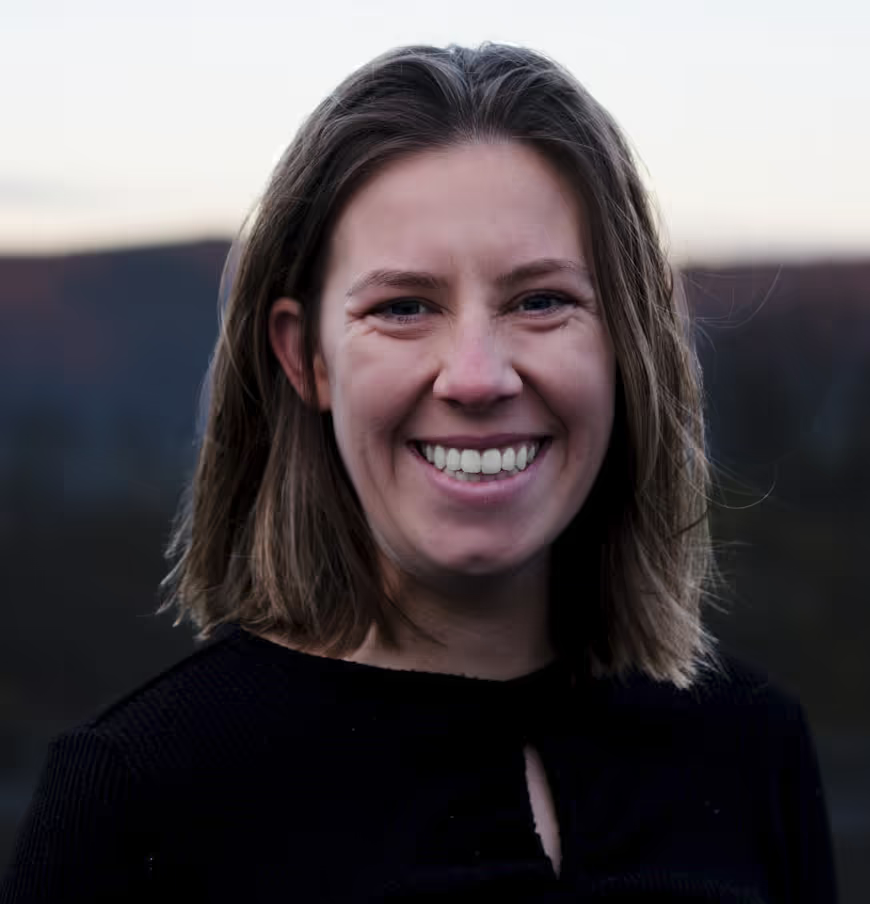
Emma Sisson left teaching in Memphis, Tennessee to become School Director of The Mission School in Sighisoara, Romania. The school serves Romani children and families from an 80,000 sq ft former Soviet textile mill, offering K-3 education and wrap-around family services. The work centers on overcoming structural discrimination while preserving Roma language, oral tradition, and experiential learning.
transcript
Speaker 1 2022 was a system reboot. 2023 broke the doom loop. This year is all about turning vision into reality. Leader
Speaker 2 to
Speaker 1 accessibility and sustainability of the virtual learning while engaging participants in an environment that models the same progressive pedagogy we value with students. Instead of long Zoom presentations with a brief q and a, our flipped keynotes let the learning community listen and learn on their own time, then engage in a one hour Q and A with our speakers. Doctor. Mary Helen Immordino Yang makes the neurobiological case for progressive education rooted in her groundbreaking work in affective neuroscience. Doctor Carla Shalaby demonstrates the power of education as the practice of freedom, honoring young people's rights to full human being. Doctor Sousan Jabber elevates the voices of Arab and Muslim students as an advocate for global equity and justice. And Orchard View School's Innovative Learning Center showcases healthy, sustainable community learning spaces for teenagers and adult learners alike. Beyond our flipped keynotes, participants will be invited to join week long learning journeys. Join Trevor Elio on a journey to learn interdisciplinary inquiry based methods to equip students as knowledge producers, communicating with zines, podcasts, and more, and understand the ripple effects of modern imperialism with a focus on Palestinian resilience and classroom tools for fostering global solidarity in our second workshop led by Abir Ramadan Shanawi. We're also featuring virtual school tours so you can see progressive practice in action at the NOVA Lab, Olin Tanji STEM Academy, Community Lab School, and more. The mission of reshaping education systems, of turning vision into reality is vital for a sustainable and just future. Conference to Restore Humanity runs July 22 through the twenty fifth. And as of recording, early bird tickets are still available. It's a $150 for four days with discounts available, group rates, and parity pricing. Plus, we'll award certificates for teacher training and continuing education credits. See our website, humanrestorationproject.org, for more information, and let's restore humanity together. Hello, and welcome to episode one forty nine of the Human Restoration Project podcast. My name is Nick Covington. Before we get started, I wanted to let you know that this episode is brought to you by our supporters. Three of whom are Daniel Holman, Kevin Gannon, and Sybil Pree. You can learn more about Human Restoration Project on our website, humanrestorationproject.org, and connect us everywhere on social media. The story my guest tells today is of her experience growing up and teaching in Memphis, Tennessee before finding a purpose driven career change in, and I'm not joking, the heart of Transylvania. Emma Sisson is the school director of the Mission School in Sigishwara, Romania. The work of the Mission Romania is deeply rooted in the local community in Sigishwara. And as you'll hear Emma describe it, home base is an 80,000 square foot abandoned Soviet textile mill where staff live, work, house a k through three school, and provide family wraparound services to Romani children and families. The Romani people or Roma are a historically enslaved and oppressed underclass in Europe, in Romania in particular where they're often slandered as a lazy thieving gypsy underclass. In 2022, the European Union reported that 80% of Roma live in poverty compared to the 17% EU average. One in five live in households with no running water, one in three have no indoor toilet, and fewer than half of Roma children attend early childhood education. The scathing report prompted the EU director of fundamental human rights to ask, why do Roma across Europe still face shocking levels of deprivation, marginalization, and discrimination? Overcoming structural discrimination and prejudice against Roma people is a key part of the mission's mission. The mission school also works to preserve Roma values and language in the context of education, expressed as a preference for family apprenticeships, experiential hands on learning, and a rich oral tradition, things that have historically put them at odds with the priorities of institutional school based literacies. And on the other side of the Atlantic, the Mission International is currently recovering from a devastating fire that destroyed their entire campus in Tijuana, Mexico, which served over 500 at risk youth. So if you'd like to learn more and donate to help support Emma's work in Romania and rebuild the Tijuana campus, you can do that at the Mission Inc. That's the missioninc.org. Thanks for listening.
Speaker 3 Thanks so much for joining me today, Emma Sisson. How are you doing? I am doing well. I'm really, really excited to be here and just talk about, I think, an another world within the world of education. Like listening to y'all's podcasts, I just always come away with the sense of, like, so many brilliant people are doing so many amazing things. And so hopefully this gets to add, like, hey. In rural Transylvania, in Eastern Europe, we are also fighting for, like, equity, injustice, and progressive education.
Speaker 1 Gotta throw in the plug for rural Transylvania. It's, you know Heck yeah. You know, your your journey here is is so before we even get started with that work, I think that was a great teaser for what the work is. But I don't know. Let's just talk about yourself and kind of what it is that you do, how you got to this position, who are your personal and professional influences or models that you that you look for.
Speaker 3 Yes. So I think I was the kid born to be a teacher. Like, I remember asking my mom for one of the really old timey projectors, but, like, you know, where you write on the plastic sheet for, like, birthday when I was in third grade because I wanted to be able to teach the neighbors. I was like, this could be a Christmas present. Right? I'm only eight. I need this. And a pack of, like, vis a vis markers. You know that? Yes. Where you could, you know, print it all. I wanted I had all the neighborhood kids in the garage during the summer. So always loved school and learning and reading. My mom's a librarian, you know, babysat in high school. So, like, loved being with kids. And so got to Dartmouth College in 2013 where I did my undergrad and was like, maybe I should do something else. I could be a doctor or a computational biologist and work with diseases or, you know, because you get to college and suddenly the whole world is open to you is what it feels like. But by my freshman spring, I took an education class called the reading brain, which was taught by the brilliant professor Donna Koch, and it's all about how we craft a reading brain. So it's the neuroscience, the psychology. It's actually looking at, like, what is happening in your brain as you learn to read because our brains are not designed for reading. Like, we naturally have evolved for language. The human brain has not naturally evolved for reading. And so you got to learn about how we, like, we pull in all different places and resources in our brain in order to read. And it was just the coolest thing in the world to be like, oh my gosh. Teaching someone how to read is one of the most complex things you can do. And so the the weight of the work of a teacher, I think it gave some credibility because I came from the South where I think there's a stereotype probably unfair of like, oh, you go to teach elementary school because you really just want a job that you can do until you get married, especially as a woman. Like, you know, it's the easy you just easy four years, easiest degree you can get. And then you'll, you know, teach for a couple years until you can be a stay at home mom. And so it's like, no. I don't want that. I wanted something different. I wanted the challenge. I wanted to be able to bring all parts of myself to whatever the work I did. And so I think that class was the first where I was like, oh, I can be philosophical and I can pull from neuroscience and psychology. And I can be creative and think about the public policy side of things. And like it showed me, oh, wait. All of the challenge and complexity that we, you know, more stereotypically attribute to law or medicine or stereotypically more successful fields exist in education. And so then from there, just kind of was like, okay. No. Education is what I want to do. I was able to spend my a quarter of my sophomore year student teaching at a charter school in North Memphis, which that was fascinating where I kind of ended up in a classroom, like, month in because a teacher got fired for hitting a child, and they needed an adult. And, like, three teachers had already quit over break. Like, very much the burnout problematic nature of charter schools, like, got to see that on the ground. Did they throw you in then and you were just like, now you're the full time teacher, Emma? Kind of. Because it was a first school where they use such, like, scripted curriculum and stuff. Like, they just would give me the stuff and I would just I was a, you know, the substitute teacher, but it was me, you know, 19 year old me like, okay, I guess. And then my junior year got to do a quarter working at an alternative high school in New Hampshire. So rural New Hampshire, which was a really cool insight into, like, just if you compare, like, North Memphis, my students were predominantly black and Latinx to then rural New Hampshire students were predominantly white, but very poor. Most of them were heroin users or children of heroin users or because it was an alternative school, been, like, kicked out of school in the heart of the opioid crisis in a lot of ways, like New Hampshire and Vermont being like second to Ohio in the areas where like the opioid crisis has decimated communities. And so I originally was just going to get certified at Dartmouth. But as we know, there's a huge problem with the value of educators and education and higher education. And so my senior year Dartmouth got rid of that program. Oh, no. So I was kind of left in this like, man, I just want to teach in public school. Because one of the things that, like, when I was reading y'all's website and made me just like want to reach out was the commitment to the value of public education as like a core right that every child should have a chance to learn. In public schools being the way we can provide that. I was listening to y'all's episode with Doctor. Emma McMain and how it was like, there's so many issues. Like, sometimes I can get to that. I wanna burn it down as well. Like, all we're doing, you know, I remember reading Altusair, like, his social reproda oh, what did he talk about? Like, how we reproduce social situations and that schools the social apparati and how, like, schools are one way society reproduces itself. And so, like, all we're doing is reproducing white, you know, supremacy and colonial hegemony and burn it down. And then it's like, okay, what would we lose if we actually just burned it down? Because what would come in its place? And the reality is then you'd have these private schools or private companies running quote unquote, you know, scare quote public schools that are really just for money and for profit. And so
Speaker 1 There's definitely a tension in there. Right? Like, as progressive educators, like living with the tension of like, hey. We value this public education and realize at the same time how historically and in the present, how it has been and is used to uphold, you know, these hierarchies, the all of these isms, and everything else. You know? Exactly.
Speaker 3 Yeah. What do we do about that? And I think I have, like, gone through. I just like different seasons where sometimes it's of, processing that and, like, where how am I an actor in that? Right? I think, like, because I am a historical actor in that. I'm a present actor. You know what I mean? I'm like a young white woman raised by, like, middle class family that access to, like, I have tremendous privilege. And then I got to go to school like Dartmouth, which adds on to that privilege. And so there's that element of, like, harm comes with me. Right? Like, the story surrounding my privilege can be harmful. But then the other side of, like, to use as an excuse to then totally separate myself from trying to find any kind of solution, if I'm gonna weigh those harms where I have come to in my career is to step away, I think would be more potentially more harmful.
Speaker 1 Well, as an actor inside that institution, you can be a force to help bend it towards, you know, a more just way of being and existing than
Speaker 3 might otherwise be captured. Yeah. Let me go work on Wall Street then. Let me just go make my money and live my happy life. Like, maintaining the status quo is maybe a better way to put it. The harm that if we're not trying to do something, the harm of maintaining the status quo. And so I wanted to teach public school. I knew that my senior year of college, I just wanted to get certified so I could be a part of the public education system. And so taught in Memphis for five years total, including that master's year in first grade for my, like, a student teaching year and then kindergarten, fifth grade, and then ended back in kindergarten. And honestly, there's something about, like, early childhood that kindergarten that is just my absolute favorite. So I loved it, and it ultimately was really hard to say goodbye. But when I applied to this job in Romania, it was in the middle of I don't know. I would be, like, fascinated if any of your listeners, like, have heard of the things happening in Memphis, but this is my, like, public service announcement to pay attention to what's happening in your school boards. Pay attention to the curriculum that, like, your districts are choosing. Because in Memphis, they implemented by, like, the last year I left, which would have been like the twenty twenty one, twenty twenty two school year. Doctor. Dickey is educational epiphanies. It's his company. And so they, like, bought into his curriculum, which is the idea of if you teach all of the common core standards in order. In the only, like, uniting factor for all the different texts or subjects you teach is the order of the standards. That's it. There's no cohesive, like all the research we have on knowledge building. All of even just like the human piece of, like, school should be fun and cohesive, and there should be a sense of, like, we're working towards something bigger and meaningful. I know there's lots of different ways of structuring how we, like, build towards knowledge, but, like, there should be a bigger goal that's not just we're gonna ask and answer questions for four weeks. But what they did is they took we did the wonders curriculum, but they like bastardized the wonders curriculum to where they would do one week from somewhere random in wonders, which is wonders is McGraw Hill maybe. I actually don't know the company behind the wonders reading McGraw Hill. Yep. McGraw Hill. And then they would do a week using I Ready reading and I Ready math, which I know has decent research as an intervention program. I was not, at the time, was not able to find any research. I'm using it as like the core classroom curriculum aligning to that standard. So it would be our KI one or, you know, our I get that's not it's r I one, which is reading informational text one, I guess. And then they would just like do that standard for three weeks going back and forth between the two curriculum random texts. And from like my knowledge, they did that all the way up to twelfth grade where like except for the picture books you got in kindergarten and first grade, you could have a kid go through without ever getting to read a whole chapter book because they would read the wonders excerpt from the Watsons go to Birmingham, but they never got to read the whole book. So there's no know like, there's no knowledge building. There's no access to, like, literature as this gateway, like, for understanding the world beyond your own circumstances and your own perspectives. And,
Speaker 1 like, it just infuriated me. You seem to be ahead of that curve because I think now what what I think we're seeing more and more building criticism of is exactly that is how can these kids get through their k 12 experience and maybe only have read a whole one whole book and have their experience with language and literature just be through testable excerpts about common core curricular ideas, right, instead of other, you know, non testable factors. I don't know. It's
Speaker 3 horrific. Like, I I just it's like they took the ACT and said, we're actually just gonna turn the ACT into a curriculum.
Speaker 1 Yeah. That is gonna be your experience of school. It's just ACT prep. It it is interesting. I'll I'll add just on the I Ready front. You know, we've we we did a ton of focus groups with schools and school districts all around Ohio, and that was one of the biggest criticisms that we heard from students was this overreliance on I Ready as like their sole experience with English curriculum. Yeah. And they they hate it. They they perceive it as isolating. They're punished for not doing it or doing well on it. And they don't get any other interaction. Like literature and English is not a space to explore ideas and themes and connect with identities and other perspectives. It's all just about, like, raising some kind of test scores or kind of getting passing through a curriculum to kind of get to the next stage.
Speaker 3 Which in some ways makes sense. Like, I go back to James Baldwin and talk to teachers where he talks about how like, I'll actually read this quote is, so the paradox of education is precisely this, that as one begins to become conscious, one begins to examine the society in which he is being educated. And then he goes on to say, but no society is really anxious to have that kind of person around. So you're like, who knows whether this is conscious or not? You know? Can't make that claim even if I would want to. But even if it's subconscious, what it's still doing is saying we don't want students who can think. We don't want students who have begun to think through their own value systems, to think through their own prejudices, to think through, like, you know, their talents and desires and dreams and capabilities. We don't want that because they're they're gonna start to question all these systems we've put in place and they're gonna fight back. And the system doesn't want that. And so you're like, yeah. You're not gonna think that academia or, you know, other places in the world have a place for you if you've never been allowed to dream, if you've never been allowed to get lost in beautiful literature. Like I remember reading the invisible man my senior year of high school and just like rereading the first couple pages, having never read like prose that was so beautiful. Like, it just in that moment of, like, this is what, like, a book can do. Like, they can describe the world in such vivid imagery. Like, I remember specifically just being like he's describing, like, walking through a college campus on a warm night, and you're like, I feel like I'm there. And then the stark with, like, all the horrors in the rest of the book, that contrast, and you're like, kids don't get that anymore in public schools a lot of the time.
Speaker 1 Yeah. They think the purpose of reading is to mine it for all of the potential questions adults may ask you about it in the future, not to make meaning of it or to, again, craft an identity around it or stretch themselves in a direction that might not be available to them otherwise. To commune, right, to have communion with other people is is kind of the goal. Now, it's interesting, Emma, because I'm noticing a common theme here. Right? Your your interest in education starting with that reading course that you took at Dartmouth, and here now here we are talking about the joys of literature and everywhere else in between. Right? Up up in Dartmouth, coming coming back to Memphis, and we're we're twenty minutes into this conversation, and we haven't yet mentioned where you are joining us from. And kind which is the ironic part. For the for listeners, the last time I I talked with Emma, she was in Mexico, and she's currently joining us from Romania, because this is where she does her work now, from Memphis to New Hampshire and to Romania, Mexico. What are you doing in Romania? How did you get there and what is the work that you do as the school director for this program you run? Yeah.
Speaker 3 So I in my anger that last year randomly was like, I am gonna just start refusing to follow along with all these initiatives, and I'm gonna let them fire me. You know? Like, someone needs to stand up and have the realization in November 2021, like, well then I should have another job lined up because I you know? Like that's a really unwise just to like choose to be unemployed without having something in place. And so Google searched missions in Romania. Among many other searches of, like, ways to start teaching in Europe, I would say at the time I was angry but not committed. You know, I was like, I was passionate. I was angry. I was gonna find something. But when it started to come to like, oh, I'm gonna have to do all this paperwork to transfer my license and that started to feel overwhelming.
Speaker 1 Bureaucracy.
Speaker 3 Exactly. The bureaucracy does, you know, if if you're not committed, it can be it can put a damper on that passion sometimes. And so Googled missions in Romania just as one of the, okay, what are the other ways I could maybe get in the classroom? And found this organization called The Mission, which began in 1987 as an orphanage in Tijuana, Mexico. Oh, wow. Okay. So they've been around now like almost forty years, incredible. They've transitioned now in Mexico mostly to what they call family care, which is like kids arriving at school around 06:30 in the morning and staying, like, through the afternoon and evening for school and, like, kind of broader wraparound services. They do still have I think right now it's 27 kiddos living on campus, but that is through the Mexican government's equivalent of the foster care system. So now it is because they now it's mostly it's only government placed kids who were removed from their homes. But because Mexico doesn't have a foster care system like in The US, they get placed in these group homes and the mission has one of them. Because the mission realized and I know this follows along with a lot of, like, work, research, and change occurring kind of in the orphanage world in the global south of realizing, like, most orphans are not orphans by the technicality of the term. Like they have living family members. It is they are being placed because it doesn't feel like there's other options. And so the mission kind of realized that years ago. Oh, wait. Most of our kiddos in the orphanage are voluntary placements. Which means parents are saying like I can't care for my kids. So what would it look like if instead of kids having to come and live with us, we provide a place that is still affording parents the opportunity to work and do what they need to do to keep their kids at home. And so that extended to really them focusing on building their school. And in Tijuana now, the mission has one of the like, recognizes one of the best schools in TJ. They have a waiting list for, like, kids from all over the city wanting to come to their school. Was just talking with my boss, Gina, who runs the mission. She and her husband are senior leaders over kind of the entire mission and talking about one of the boys she was talking to wakes up at 04:30AM to get ready to get on the bus by 05:15, which gets him across Tijuana to where the mission is by 06:30 for breakfast, like like the value of education there in that, like, commitment to getting kids to school is really, really cool. And so I've now learned about all that work. What's interesting when I googled missions in Romania, I didn't know about that. I just found out about their school in Romania. And I Eastern Europe had always intrigued me. Romanian is a romance based language, so it felt easier to learn than any other Slavic language. And so I was kind of like, well, I just want to do this. Had always had a value for like, how can I take all of the privilege and access that I've been given and bring it to places where that is, like, less common? And so Romania being one of the poorer countries in Europe and then learning about our base, we call it Miss Unea, which is the Romanian for the mission. So Miss Unea, if you see it, like, on the website, you'll see both the mission Miss Unea. We specifically work with the Roma people. They are often, like, derogatively referred to as the gypsies. You will see in some, like, scholarship. They're called, like, the Romani gypsies just because there is a global familiarity with the term gypsy, but has no the background comes only from, like, stereotypes in an outsider perspective within the Roma language. The Romani refer to themselves as the Roms. So that's where Roma comes from, which becomes especially confusing living in Romania because Romani and Romanian sound similar, zero connection. Wow. Okay. But people get confused. And it's interesting. It almost adds to Romanians, like, racism against the Roma and their anger at the Roma because when Romanians go abroad, they get treated like they're Roma people. And so then Romanians like it it because this like, I'm making a circle with my hands right now because the way it feeds into, like, the the poor treatment and the racism and the marginalization feeds itself, and it just keeps getting perpetuated. And so the Roma are thought to have come there's a couple different theories in Romani scholarship, whether they were slaves of, like, the ruling class in Northern India or they were part of the untouchable caste. There's a couple different, but linguistic evidence especially points to they came from Northern India before 1,000 CE and migrated west. So there's evidence of the Roma in, like, the Byzantine Empire within, like, Greece and then kind of spreading. Romania to this day has the largest Romani population in Europe, and there is still rampant racism in Romania doing part the parallels, not a one to one match at all, but having spent a lot of time and work really wanting to, like, learn and be not the white supremacist teacher teaching in a classroom of majority, like, black and brown students in Memphis. A lot of work in history around the black experience in The United States. Just reading and learning. And the more I've learned about the Roma, the more I'm like, okay. There are some similarities in the story where the Roma were also they were slaves to the Eastern Orthodox Church, like the Romanian Orthodox Church until the late eighteen hundreds, until the eighteen sixties. And so, like, that idea of system systemic racism being built in with, like, being enslaved, being valued as less than human, being made a category that's subhuman is also deeply interwoven into Romanian history and culture was just reading an Al Jazeer article on how it's time for reparations for the Roma. Oh, wow. And so some of those through lines definitely exist and it makes me thankful for so much of the work and learning I got to do in The States to be prepared for this job to come in, like, to be anti racist and to fight for our kids. And also just to, like, be ready and open to the fullness of their humanity because my kids live in tremendous poverty. Like, it's disgusting because in part, it's, like, always right across the street from, like, very mainstream middle class American houses. Like, we use the term villages to describe the little pockets or neighborhoods where our kids live. But if you look at, like, the academic definition of, like, ghettoizing and how if you think even in the Holocaust, like the ghettos that were created with the ideas of we will create streets or pockets of a neighborhood where these these, quote, unquote, these people can live with the full intention of marginalizing them and preventing them from being able to integrate in any way, shape, or form into society. And so you will be next to a, you know, 2,000 square foot beautiful mainstream Romanian home. And across the street, we have kids living in, like, shacks made from just, like, tarps, whatever pieces of metal, bricks thrown together, dirt floors, no running water. I mean, you know, their source of water is the stream that is full of trash where they bathe in and drink it cooking water from, but also like where they use the bathroom in. Like it's the conditions are infuriating.
Speaker 1 The Romani people are essentially like a structural, like, systemically created underclass of people that that coexist alongside just mainstream society, but perhaps, like, in invisible ways. So I'm I'm willing to bet that the the the middle class person across the street at some point just stops seeing, you know, the the I'll call it a shanty, like, you know, shanty town kind of It's a shanty town. For lack of a better phrase. Right? But created out of necessity and need and, like, this dire poverty of the people Exactly. Their neighbors, essentially. Wow. Yes.
Speaker 3 The language, like, the language used to maintain that in Romanian society is the racist idea that all Roma are thieves and lazy that, you know, they choose to be this way, that we can't trust them. They don't deserve any better. Like, I was recently reading bell hooks teaching community and where she talks about shame in just going back to, like, a she talks about, like, the pervasive sense of shame of being, like, less than. That is also something that really cements marginalization in a culture. And I will get there to talk about the work we're doing in education, but that There's being a lot of context. There's a lot of important context. This is all of that context of so it's also they look because I think they've kind of made it another version of pull yourself pull yourself up by your bootstraps. Like, oh, I don't know. They just they don't they don't want any better than this. They're just lazy. And and so that's how they write it off. And I think how they're able to kind of separate their their own sense of humanity and consciousness from it. And I do wanna name. I work with, like, a specific population of Roma, even within Siguiratta, that the Roma are a super diverse group of people across the world. So even in Romania, there are different, totally different, like, groups and families in cultures that all kind of fall under the Roma umbrella. And so there's different dialects spoken. There's different religious beliefs. And so, like, not all Roma are poor. Not all Roma are living in poverty like this. And that's the other piece that these, like, specific areas I think it highlighted is, look. They're choosing to live in trash, so all Roma must be x y z. And it's not true for many reasons, but also one being not all Roma are living in poverty. There's very wealthy Roma. There's, you know, all across the spectrum. And so when I'm talking about this, I am talking about the specific groups of kids like we serve the seven or eight villages where we go, which is still only a portion of even in our city, the Roma living there. And so I'm only describing the experience of a small group, but still meaningful and still real. And so the program here, Jimmy and Gina, my boss, they kind of were just, like, given a vision for wanting to expand the work they were doing with, like, a global view. And they decided on Europe first and originally went to Moldova because it's the poorest country in Europe, statistically. And they were like, you know, and they describe it as, oh, yeah, there was need. But there was something about when they crossed into Romania. Just like for them, they would call it a God thing of like, oh, we just knew. Like, we heard that voice of God of like, this is where you need to be. And so they listened. And I think by 2017 had purchased an old Soviet clothing factory, which is where I live. It's where the church affiliated with our mission is. It's where the school is. It's where the like, most of the staff lives. It's this big, like, 80,000 square foot old factory. It's and it looks like when you walk in, my brother came to visit me and we got off the train into the taxi pulled up at like 3AM. And you just look up at this behemoth, like, of a building concrete like that Soviet brutalist
Speaker 1 architecture style, you know, just glass and concrete.
Speaker 3 Still has the big speakers on the one top tower. You know, they, like, did all their propaganda. I have to imagine, like, Wilde and my brother was just like, Emma, what? Like, are you sure this is not an abandoned building? And it's like,
Speaker 1 no. Yeah. But it's nice. Nice. Our abandoned building. Yeah. Exactly.
Speaker 3 And on the inside, they've actually done tremendous work, and it's actually really beautiful. The renovations were only two floors in. There's, like, three floors left with the visions, you know, of going up through high school someday through twelfth grade. And so there's dreams. But where we're at right now, because we're still pretty new, is just the first two floors. The school originally opened more as like an after school program, but has transitioned to being an official school. We're still working on official accreditation through, like, Romania, but we use a homeschool, like, platform to kind of make sure we get, like, the school enrollment right now. So there's some legal proof of kids being enrolled internationally. So we're technically they're technically, like, American homeschool students, which again, kind of that when you're abroad, just you figure it out. You piece things together. But we serve grades pre k through third grade right near next year or right now. Next year, we'll add fourth grade. But our kids aged from three to 16 because when we started, there were a lot of kids who had just never been to school or were enrolled in school. But because of a variety of reasons, whether it was they got sent home because there was so much lice in their hair that they weren't allowed to come to school. That has happened to like a number of our students, you know, so much lice or just like level of hygiene. The teachers would say, like, you can't come to school until you're clean. Or it's that they're bullied and marginalized so much that school is not a safe place that has any value for them. There's a fantastic book called I Met Lucky People that is written by a British linguistics professor, but it's about, like, the Roma and the Roma culture with an emphasis on linguistics, but it gives a pretty good overview of their culture and also talks about how, like, the Romani vision for education is really different than, like, our our Western kind of post enlightenment, like European United States view where they think, like, learning happens in practice. So you learn by doing because most Roma history has been passed down orally. They don't have a ton of written history. Their language often isn't written down. It's all oral tradition. There's not a huge value on reading and writing in the way like we have in, like, ethnically white European United States tradition. And so that piece isn't super valuable. What is valuable is you come to work with me. You are with your mom all day helping, you know, around the home kitchen or you're doing the metalsmith thing or you're, like, traveling and working on the farm or you're like, you learn by doing the Roma value, not protecting kids from the hard things of life. So to them, it's important that kids are learning early on how to process death, how to process illness, hardship, hardship, conflicts. Like there's value in kids learning that young and being able to, like, grow up in maturity in communication and openness, which I think a lot of times we don't do a great job of, like, we have a lot to learn. We, I mean, meaning, like, you know, mainstream United States white culture. There's a lot we have to learn around like openness and communication around those things. So in that going to your local public school, not a super valuable thing. And so there's lots of reasons why not just kind of what can be attributed is, oh, it's because they're dumb and lazy and don't care about their kids. And so but for a lot of the parents, it's other aspects that are coming into play. And so we go every morning. We actually drive to pick up our kids. There's no transportation for school in this city. We're in at least. And so we also pay for a bus to get kiddos from one of our villages who go to the local public school and, like, come to our after school program. We value them going to school. So we invest in a bus for them to be able to get to school as well. But we have a couple different vans and buses where we leave between 06:30 and 07:30 in the morning and, like, go to the houses. Sometimes it actually involves waking kids up. Like, I've gone inside a house and, like, literally picked up one of our girls from the bed and, you know, ask her parents to hand me her shoes, you know, and just, like, carry her back to the van to go to school. There is a tension that I do wanna name on that of there's lots of reasons why parents don't value education. But because they don't, there are things where we have to do that because, like, that particularly particular family, sometimes they make more money with their kids going with them to beg in the city than going to school. So they are not gonna go out of their way to send kids to school. So we have to be really invested. So there is that, like, we feel the weight of parents not being fully bought into our kids going to school, and it means we have to do a little bit more. It takes more effort to get kids to come to school. And so trying to balance that that is a reality, but also I have no desire to add to kind of the racialized different attributions to that. So trying to hold both as true of, like, I can have a lot of compassion for the reasons, But also the reality is like, yeah, I am sometimes in the home like myself begging, like, no, come on. If she comes with us, like, it's okay. She doesn't have shoes. I can carry her to the van. Like, she's got her uniform at school. If she comes with us, it means she gets breakfast and lunch. You know, trying to convince parents that it's worthwhile, like, waking their child up to go to school. What does programming look like then
Speaker 1 for kids who, you know, on a day to day basis may make it in, maybe with their parents, maybe out. Again, depending on the value or the thing of the day, maybe doing farm work with their parents. What what does that look like in the day to day for those kids in your in your context?
Speaker 3 So they get picked up from school or for school. And then once they get there, we our kids, they get to shower and change into uniforms. And then we have on your facilities. They come to campus and do that. Okay, excellent. Which I like one of the ways we kind of frame that, especially when new teachers are coming in and it's allowing kids to like, take off the armor from home because, like, the trauma they're experiencing. So they're coming sometimes having not slept in their house the night before because who knows who was, like, drunk that night at home, whether mom or dad were there, whether they were fighting, whether it felt safe, like they may or may not have slept in their house. And maybe they did, but there's a family of nine living in one room. So they're sharing beds with baby siblings who are up crying. They come to us, like, really protected and guarded. Like, they have learned to survive. And so that act of, like, showering and getting to take off clothes from home and put on new clothes is, I think, a way that they are subconsciously, like, taking off the armor of home and, like, entering into a new space and physically kind of getting to see that they are in a new space that, like, do our darn best to make sure it's, like, safe for them. There's, a physical and emotional and, like, social transition
Speaker 1 that allows that to take place.
Speaker 3 Yes. And so then they come upstairs, and what we do now is, an open breakfast where they just come in and we serve them breakfast. And as they finish breakfast and kids are arriving from all over the city and kind of showering and then eating breakfast in our big dining hall, the front tables is food, and then the back tables is just, like, different kind of tangible blocks and games. So it's the Magna Tiles and it's blocks and it's tangrams and it's just like so that they just begin to get to kind of okay. They're starting to get in that problem solving more academic. They're using their hands, but it's very low stakes, which I remember in my master's program, and I don't remember now. But reading an article, like, I haven't been able to find it about how especially mathematics classrooms, like manipulatives and math centers are really great way for kiddos coming from homes where they experience a lot of trauma. It's a great way to start their day the way it allows them to, like, calm down their nervous system and kind of gradually enter into an academic setting. And so they have, like, you know, from eight to nine, they're eating breakfast and just getting to, you know, we put out books to, like, just kind of ease into the day. And then we have class from nine to 01:15, and it has been awesome. One of my favorite parts of the job was getting to choose the curriculum and getting to, like, empower teachers to set up a day that is truly student centered and, like, based on the knowledge we have right now, what is best for kids. We will never get that perfectly. And every year, you know, there's something changing, and I'm always learning. But I got to I spent so many years feeling like, oh, I I am my hands are tied towards what I can really do. And there's things that are best for kids that I can't fully implement to being in a space where, like, I'm not a school director. You know? Like, we get to do things like, we get to decide what's best for kids based on all the resources out there. My prayer is that it's not, like, you know, this arbitrary, like, what I think, but I've gotten to learn. And so the kids, like, we're using American curriculum. So, like, you know, Eureka math, the free version, the free version of CKLA phonics, found this really cool reading program called Fish Tank. They do alien math, but we just do their ELA, but it's just like really quality books where it's a lot of the really amazing new books that have been written that are more, like, diverse and inclusive. But then also, like, the classics, you know, the is it like the Gail Gibbons informational books when they're learning about plants or the Pinky and Rex books and Esperanza Rising and Charlotte's Web and Brown Girl Dreaming and, you know, like, they get to do the 100 dresses, just the quality, like, quality across the board. And so right now, we are in this, like, place that is teaching me a lot to hold, like, open hands of we have really high expectations for our kids. It's one of the things, like, I found most powerful in the classroom is, like, kids rise the expectations you set for them. You have to equip them. But if you are kind of like, oh, yeah, you're right. Life's tough at home. You're probably never gonna be able to, like, do that math problem or, yeah, like, you're just not a reader kid. You know, you will kids will believe that that will shape their entire identity as a learner. And so, like, I believe all of our kids will be just as that they are as capable as any child in the world. And they will get to the point where they are on grade level or above by that metric. I know that's not the best metric, but that idea of, like, what fourth graders are doing for math in The United States or in Finland or in Germany or, you know, in Singapore, like, kids are gonna be doing that too. So I have that, like, expectation and that belief because I got to see that in reality, which I loved. Like in teaching in Memphis, I got to see that take place. Then all my kids were math kids or had math brains because they're human and they're capable. Like, that's just and now did it take different tools and different amounts of time and different ways of doing things for every child? Absolutely. But that expectation isn't gonna minimize. And so we have that high expectation, but also, like, embracing reality that we're not there yet. And that's just each year we get to keep growing and our kids are gonna keep learning. And it's been like in our because our philosophy really is like we want kids to come and be loved. So like the motto of the mission is like rescue, restore love. They came up with but like especially the hope of like restoring relationship to community, restoring relationship to like themselves, restoring relationship to God and their spirituality, the idea of restoration, and then also love. Like, we just want kids to have a place where they get to come and be safe and feel loved. So sometimes with our teachers, we do just, like, sit around and read fun stories and let kids sleep and have an extra snack Because sometimes that's actually just what needs to happen. What they need that day. Yeah. And so holding that tension, there's that tension there of like but I also don't ever want that to become the only thing we do because our kids are capable of so much more in learning to balance that and just learning to hold dreams for the future of, like, where we will be five years from now, ten years from now, twenty years from now. Like, one of our students now, I really believe she will be director of the school someday.
Speaker 1 You know what I mean? And like Interviewing her for your position, you know? Yeah. And
Speaker 3 that's one of the things I love about the mission when I before I signed on because I didn't know anything about them. I Google searched, you know, had an awesome interview and was like, I guess I'm moving to Romania. I don't know. I'm single in my twenties. Like, let me let's take a leap and do an you know, go on an adventure. But of the senior leaders, like, the whole you know, I think there's five senior leaders. Two of them actually grew up in the orphanage. In their now senior leaders, one of them runs the entire base in Mexico. And then even here, two of my teachers grew up in the orphanage and were adopted, like, into the family in Mexico. And then they chose to come and teach Romania in right here in Romania. And just that, like, our long term goal is that it's Romanians and Romani Romanians teaching here, that it's not just like white girls from The US who think they have all the answers, which I try not to be. But that is, you know, right? That is who I am in a lot of ways. And, okay, someone needs to build it now. Yes. But like that I can actually see fruit. Okay. Over forty years, they actually followed through that commitment to this work should be done by like, yeah, the communities we're serving themselves. It shouldn't be
Speaker 1 this like outsiders perspective and outsiders work. But it doesn't seem like the school is like a cultural imposition or or a dis cultural displacement of the, you know, replacing one set of values for another and sort of like, you know, this educational imperialist kind of way that I've talked with people in who grew up in schools in The Caribbean that they experienced a very English format of education as a result of this. Right? And their their their whole education system, despite having achieved political independence, is still very, like, colonially British. But it doesn't seem like, what I'm saying is it doesn't seem like that's the culture at the school here because it's constructed alongside. Right? The community values and cultural and people and linguistic identities and historical identities, while at the same time, like, recognizing that, you know, there are challenges in this community too and we're here to, you know, help meet those challenges Yes. Where you're at. Not displace or replace, but really like help fulfill, you know Yes. This need that is that is there in the community.
Speaker 3 Yeah. I don't know if I got that right. That's kind of the same Amen. That is I mean, that's my dream. I Okay. Feel really lucky to, like, be on a team of people who are on the same page with that. And again, like, we are always learning, but you're exactly right. Like, the heart is that this should be by the kids for the kids as much as we can. And even just the language that we just talk about how, like, we want this to be a safe house. And so we don't even really do rules as much as that we have our values, kind hands, kind touch, listen to instructions, stay in our group. And we talk a lot about how that's how we build our house. And then very much, like, in the restorative justice, like, no punishment. It's been so cool just to get to leave a lot of the, like, yeah, the bureaucracy behind of, like, the PBIS and, you know, having to choose a social emotional curriculum or the all of that where it's like, we just get to kind of take, I think, what's good and just, like, live it out in relationship with kids. Very familial. Yeah. And so even, like, our family visits where multiple times during the week, we're, like, in villages just hanging out with families. And it's been awesome for me, especially as my Romanian has gotten better. We're like, I'll go sit and they'll be like, oh, do you want a coffee, miss Emma? And then I'll just sit in the house and we'll sit and drink coffee and get to chat and talk about, you know, we're at like and that was the piece that I think I always wanted even teaching in Memphis that because of the structure of public education, you do also wanna respect, like, healthy boundaries. And that's just part of the beauty of the work we're doing in a different context is what might feel inappropriate in terms of, like, connecting with kids and families in The States. The culture here is just totally different. And I've loved that. I've loved that I get to connect with kids and whole families in a way that
Speaker 1 I never, like, learned how to do well in The States. Well, honestly, it sounds like you wouldn't have this anywhere near the level of success that you've had without without that piece. Like, that is a vital piece. Right?
Speaker 3 Absolutely. And the parents view of education is also shifting, which is cool. Like, did a meet the teacher night last fall and to see the look of pride on parents' faces as they sat in each classroom and got to hear teachers explain what their kids were learning. And more and more parents being like, well, I don't know how to read. Like, are you when are you gonna teach me? When can I come to school? You know, and kind of that hope of like, we are starting next year. It's called second chances in Romania, the Ashantza, similar to like GED programs in The States. Gotcha. Gotcha. For like high schoolers, you know, teenagers who have essentially placed out but never got an education. And to start to be like, how can we build that towards then an adult education program where I have conversations with moms of like, I see how smart you are. You would be an amazing reader and writer. You just didn't get the opportunity.
Speaker 1 I'm because because I'm super curious to ask since your program is k three, if I if I heard that right. Where what what do the kids do when they age out of the k three? What's what awaits them? I know you had said Yeah. You were hoping that the program expands and grows to accommodate kids as they age through it, but what what's kind of the status now? What's waiting for them on the other side of third grade?
Speaker 3 That's a great question that we're kind of in the middle of coming up with the answer. Because we're adding a grade every year. Oh. So with the idea of like who's in third grade now will go to fourth grade. So depending on their age, they would just graduate with us. Now what is tricky, and I think we're gonna get to live this out is like in that third grade class, we have some 14, 15, 16 year olds. And so the reality will be, I'm not sure as a 25 year old, they're gonna wanna be completing grade 12. And so what it might look like is they end up like getting a diploma through the second chance program. Almost they're not actually gonna graduate grade 12 because our school, the k through three is in English. But those second chance program is in Romanian just because it will, you know, it just is a separate pathway. And so the goal would be like that they graduate grade 12, a diploma also like certified proficiency level in English. I think what we're probably gonna see is some of our older kids hit the point where either they transition to that second chances program or they may just decide like we started too late. We're actually ready to enter the workforce. And that's where, like, our wraparound view of family care would be then like, great. Let's help you make your resume. Let's help you find a job. Like, let's help you if you want to find an apartment in the city that there will still be that commitment to them that they're part of like, once they're part of the family, they're always part of the family, which I know is much easier to say than do. But again, like the forty years, almost forty years in Mexico, that's something that they have been committed to and have figured out how to do.
Speaker 1 Because it's not just the school based setting. Right? Like, the mission provides all these other services. So, essentially, the the bigger institution can kinda be flexible at providing different pathways, whether it's k three for younger kids to kind of get those foundational kind of pieces met, and then services and, things for, older family members who are interested in educational pathways and all everywhere in between. So that's that's incredible. It really is like a Yeah. It's it's sort of like a vision for, like, community schooling, I think, is perhaps coming back in vogue in The United States. But
Speaker 3 You're right. And I hadn't really thought of that, but I'm almost like, okay. Like, I'm a some of my next research into what has been like, work like you know what has been working in the models of that that exists. Because you're right, a lot of it. Is that heart of like education being so much broader than just that, like quote, unquote, academic setting
Speaker 1 in a school building. K 12 and done. Well, it's like, well, my mom was not a reader. My mom never got an education. How can she at the same time, you know, become be who they see themselves as alongside their kids, right, and providing necessary services at the community level, not like at a state level or at a, you know, federal level, but, like, at the level of community need, being able to both understand and meet in a variety of ways, you know, showers, food, job services, education services, not just k 12, but k through 99, you know, and beyond. There's there are models of that. That's that's what you're living right now is what I'm that's what I'm hearing anyway as I process it. I yeah.
Speaker 3 I as you, like, describe it that way, absolutely. We're, like, living it and still building it at the same time, which is really I'm just really thankful. Sorry. The whooping coughs got me.
Speaker 1 This was the last recorded interview with Emma before the whooping cough took her. Whooping cough is
Speaker 3 took me away. Oh, no. I was glad this was virtual. I was like, I probably would have had to cancel this.
Speaker 1 We'd be shouting at each other from across a room is what we would be doing outside.
Speaker 3 With with
Speaker 1 full COVID. Well, so I'll I'll spare you, but just because I know, you know, is there any way people who wanna learn more or be able to support? Because I know it's a charitable organization as well. Perhaps there's people who are interested might be able to. If you have links or resources, feel free to speak them now or I can post them in in the link as well. So the mission, like, inc.org
Speaker 3 is the website. And so the way the mission gets most of their funds is through, like, sponsorship where you sponsor a child for $30 a month. It doesn't actually the money doesn't go directly to the child with the idea of if you were only choosing the kid you thought was cute or when you visited the kid who was the most, you know, loquacious and fun to be around, then like the money wouldn't so it goes to programs to support all of the kids. But it can be a cool way to stay connected and, like, when you if you choose to donate Christmas gifts or birthday gifts, like, can go to a certain child or you can write letters with our students here too. So that's both in Mexico or here on our base in Romania. You can also just gen donate to, like, the general fund. We're saving or trying to raise money right now as an organization because the big church building, high school administration administrative offices, dorm rooms, that building burned down in Mexico last August, which was just really devastating and disappointing. But also, as someone who's newer to this community, just, like, beautiful to see the hope and resilience of, like, okay. Well, this happened. Like, doesn't change what we do. Doesn't change how we're gonna show up for kids. We're just gonna have to pray that we get more support coming in. And so there's a fundraising, like, million separate from that on in addition to just, like, normal annual funds. I might also share with you. I have, like, Amazon Germany wish list that folks can even just, like, buy an item or two. I'm working on building our library. It's been really cool to watch kids transform into readers. My mom recently visited and, like, brought some books and put them out during breakfast. And I mean, the kids just flocked to them just like wanting and just building readers. And so trying to make sure we have just like a really divergent rich library for kiddos as well as just other school supplies. And then I can also share my email because we do, like, summer internships. Groups also come and visit and can do projects, and I am open to, like, any collaboration opportunities to learn because it can be sometimes isolating in, like, rural Transylvania. Again, like, didn't expect to end up here in this, like, being reminded. And I think that's why it's so cool to connect with y'all that, like, there are people all over the world, like, working to find humanity, you know, in education and the things we do that get back to the heart of, like, kids are humans who should be given the chance to learn and grow and make mistakes and dream and, like, figure out who they are. So even just connections in that is just always encouraging to know that, like, okay, we're not doing this work in a vacuum. We're not we're not actually isolated
Speaker 1 even if it feels that way sometimes. Yeah. No. We're we're so pumped just to be able to help shine a light on, you know, your work and the work that you're doing and hopefully, again, just builds connection to listeners, to people who might be engaged, to reach out to you, to, you know, help support the work by buying some books or sponsoring a kit or something. Just yeah. And and there's I can't imagine a better advocate for the the that work than you. It was it's so great just to be able to be like, hey, I'm just gonna hit record and we're gonna get going and we got the this, you know, your story from start to finish and never in between. So I'm so thankful for you taking the time out of your busy day to sit down and tell that story to me and and to our listeners.
Speaker 3 Well, it was a joy. And I know I rambled. I look forward to see how you kind of make the story make sense because there's just there's just so much.
Speaker 2 Thank you again for listening to our podcast at Human Restoration Project. I hope this conversation leaves you inspired and ready to start making change. If you enjoyed listening, please consider leaving us a review on your favorite podcast player. Plus, find a whole host of free resources, writings, and other podcasts all for free on our website, humanrestorationproject.org. Thank you.
resources
- The Mission Inc. (organization) Runs The Mission School in Sighisoara, Romania, serving Romani children and families.
- Amazon Book Wishlist for The Mission School (tool) Support The Mission School directly by purchasing books from their curated wishlist. link →
- Amazon School Supplies Wishlist for The Mission School (tool) Donate school supplies directly to The Mission School in Sighisoara, Romania. link →
- Emma Sisson (person) School Director of The Mission School; former Memphis teacher turned Roma education advocate in Romania.